 Dive The Blue
Dive The Blue
Dive The Blue
Graceful, ancient, and unforgettable - sea turtles are among the most treasured encounters in the warm blue water of Cozumel.
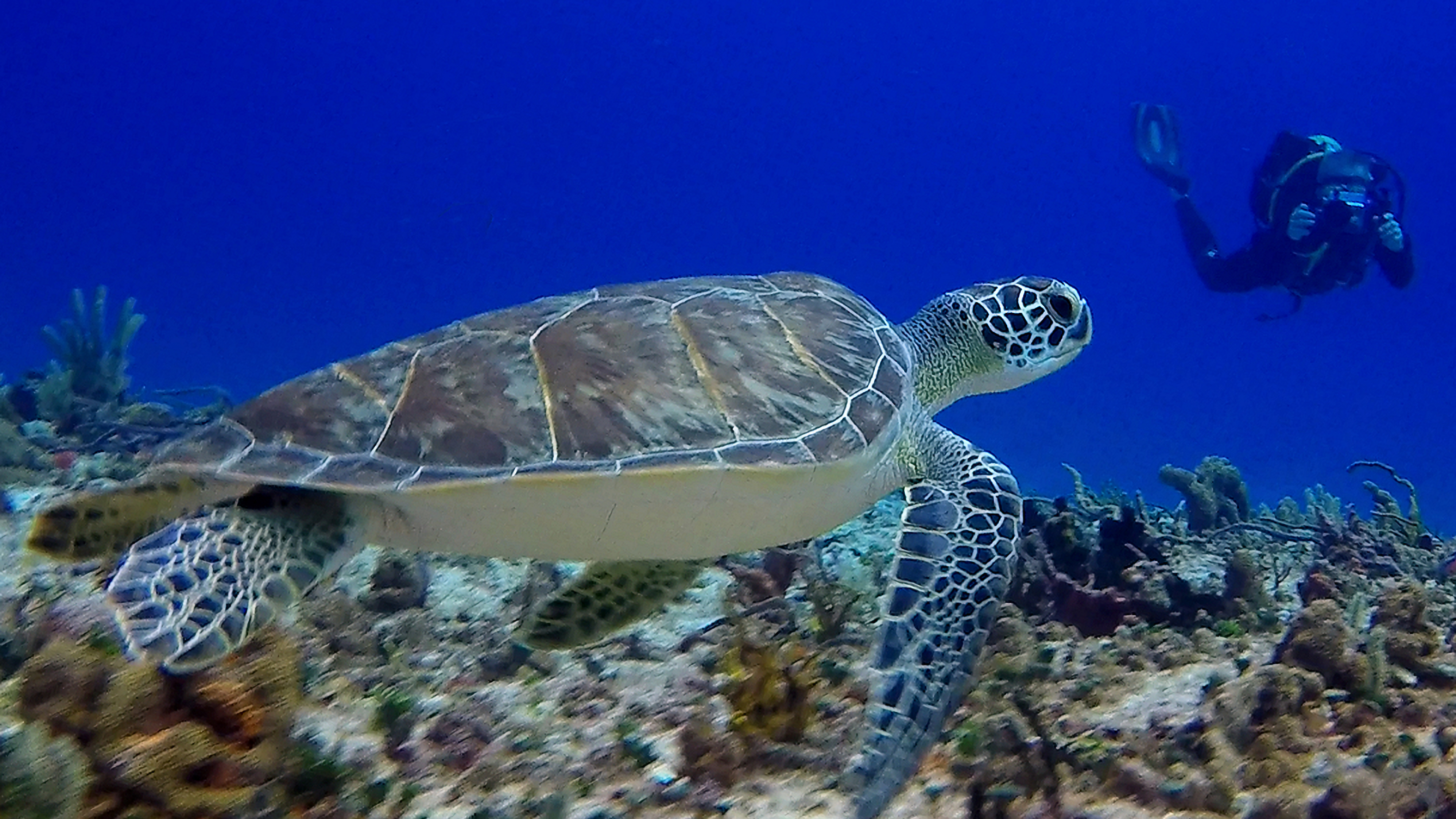
A sea turtle encounter is rarely dramatic. It is usually quieter than that - a shape resting beneath the coral, a slow breath, a gentle push into the current, and then the turtle glides away as if it has always belonged to the blue.
Around Cozumel, turtles are part of what makes a drift dive feel alive. They may appear on the reef edge, over sand channels, near coral heads, or rising calmly toward the surface. 'Dive the Blue' celebrates those moments through first-hand diving, photography and video.
A simple first look at the turtles divers can see on Cozumel reefs.
Cozumel divers commonly encounter Green and Hawksbill turtles. Loggerheads are occasionally reported.
Many sea turtles can live for decades, making every encounter feel like meeting an ancient traveler.
Sea turtles are reptiles. They live in the ocean, but they must surface to breathe.
The best turtle encounter is respectful: watch quietly, keep distance, and let the turtle choose its path.
Turtle species of the Caribbean and Cozumel region, with their own shape and markings.
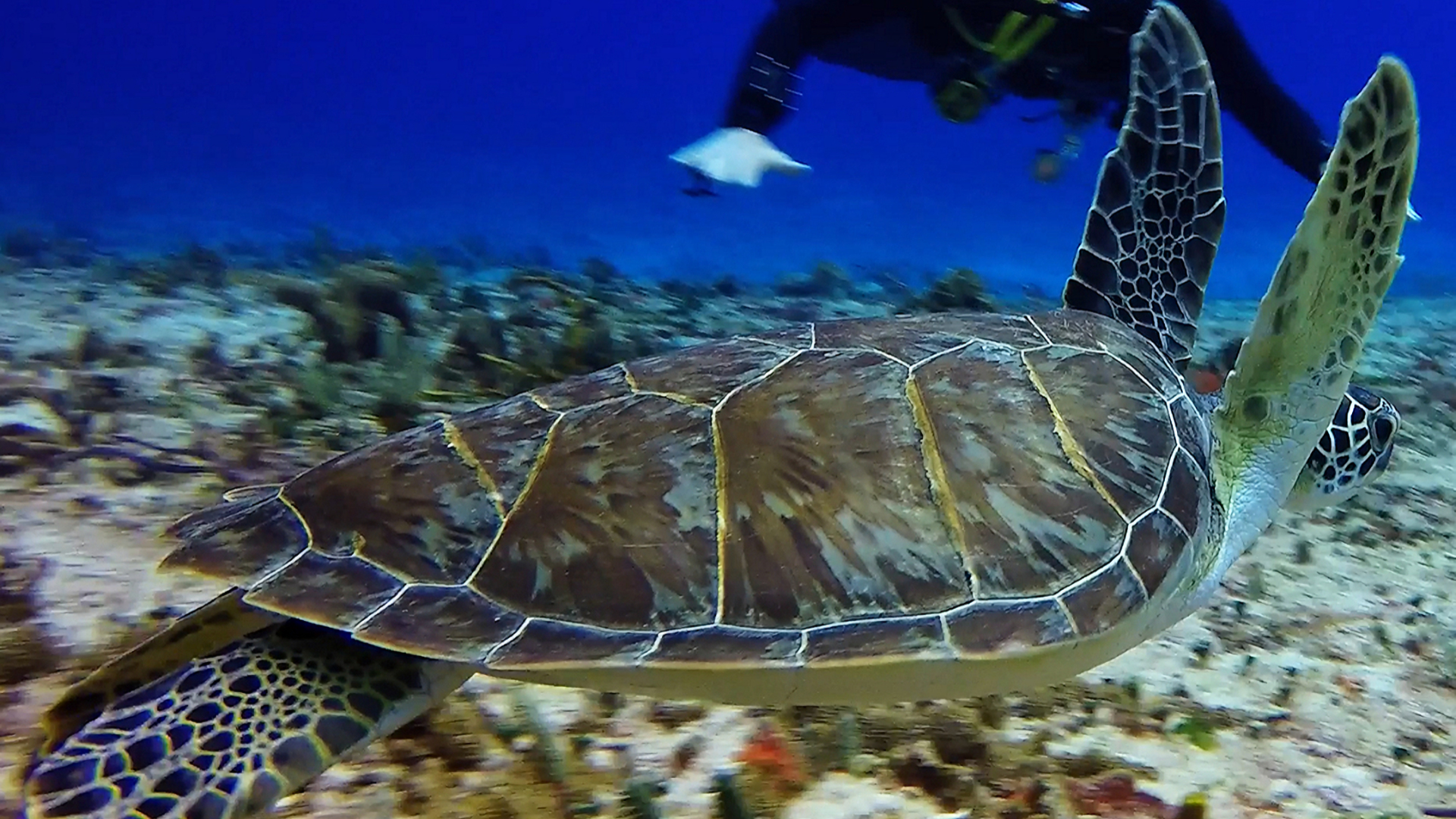
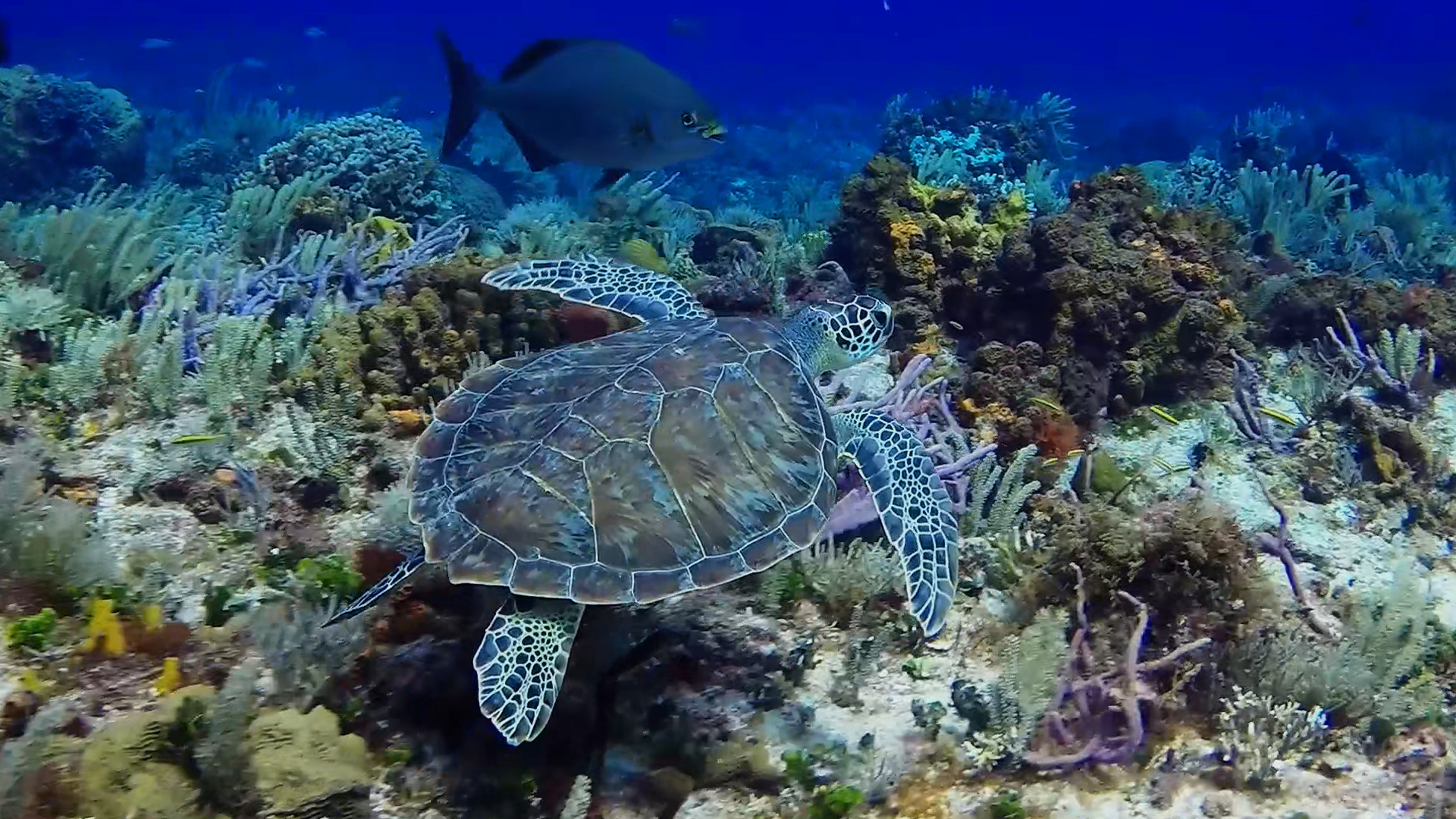
Recognized by a smooth shell, round face, and calm grazing behavior. A classic Cozumel turtle.
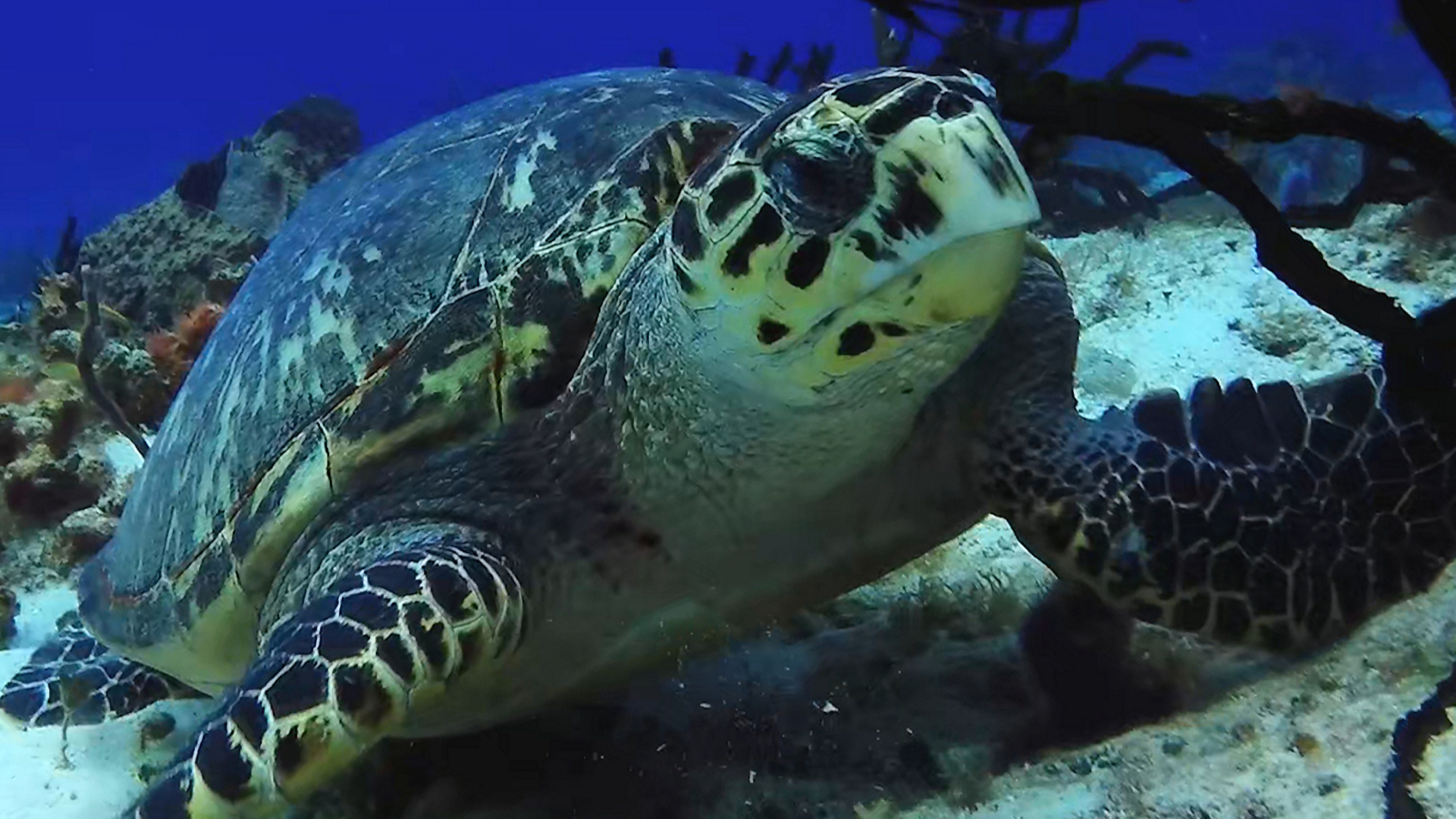
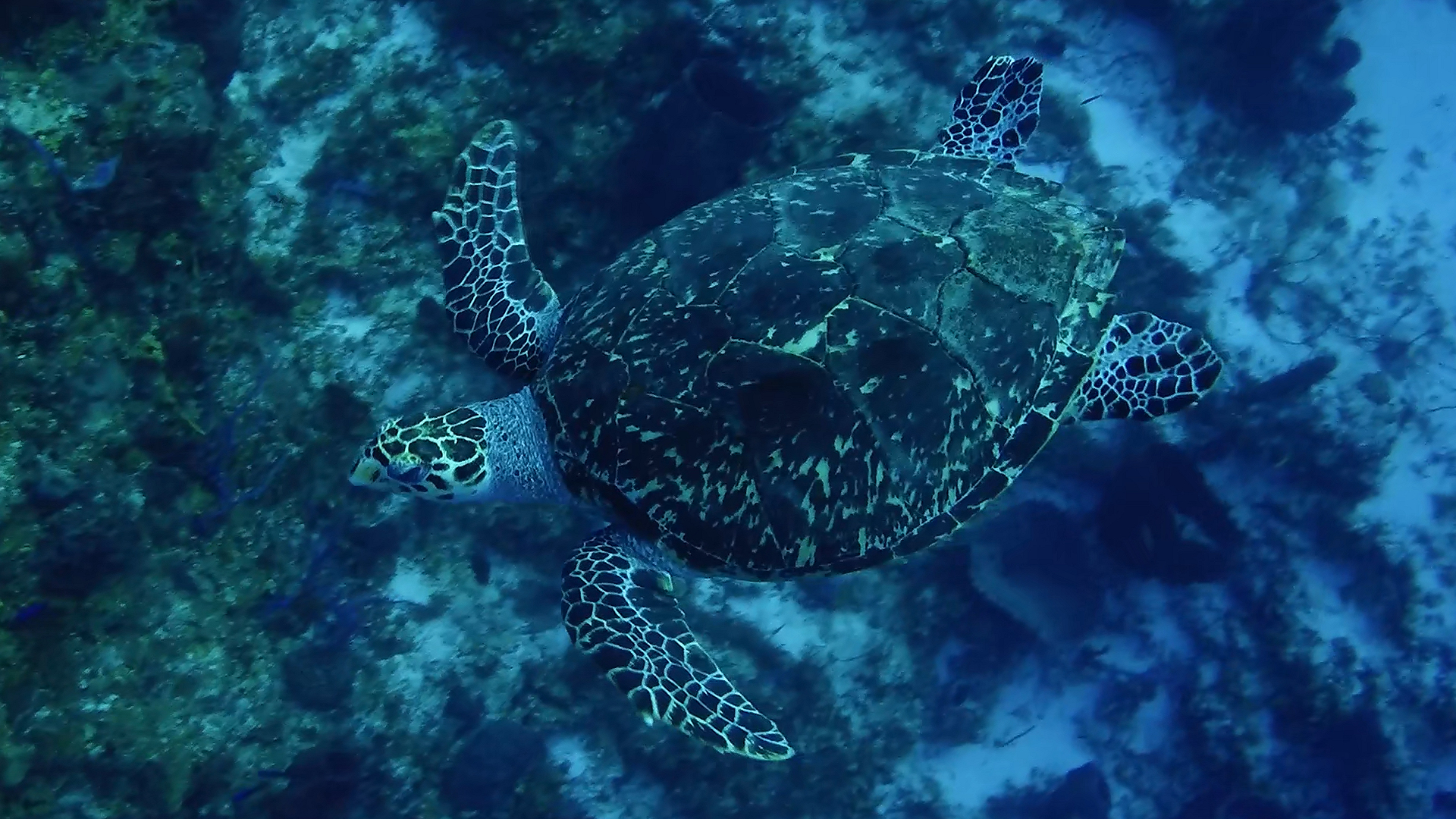
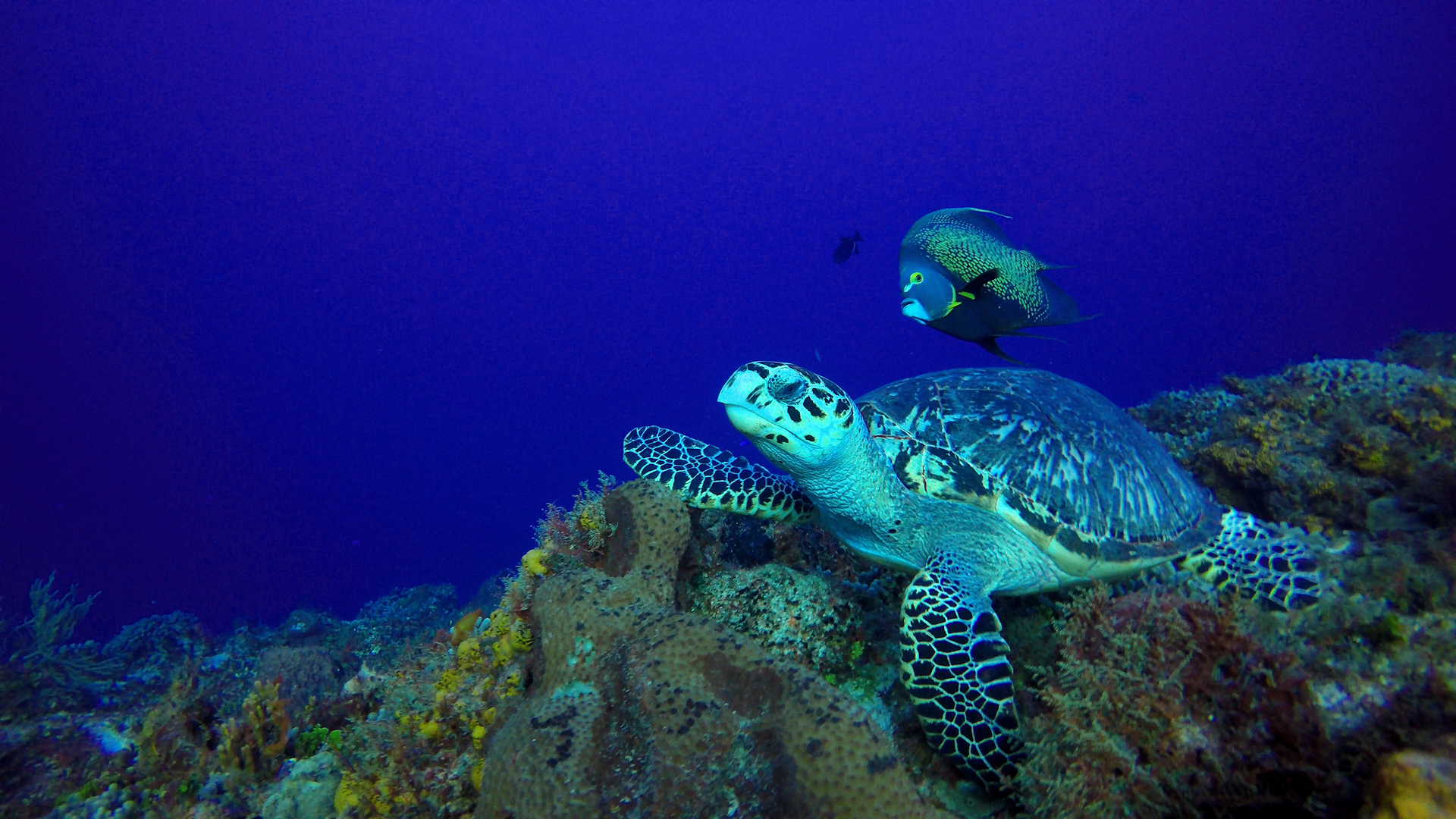
Known for its beautiful shell pattern and narrow beak-like mouth, often seen around coral reef areas.
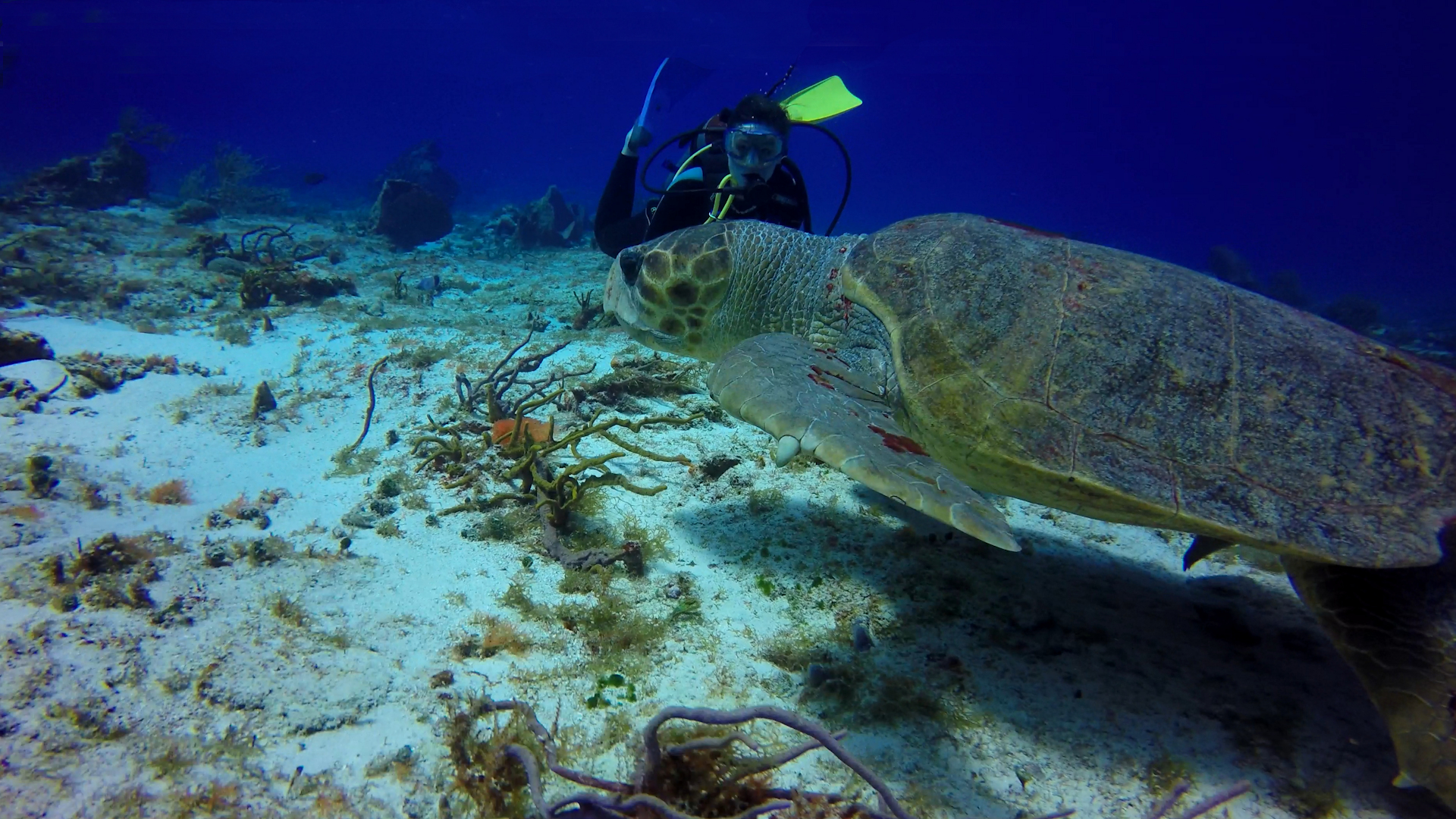
Green sea turtles can become very old and large, with weathered shells making memorable encounters.
Divers most often talk about green sea turtles, hawksbill turtles, and occasionally loggerheads in the wider region. The exact encounter depends on reef, season, depth, and luck.
No. Sea turtles are generally peaceful animals. The respectful approach is to keep distance, avoid blocking their path, and never chase or touch them.
No. Sea turtles are reptiles and must surface for air. They can stay down for long periods when resting, but they still need to breathe.
Their diet depends on species. Some feed on seagrass and algae, while others eat sponges, jellyfish, and reef invertebrates.
Many sea turtles can live for several decades. That long life is part of what makes seeing one underwater feel so special.
Female sea turtles are known for returning to nesting areas connected to where they hatched. This is one of the great mysteries and wonders of turtle life.
Most underwater encounters are slow and graceful, but turtles can move surprisingly fast when they decide to leave.
Threats include habitat loss, pollution, fishing gear, boat strikes, climate pressure, and disturbance of nesting beaches.
The safe rule for divers is simple: do not touch sea turtles. Good diving behavior protects the animal and preserves the encounter for everyone.
Turtles may be seen on many Cozumel reefs. Palancar, Paso del Cedral, Columbia, and Santa Rosa are good sections to develop with your own diving experience and images.
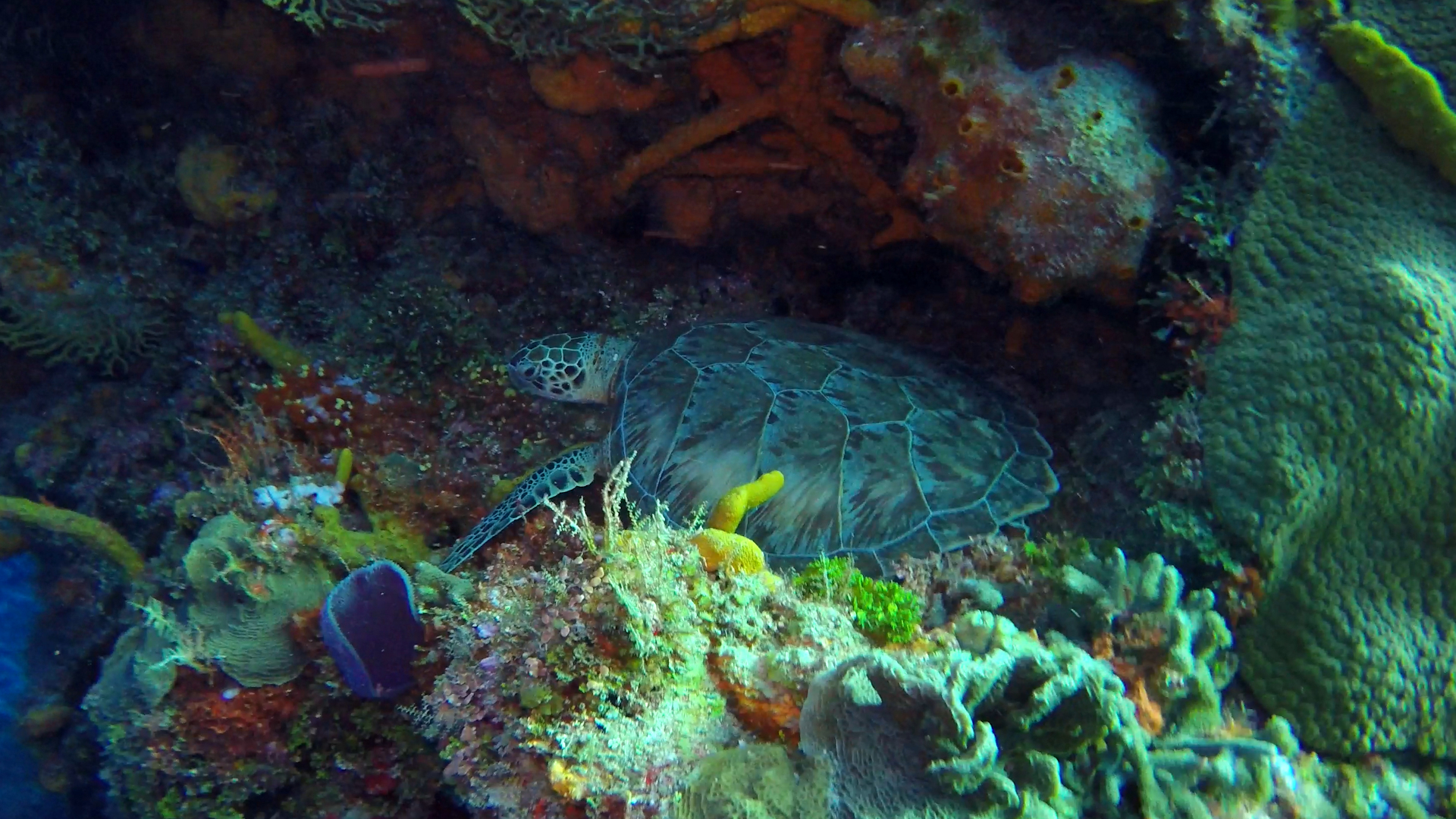
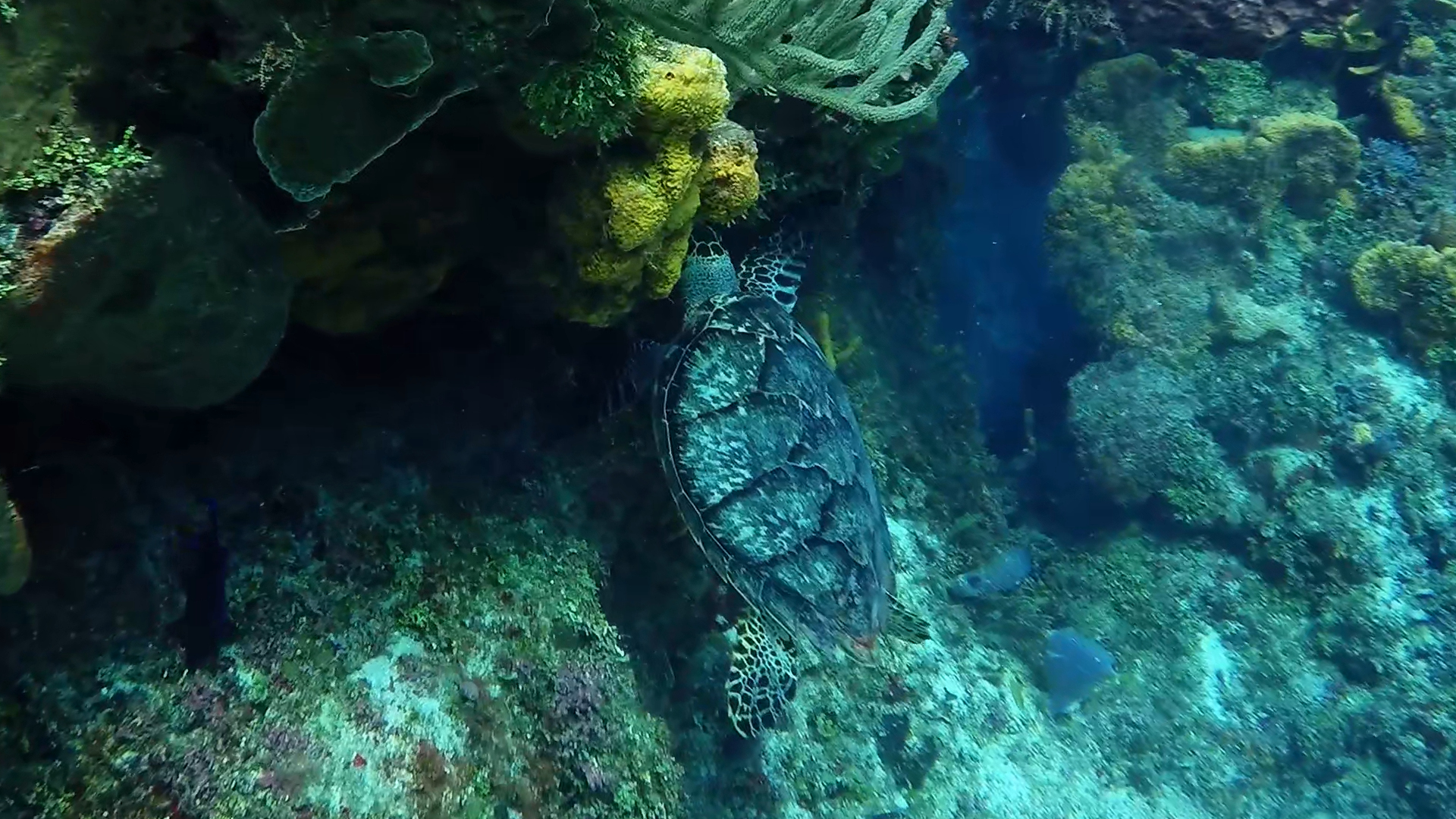
A turtle tucked quietly beneath the coral resting from the current.
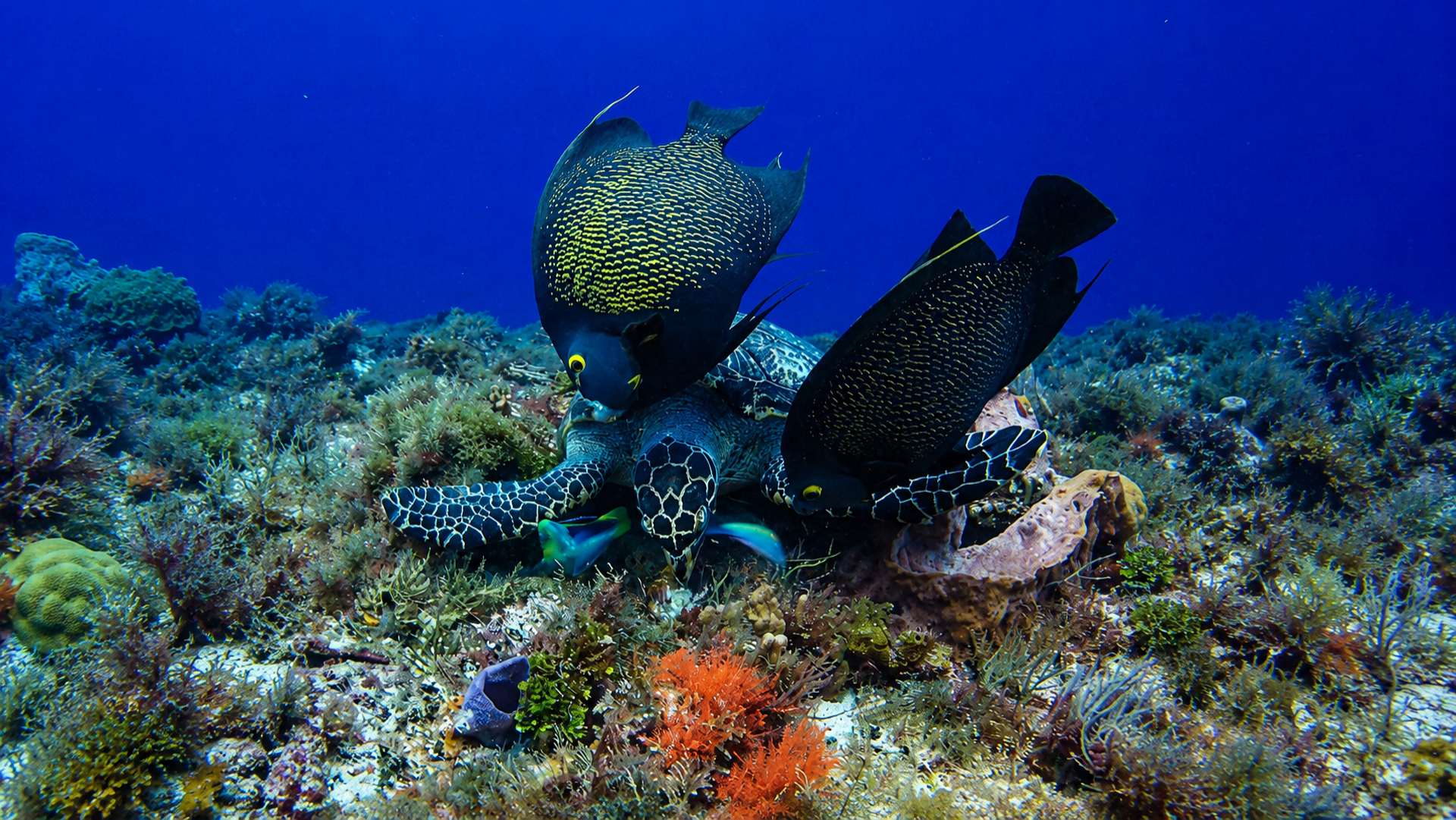
Natural behavior photographed from a respectful distance.
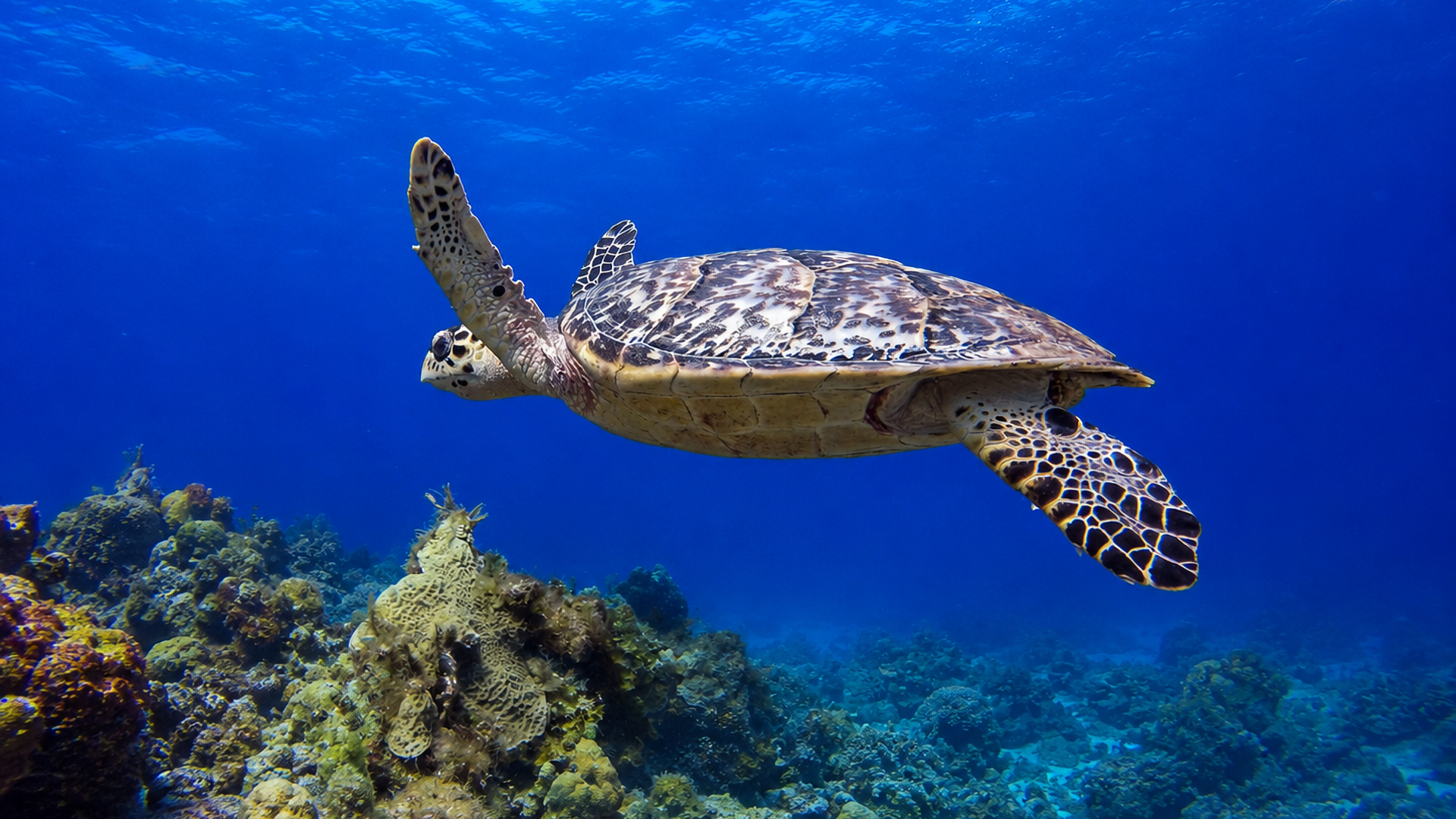
The classic glide through clear Cozumel blue.
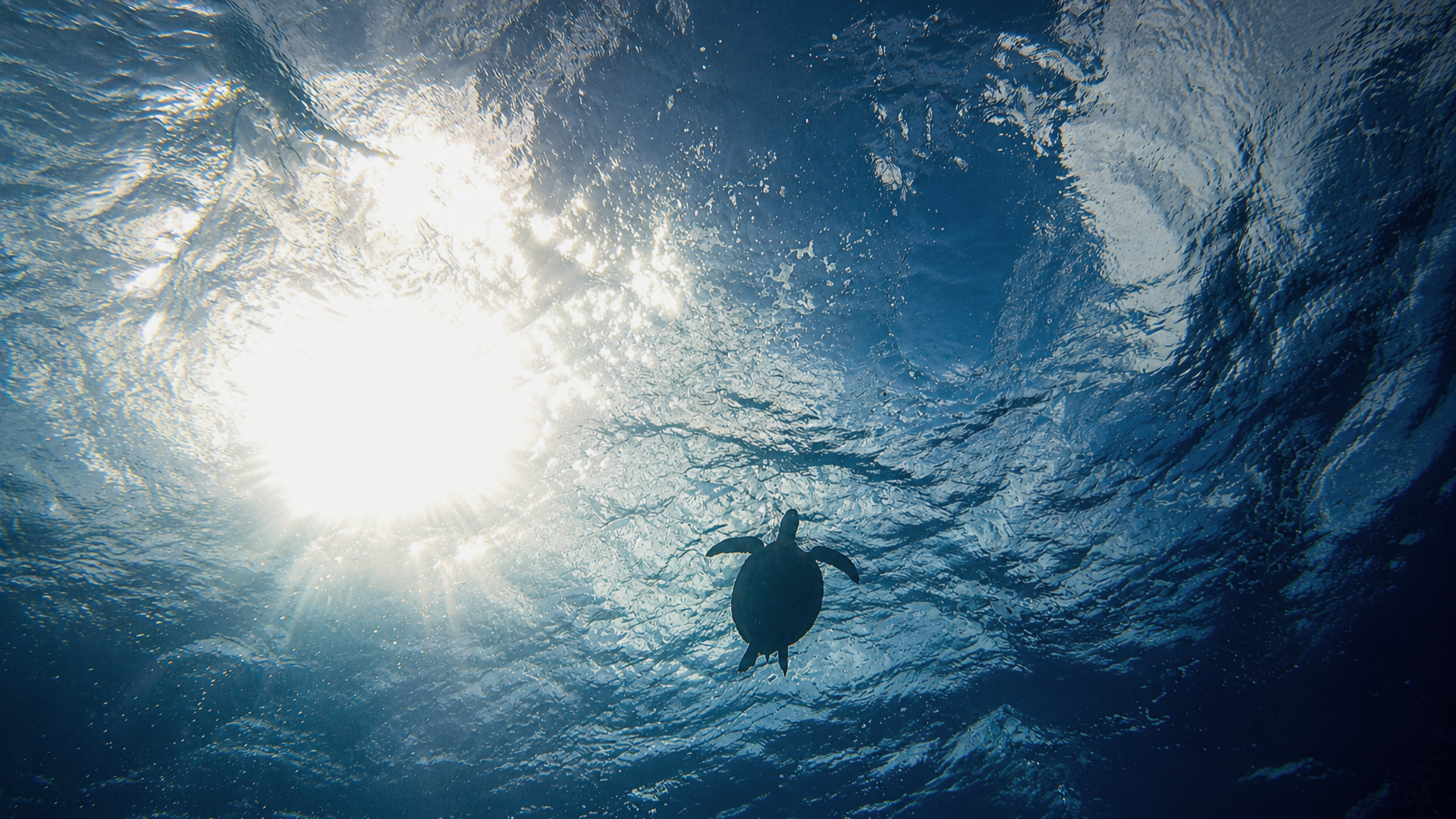
Even turtles need a break as they rise to the surface for a breath.
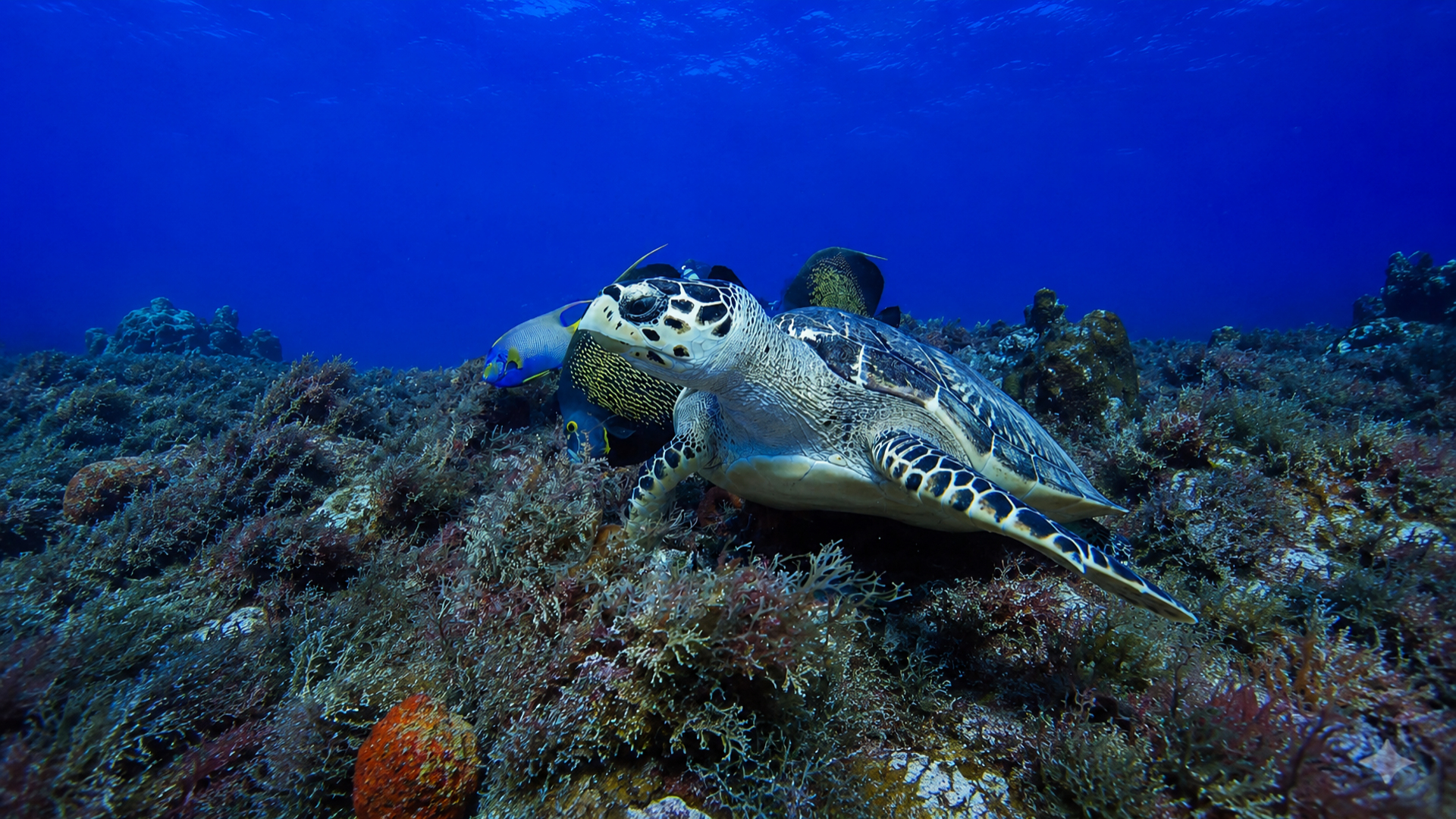
A close image that still respects the animal’s space.
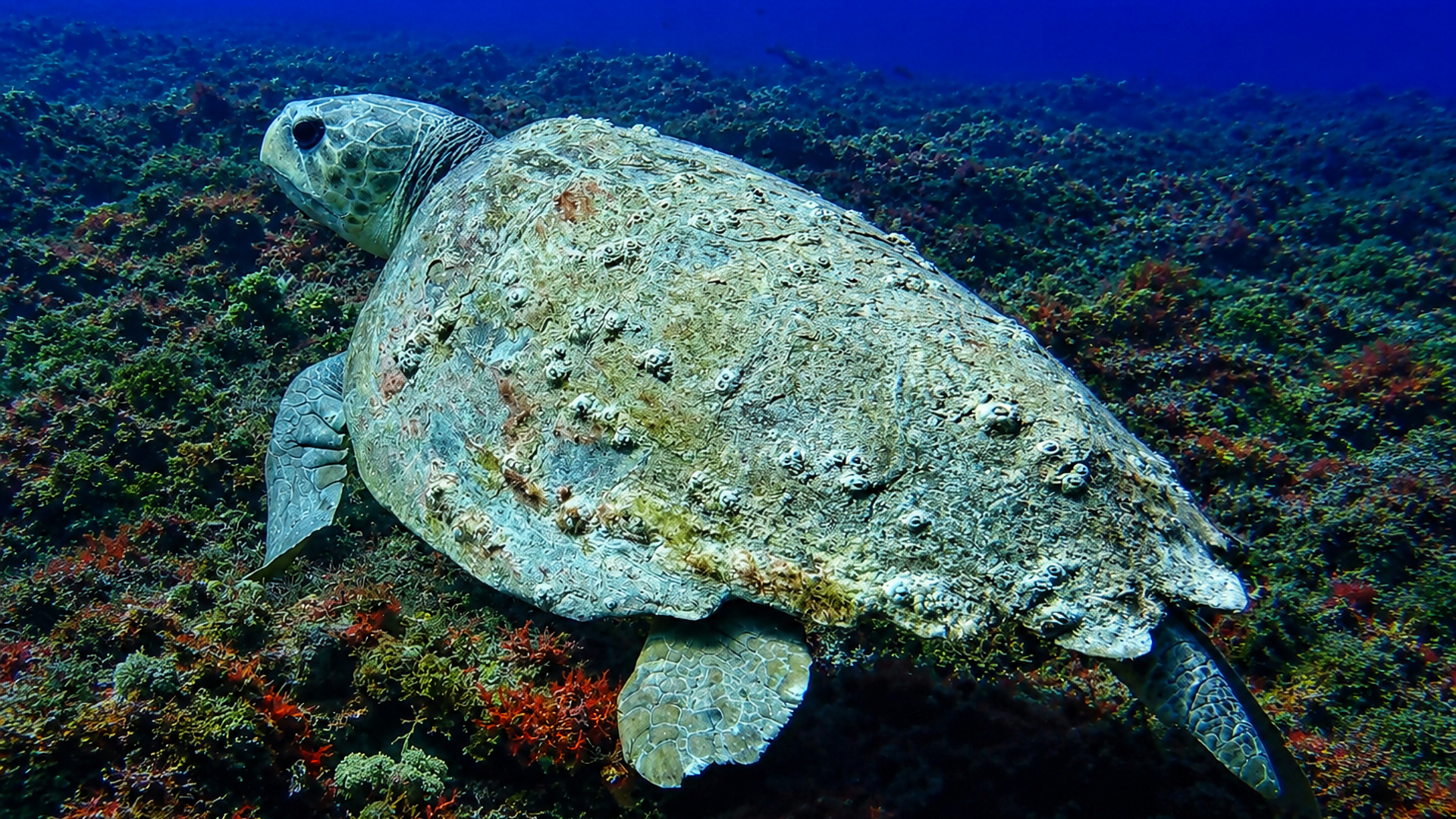
A turtle shown as part of the living reef.
This injured turtle is a reminder that sea turtles face serious pressure from boats, plastic, fishing line, coastal development, and changing ocean conditions.
The best turtle video is not the closest one. It is the one where the animal remains calm, natural, and free to continue its life. Good divers keep distance, control buoyancy, and let the moment unfold.
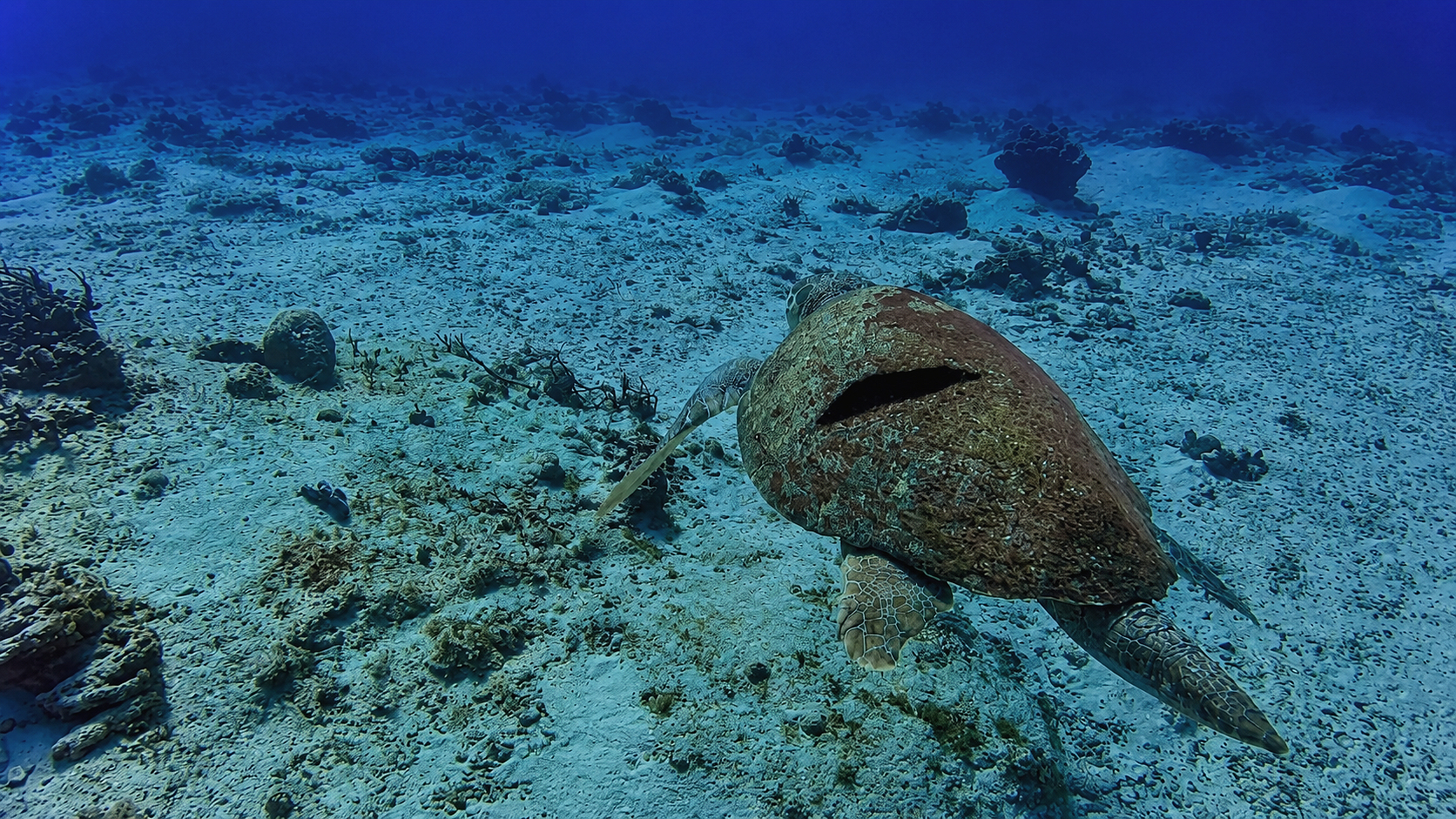
Monthly Cozumel Turtle Feature
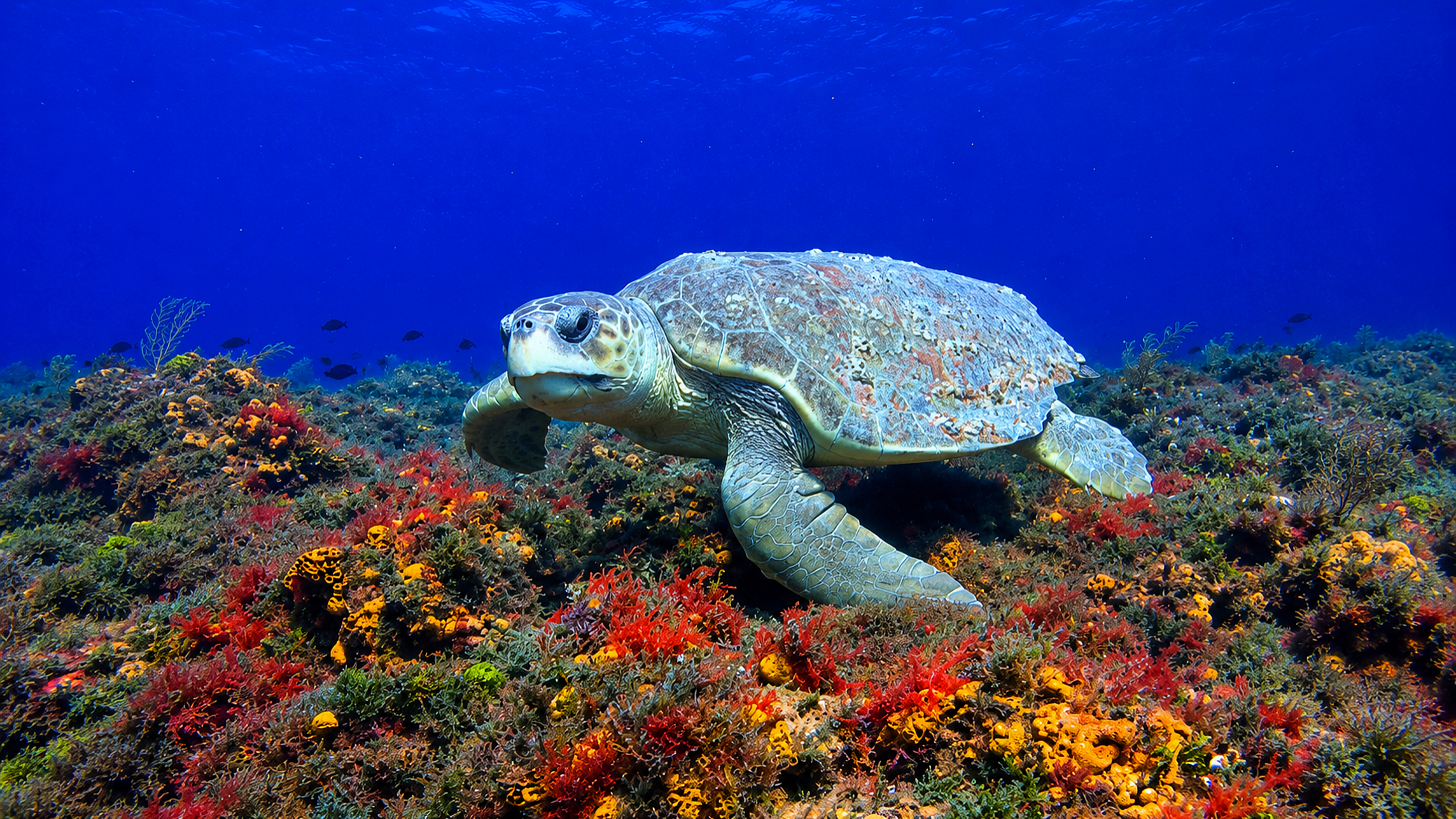
Photos here were taken with my GoPro while diving Cozumel reefs. Each month, this space highlights a different turtle encounter from the blue water of Cozumel.
If you Dive the Blue of Cozumel, you could experience moments like these yourself - quiet, natural turtle encounters where the best view comes from patience, respect, and letting the animal choose its own path.
Every reef has another story waiting to be discovered.