Featured Destination

Paso del Cedral

A living reef where the greatest discoveries often begin when you stop rushing and start looking.

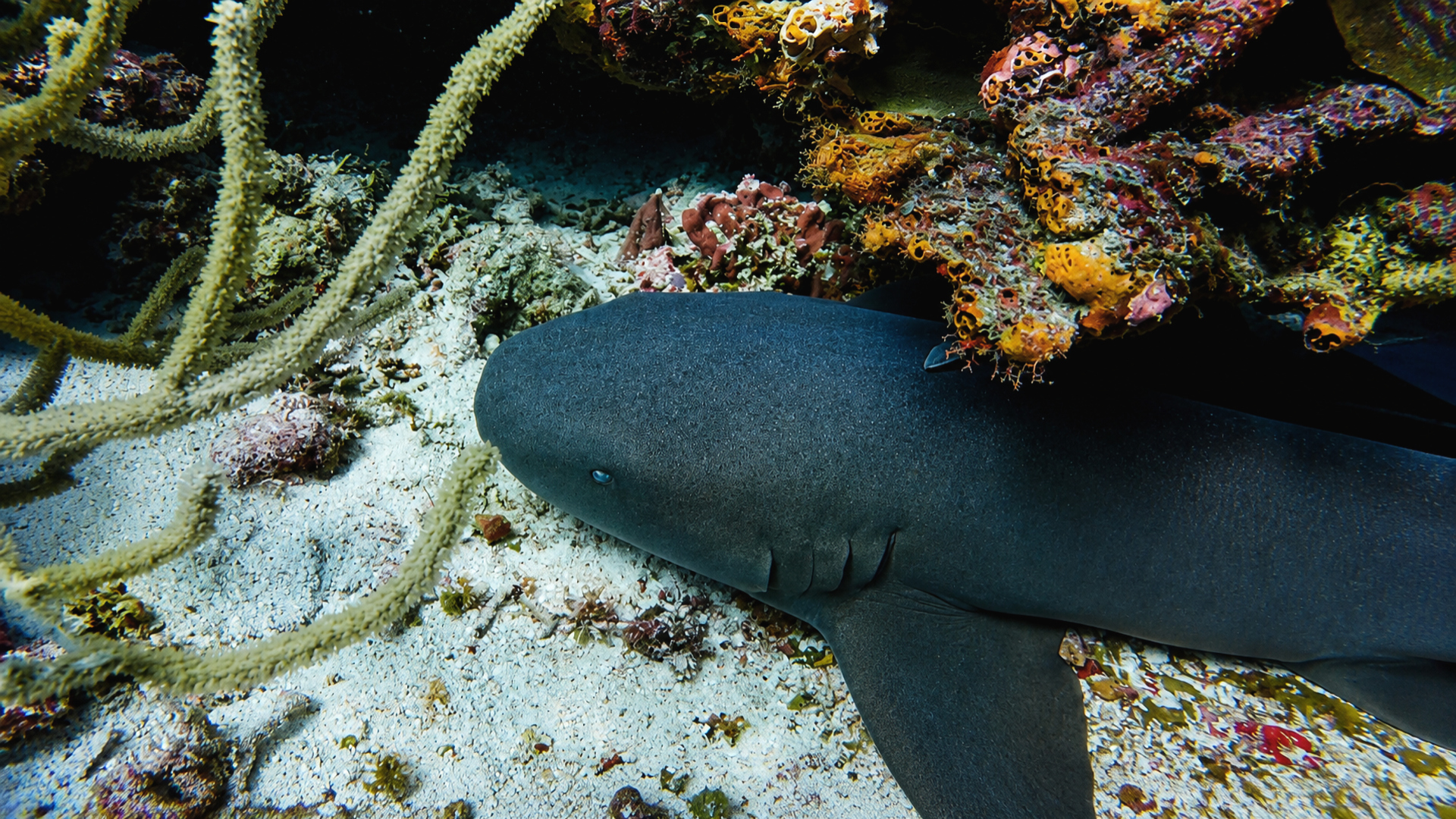
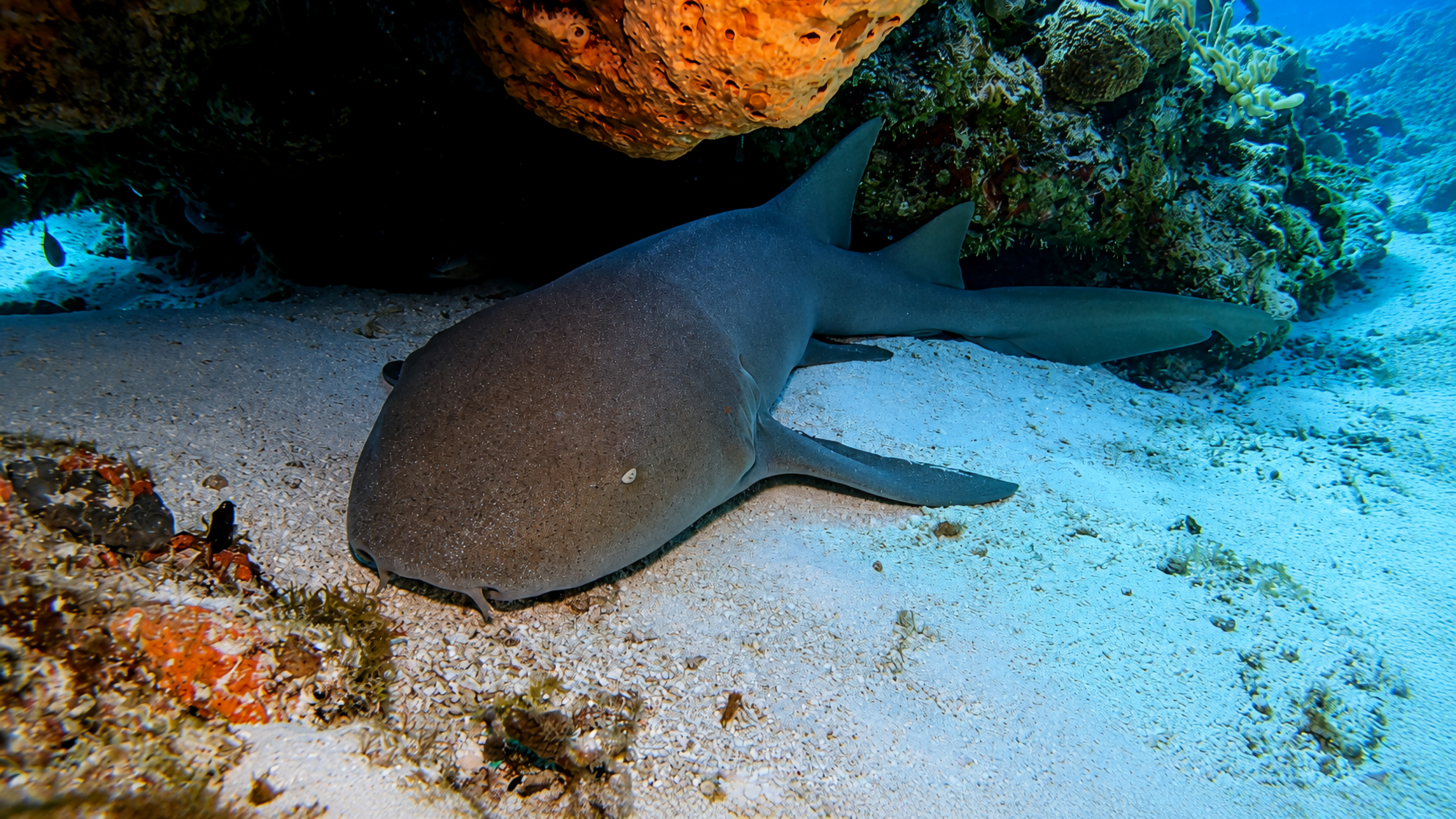
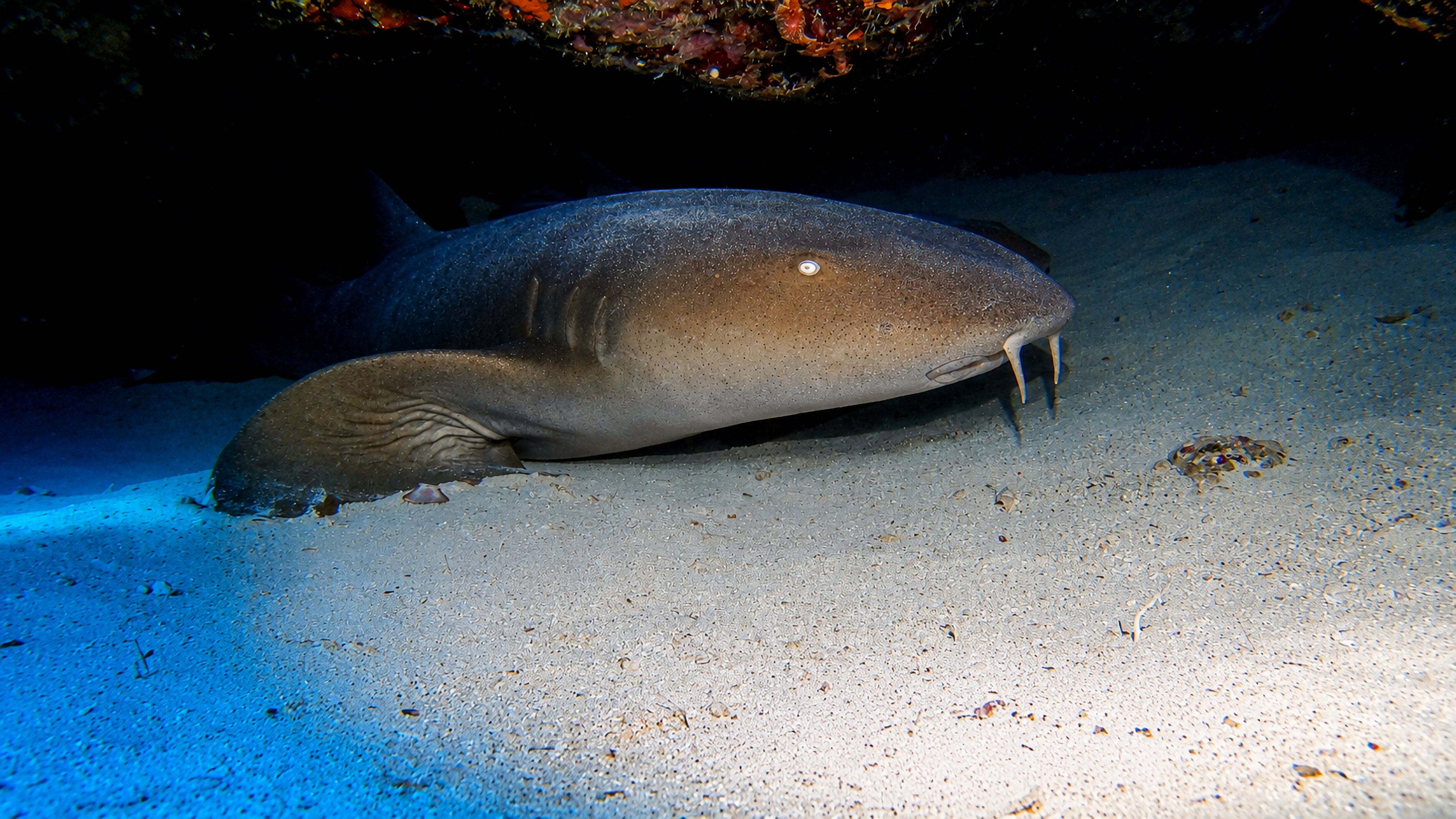
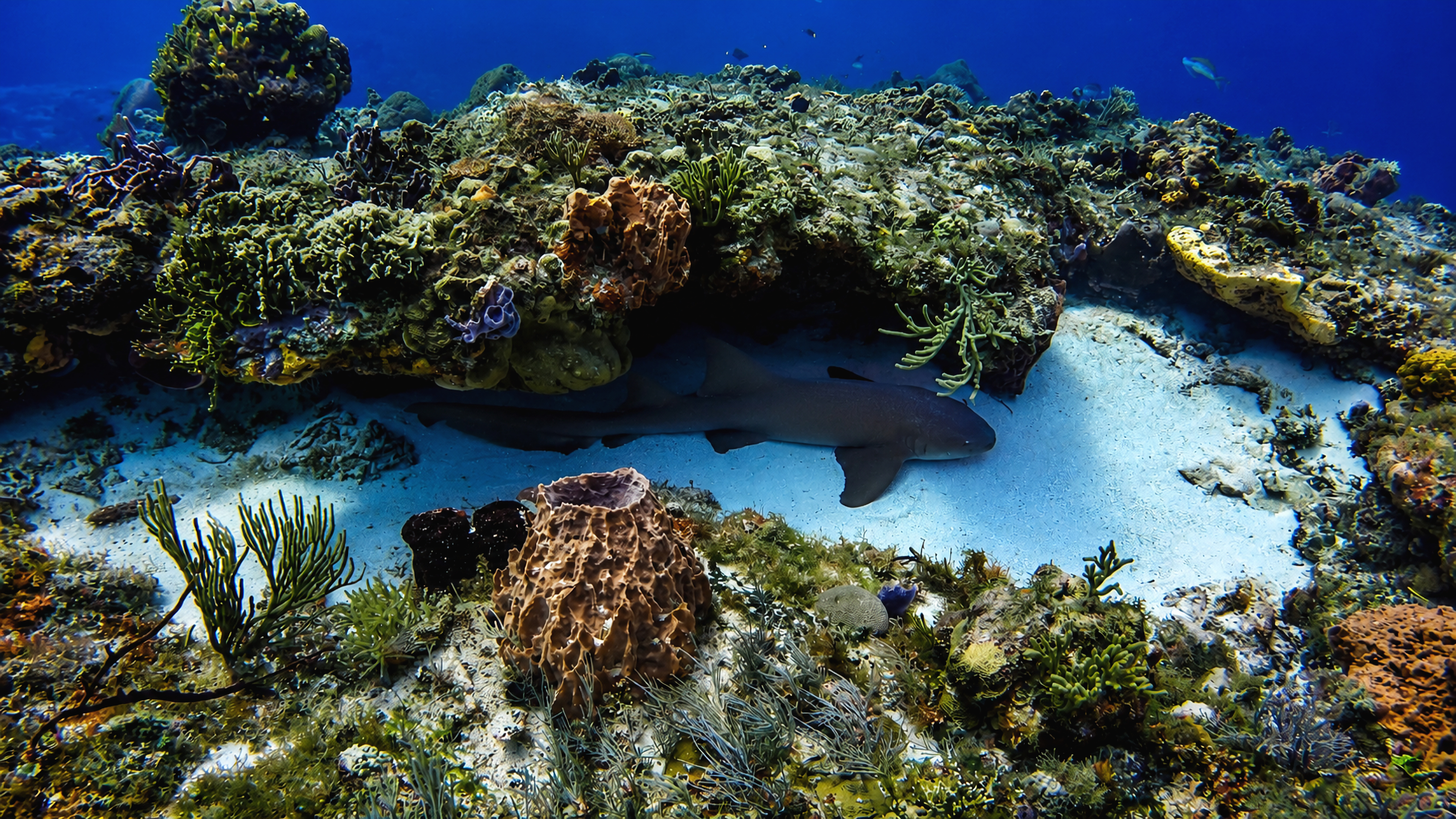
Nurse shark resting beneath a coral ledge at Paso del Cedral
Cedral rewards the diver who notices the quiet spaces beneath the reef.
The Living Reef

A dive that teaches you how to see... the sea.

Paso del Cedral is not about racing from one attraction to the next. Its character comes from a broad reef alive with movement, hiding places, and changing encounters.

Move with the current, settle into good buoyancy, and let the reef come to you. The longer you look, the more the dive reveals.
Find the Rhythm

Drift slowly enough to notice.

Cedral can feel easy, but it asks for control. The best experience comes from staying relaxed, maintaining position, and looking into the reef rather than only across it.

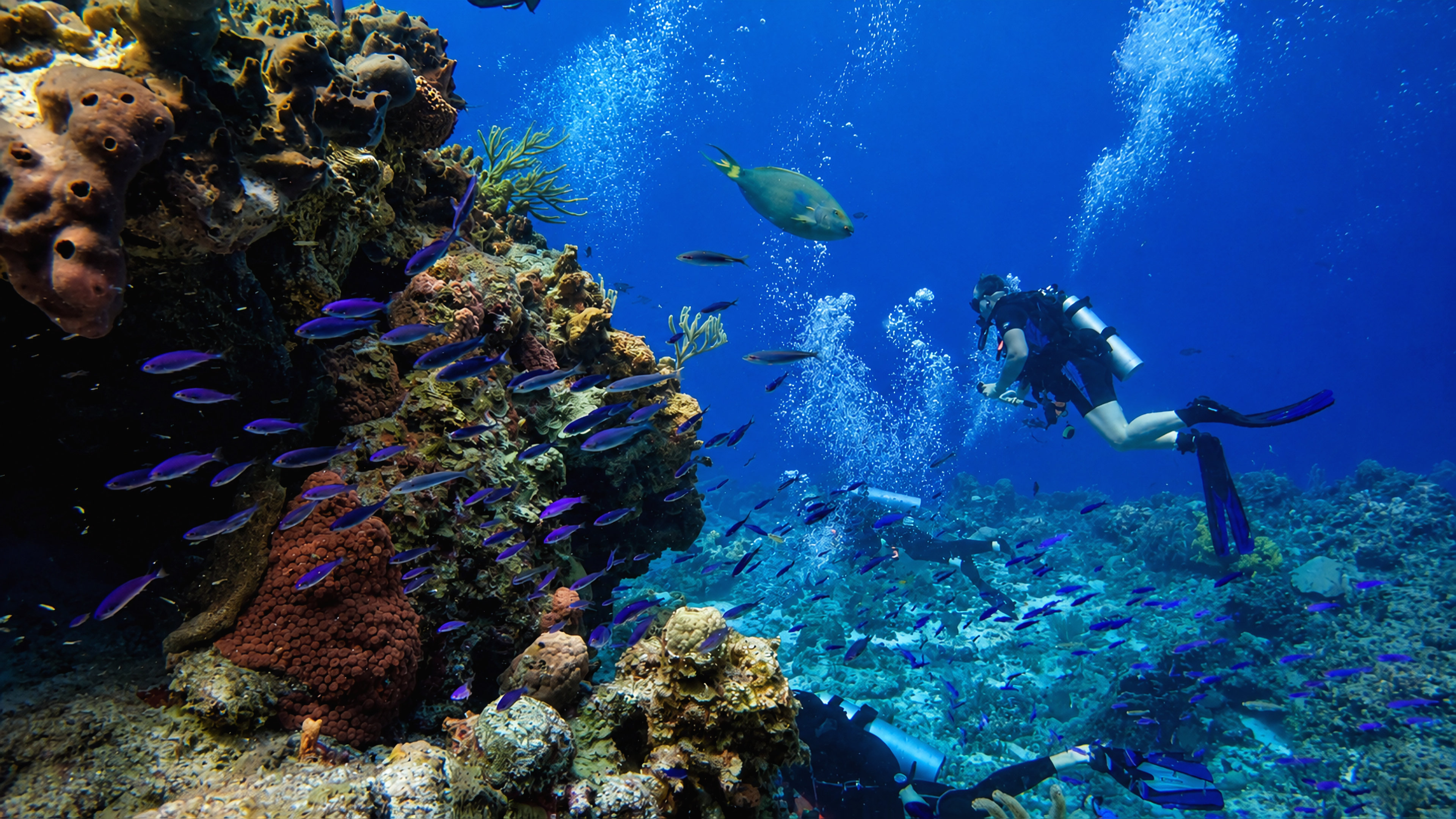
Divers moving calmly beside the reef at Paso del Cedral
A calm pace gives divers time to read the reef.
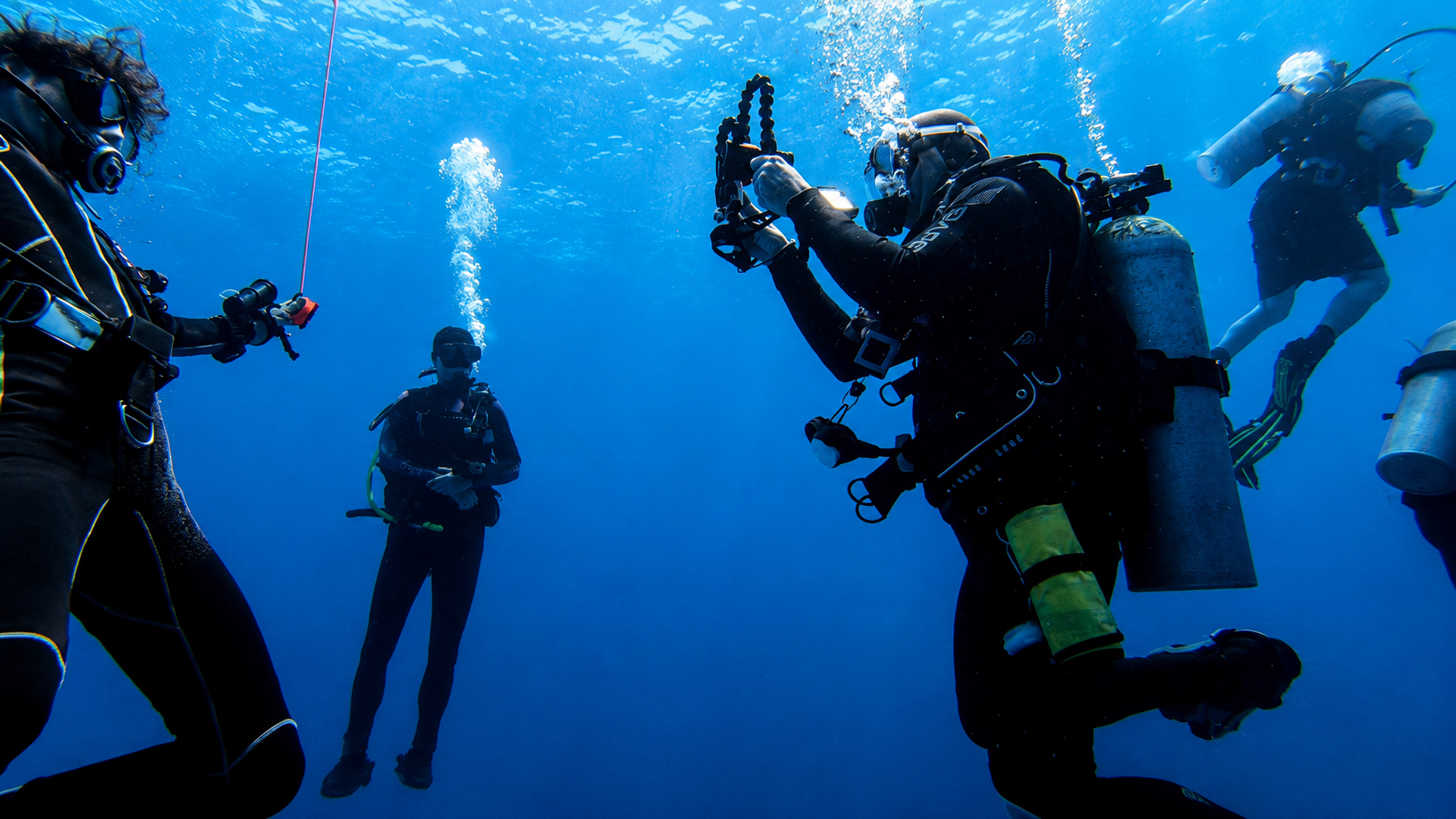
Divers pausing together in clear blue water
Good spacing and steady buoyancy make observation easier.
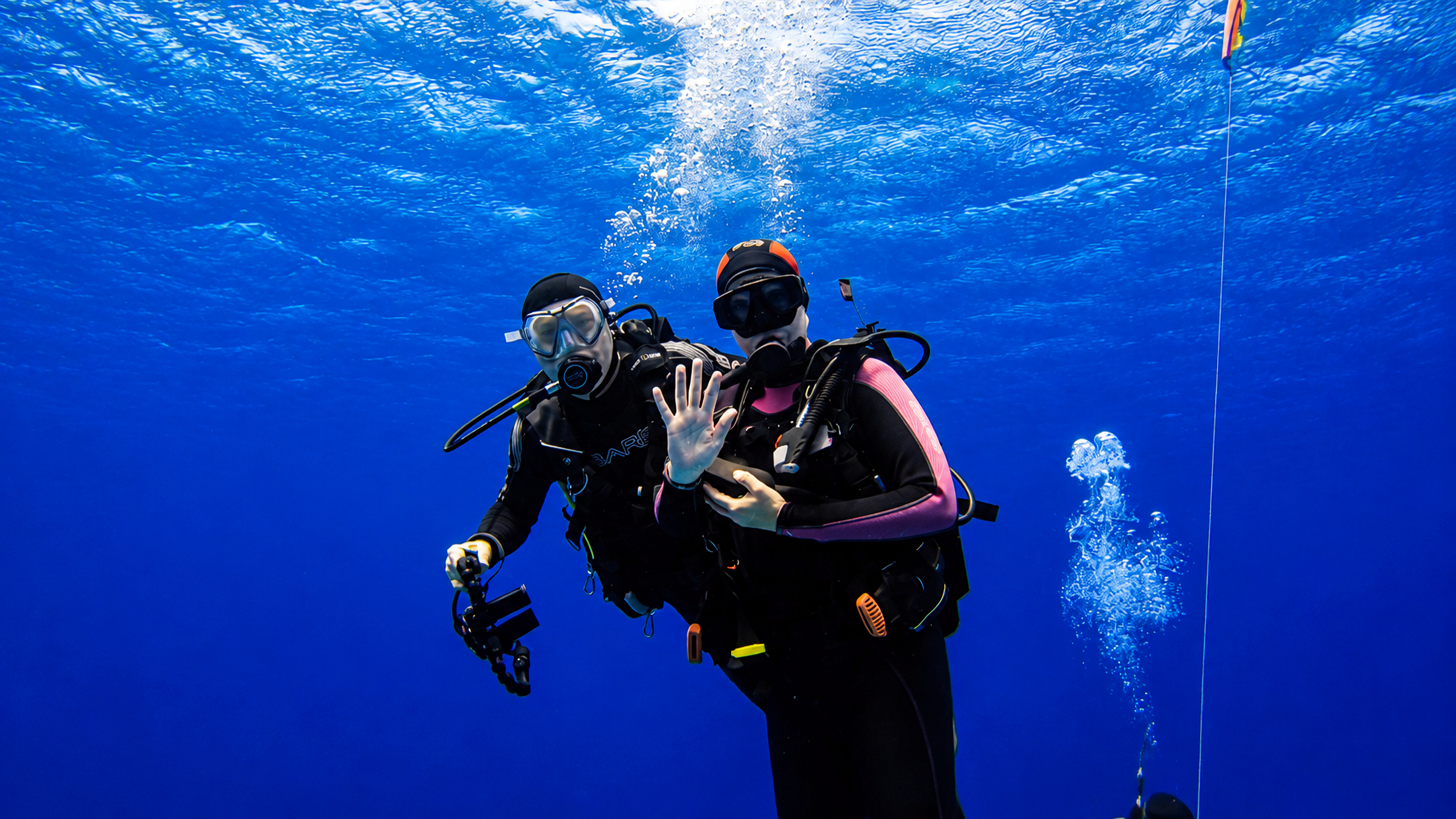
Two divers together during a safety stop in Cozumel
The dive ends with the same calm control it began with.
Encounters

Large animals, small details, a linked reef.

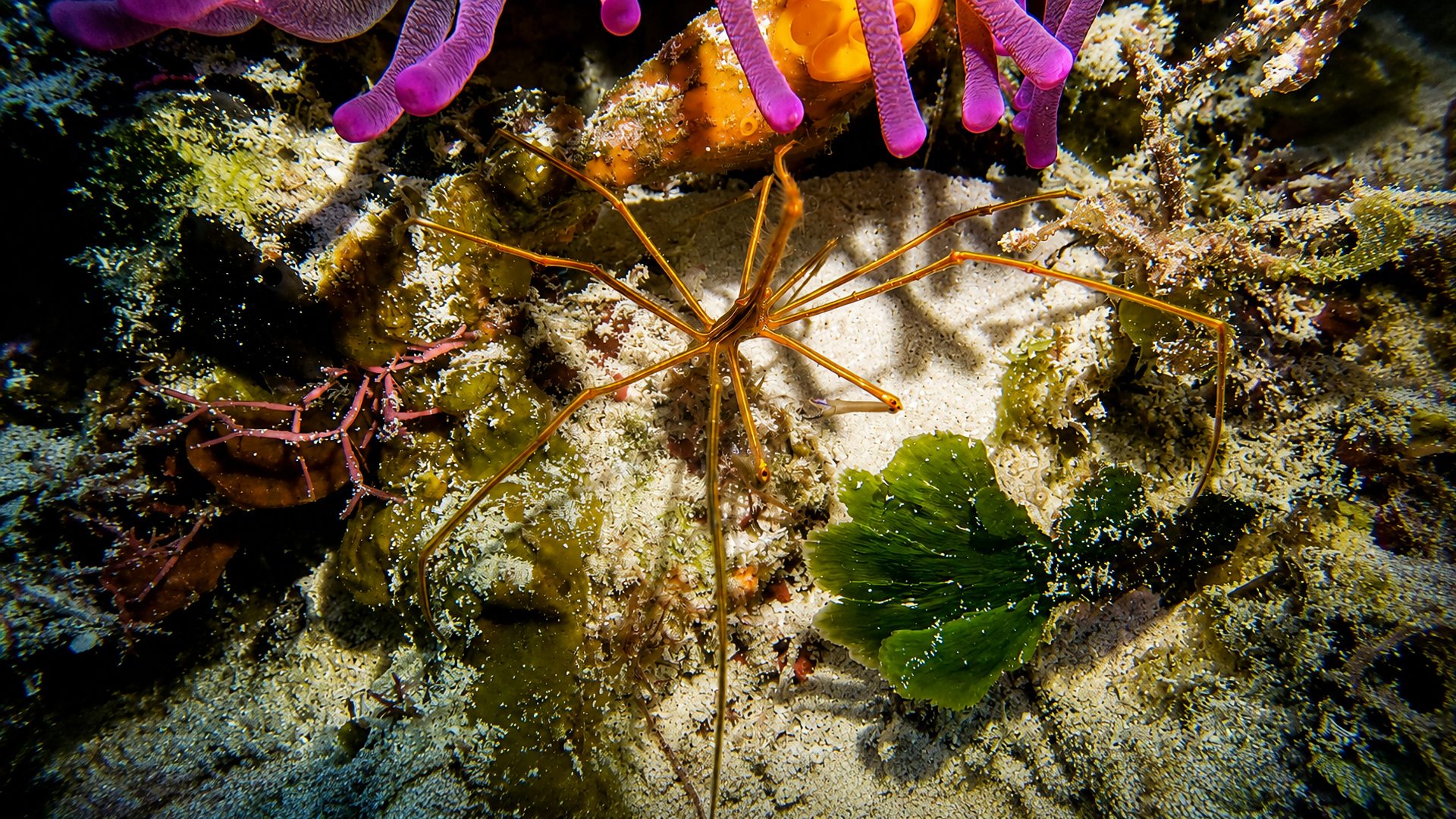
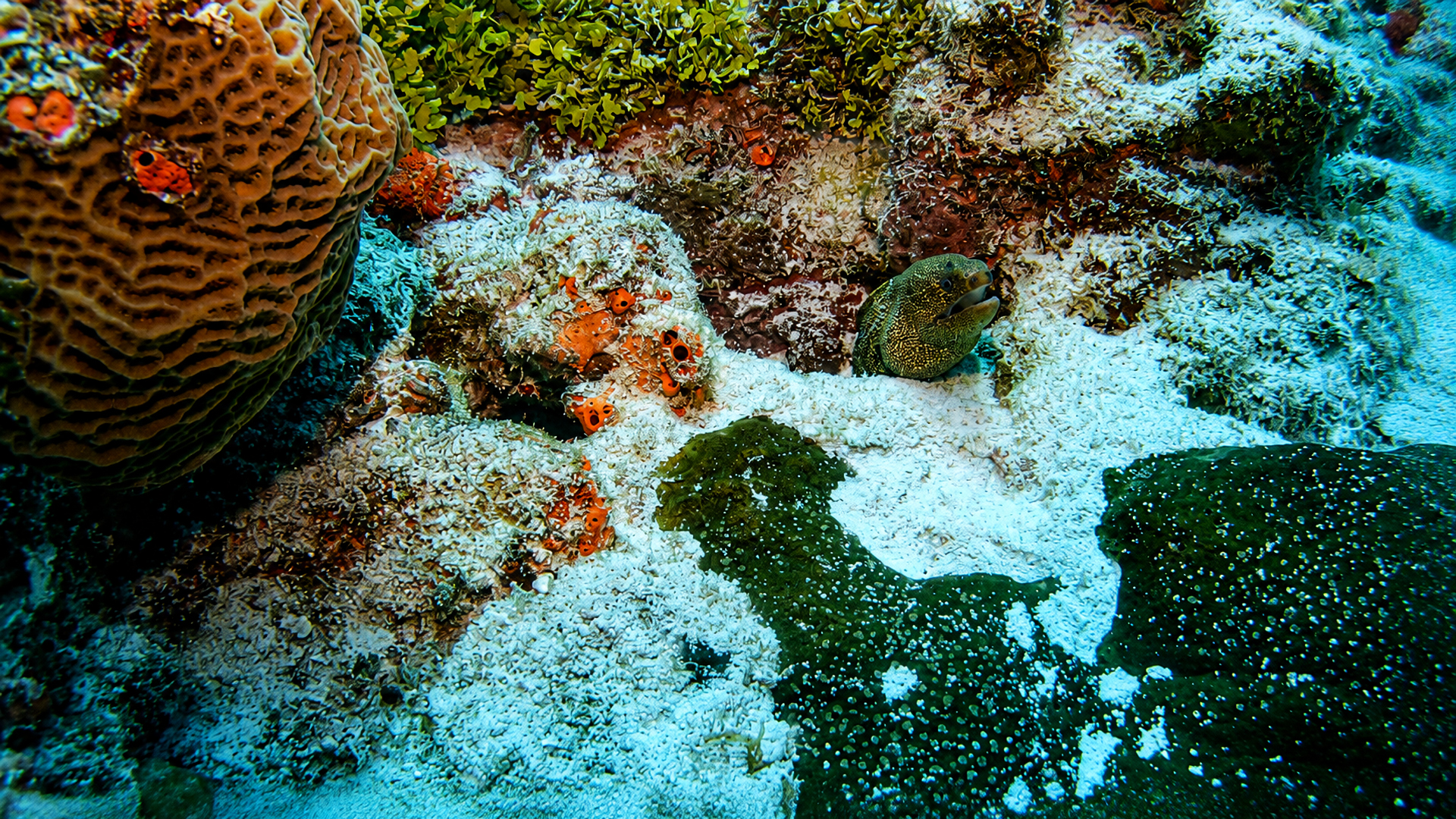
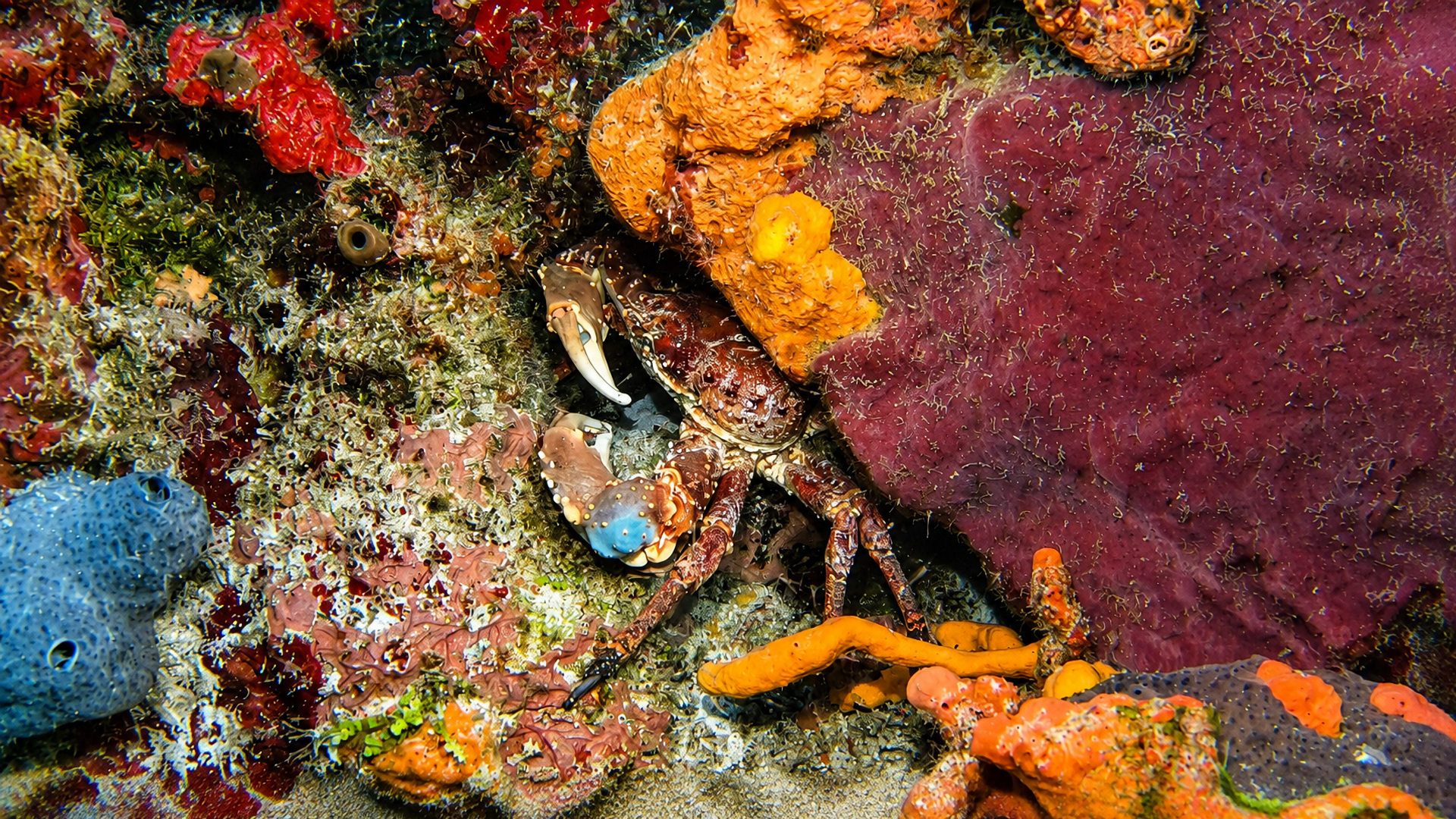
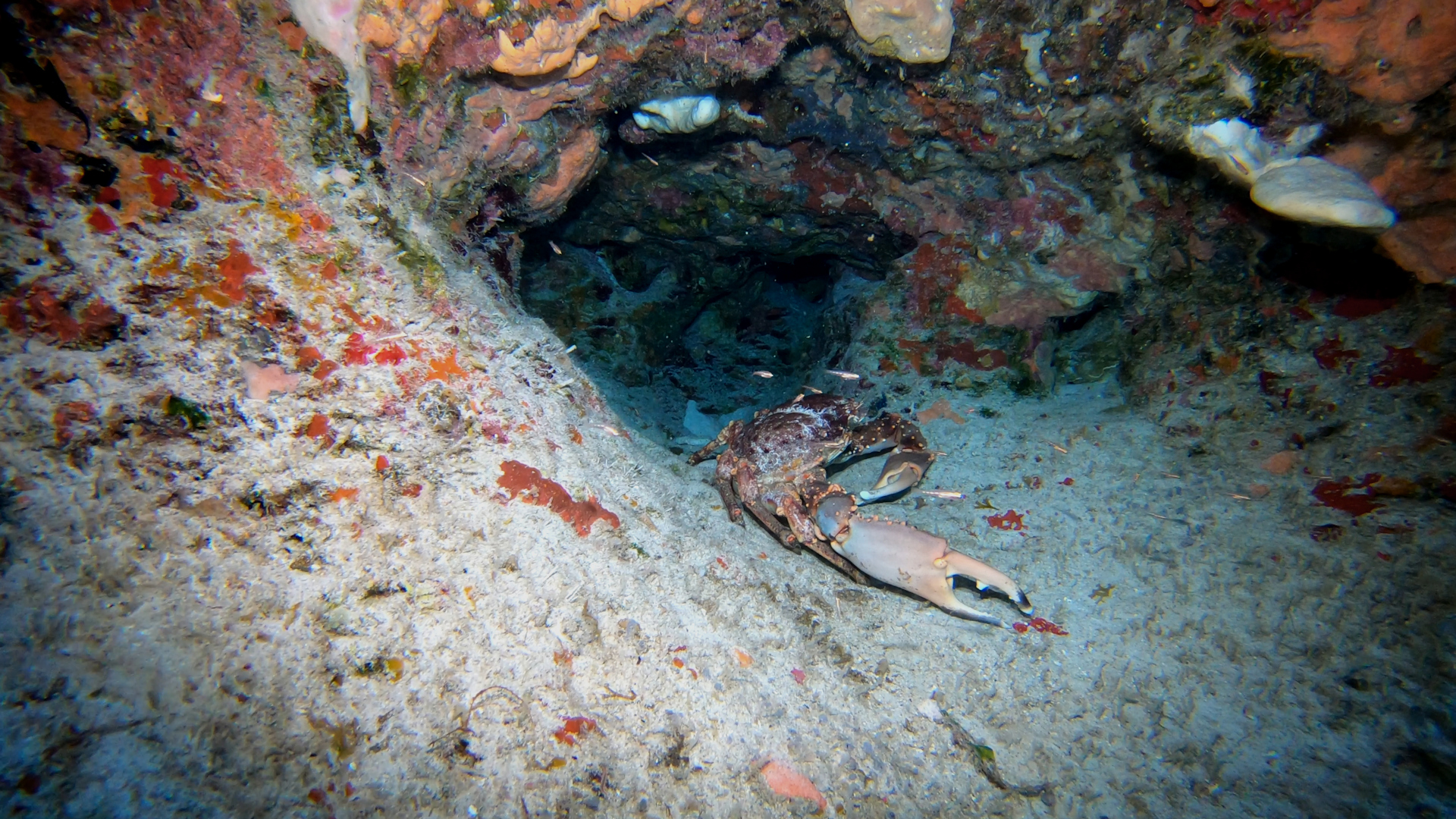
Turtles, nurse sharks, barracuda, morays, angelfish, trunkfish, lobsters, crabs, and reef fish may all appear on the same dive.

The variety is what makes Cedral memorable. Every coral head can hold a different story, and no two passes over the reef feel exactly the same.

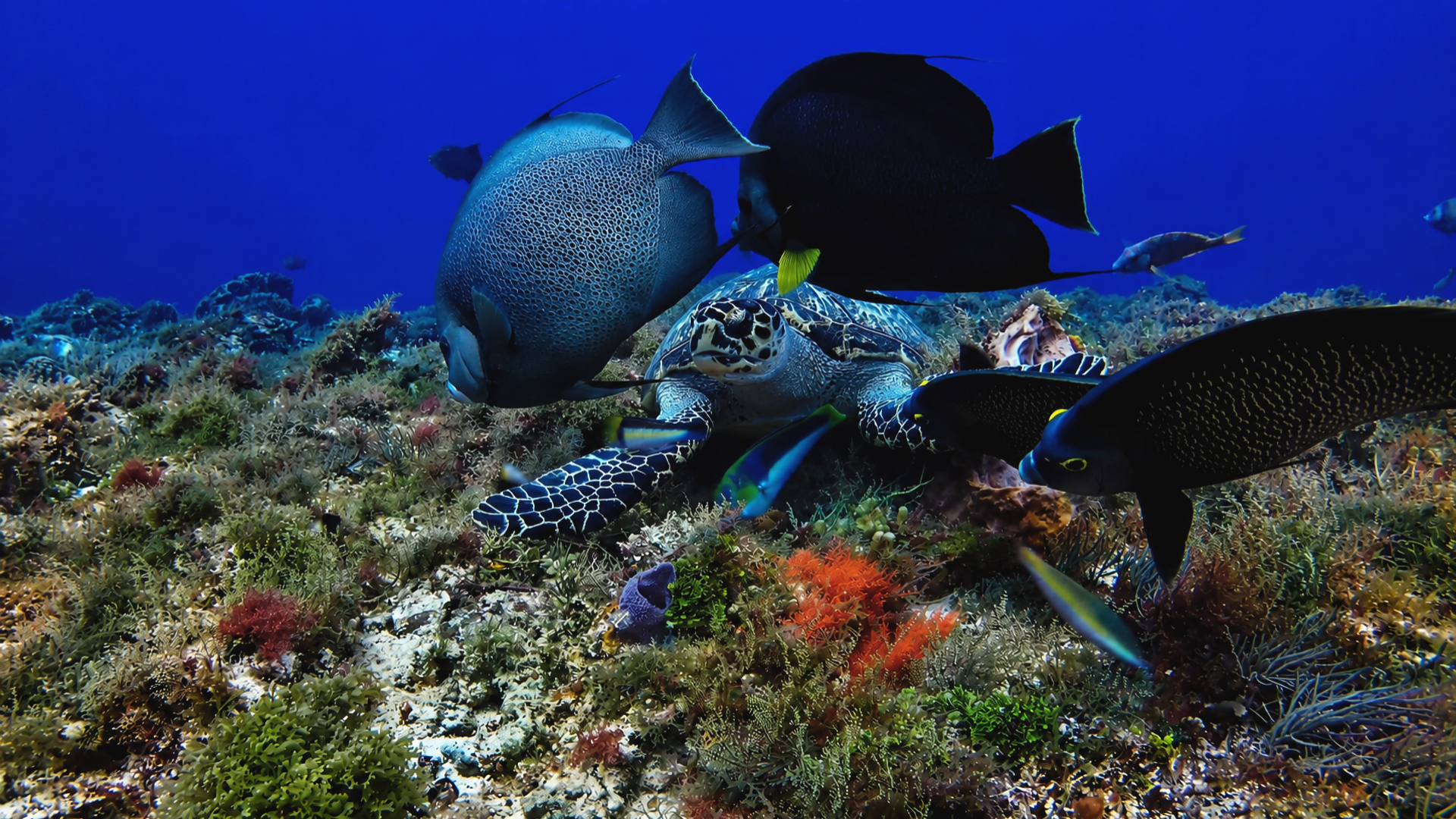
Sea turtle surrounded by angelfish and reef fish at Paso del Cedral
A single scene can contain several layers of reef life.
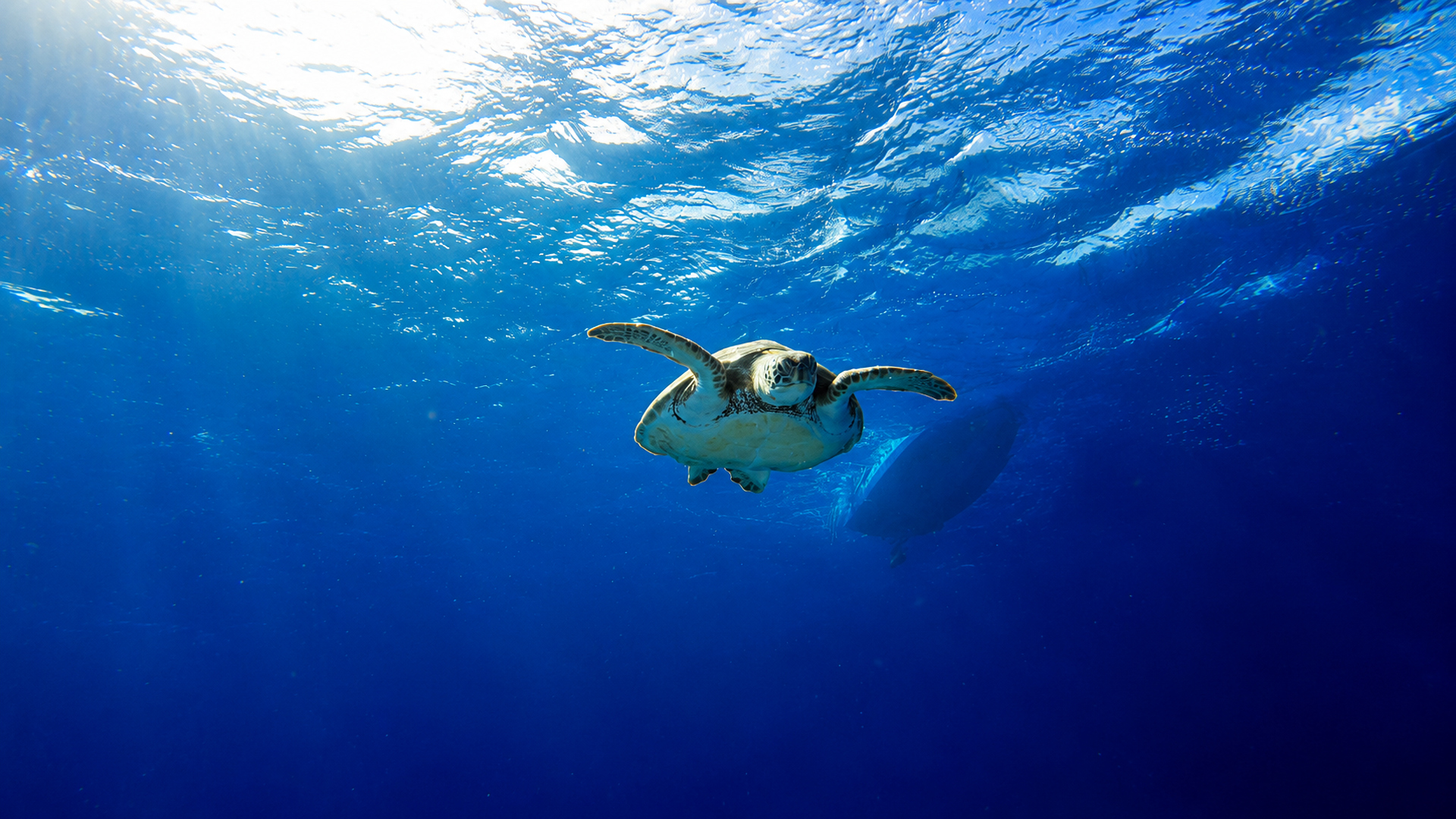
Sea turtle swimming through clear blue water near the surface
A turtle returning from a surface breath.
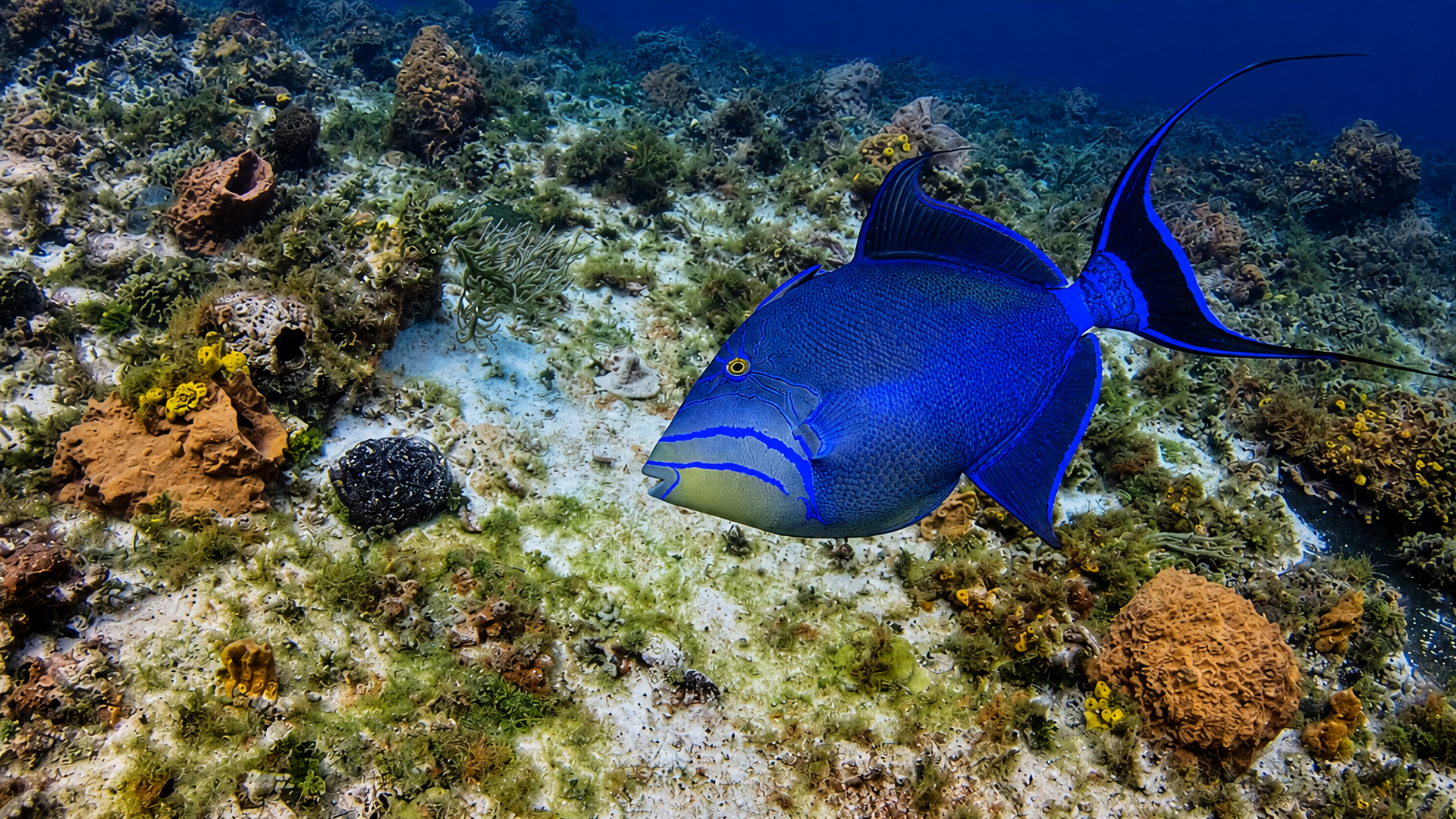
Queen triggerfish swimming above the reef
Bold reef fish add color and personality.
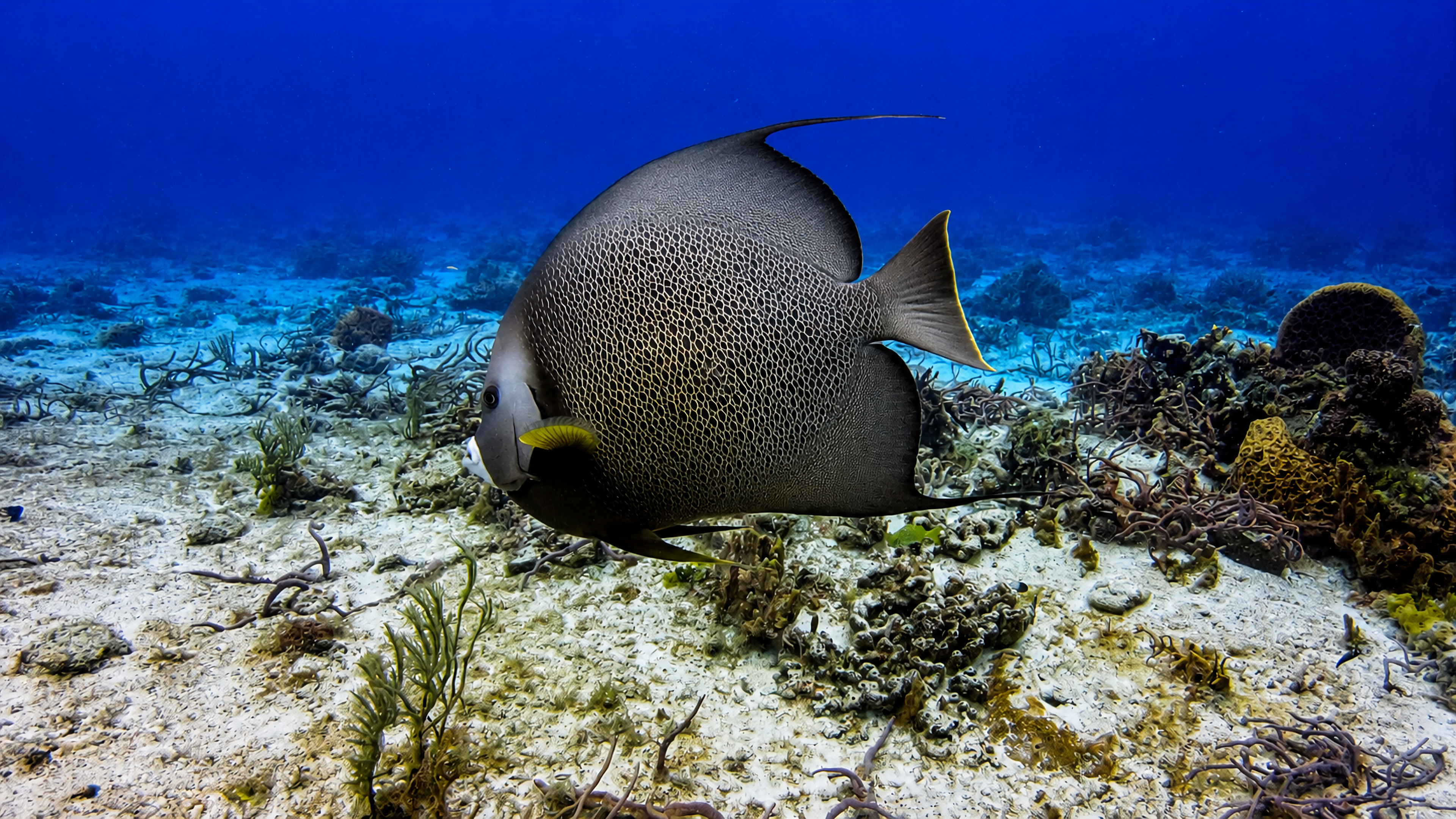
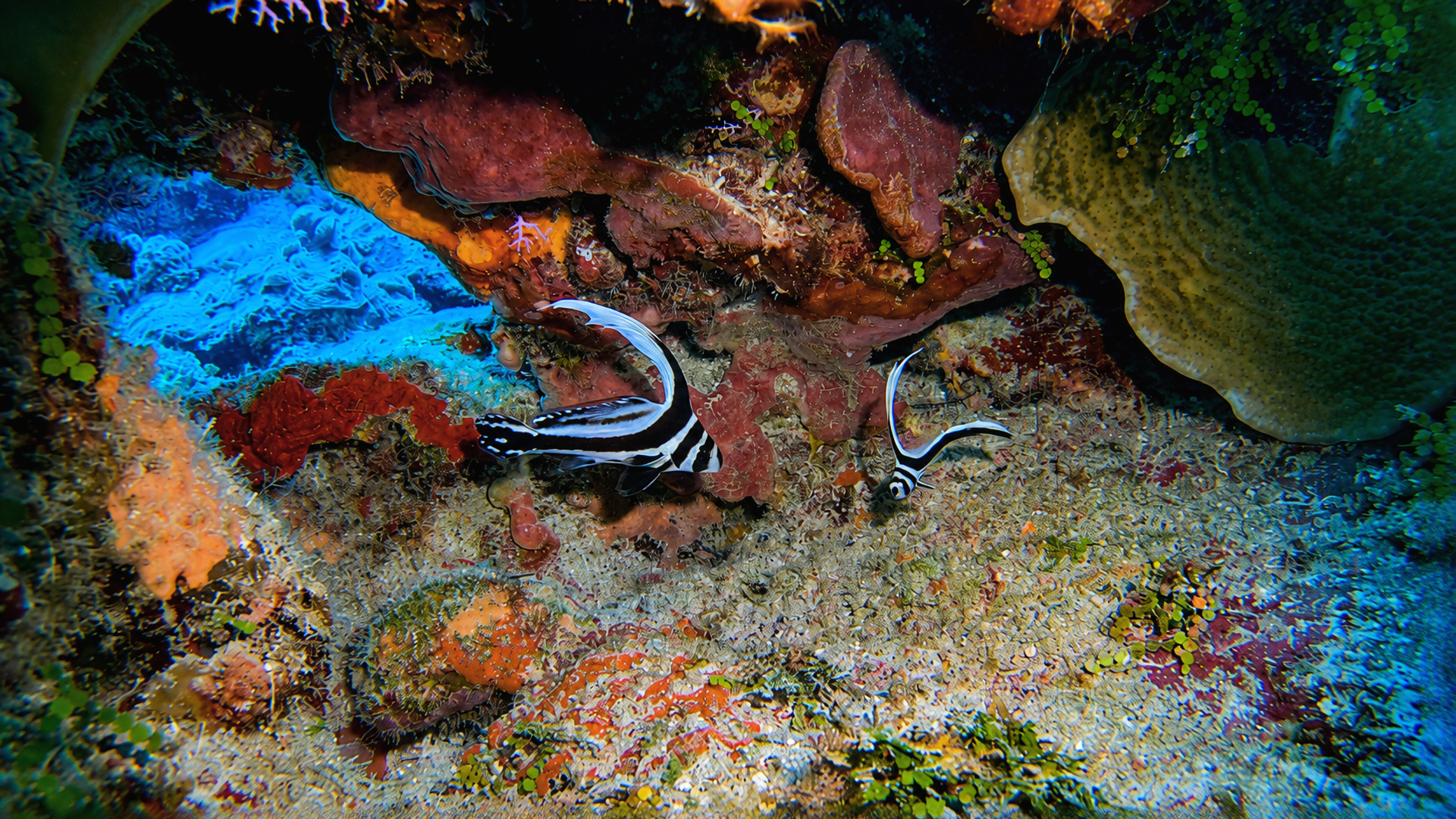
French angelfish crossing the reef at Paso del Cedral
A French angelfish moving over the bottom.
The Hidden Reef

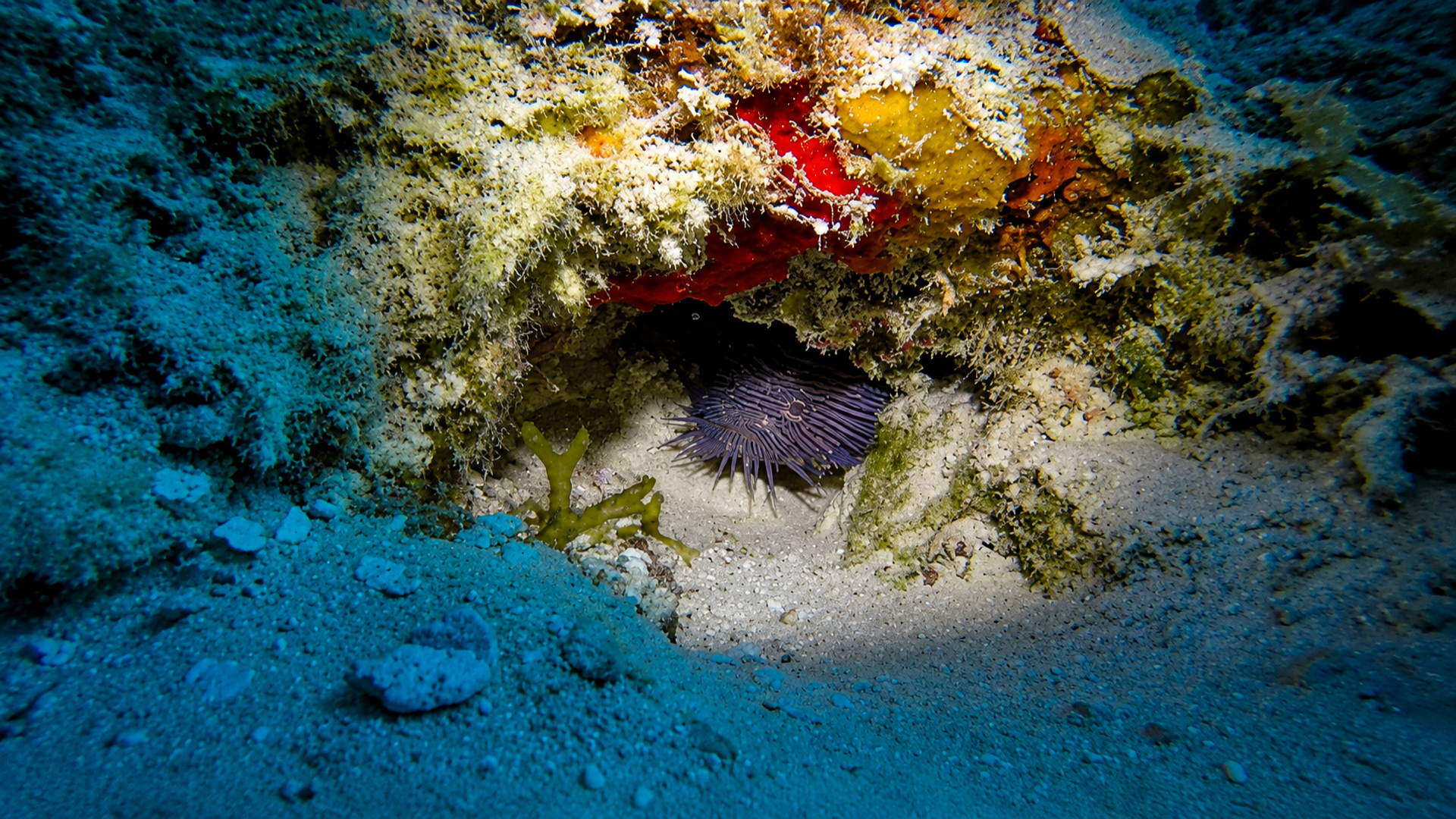
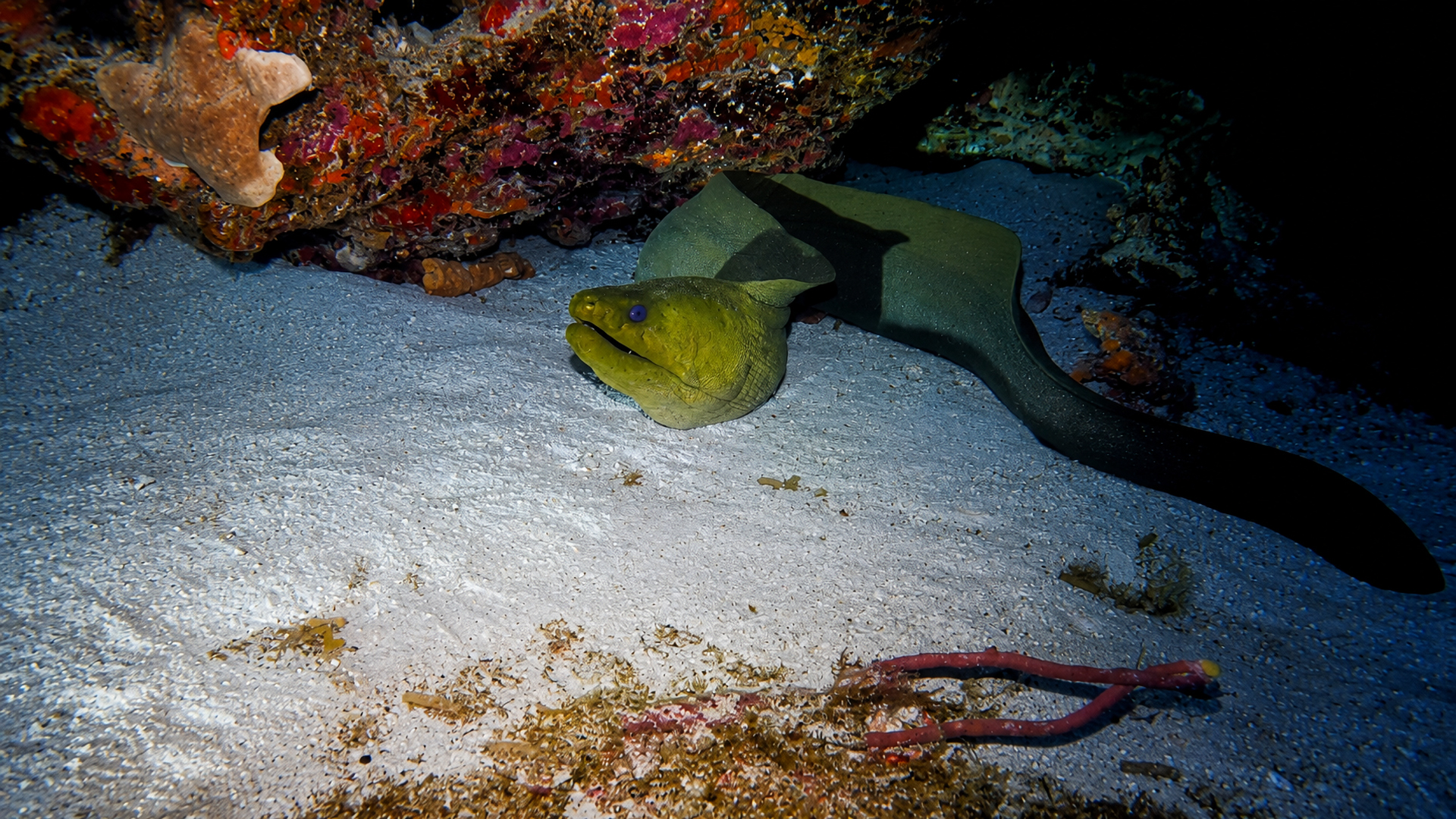
Look under ledges and into the spaces between.

Cedral's best lessons often happen in shadows, crevices, and small pockets of sand where animals rest, feed, or wait unnoticed.

Always Something Moving

The reef is never empty.

Cedral remains alive with passing fish, feeding groups, coral shapes, and small changes in the blue.

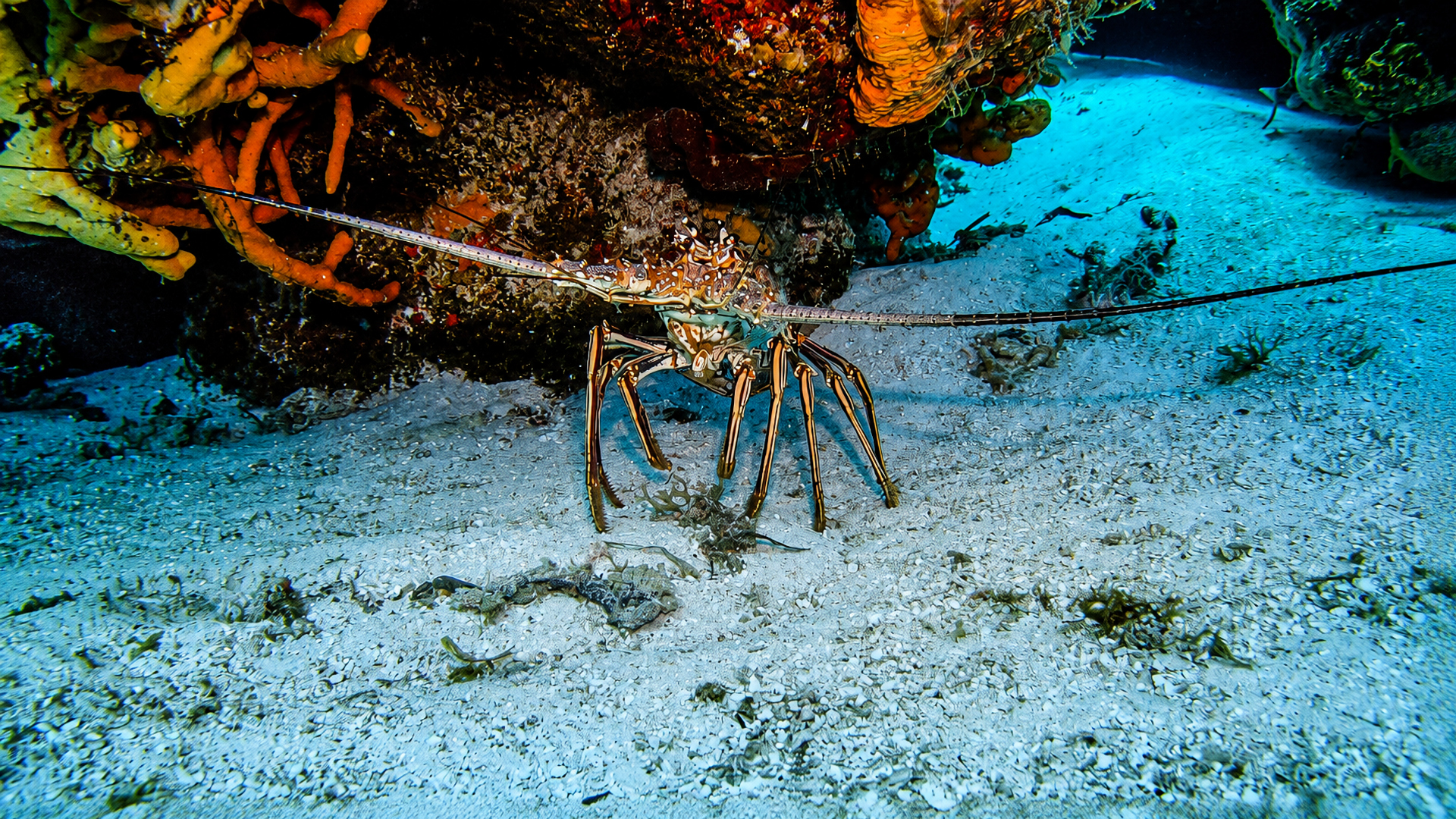
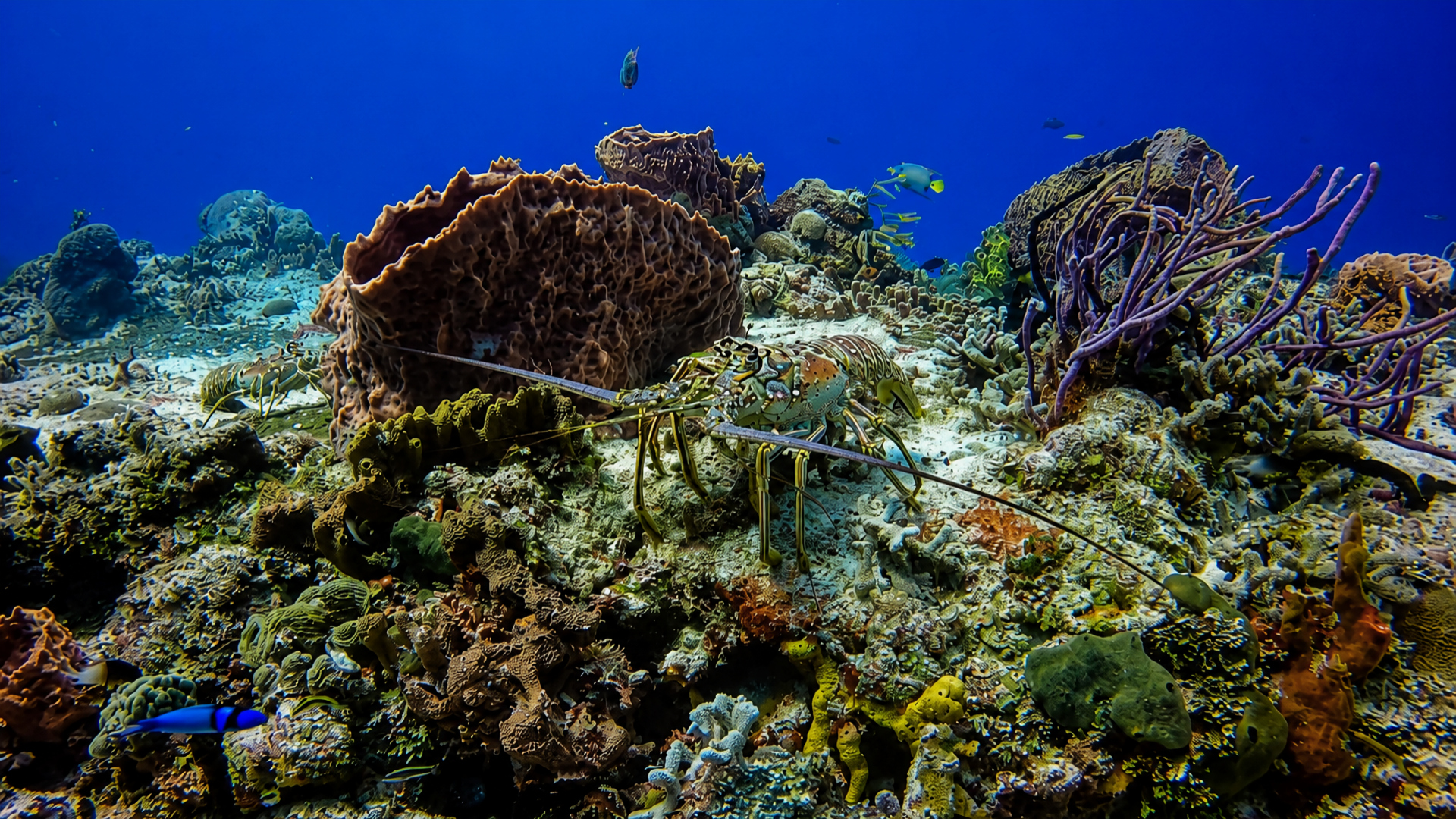
Spiny lobsters among barrel sponges on the reef
Lobsters moving openly across a coral scene.
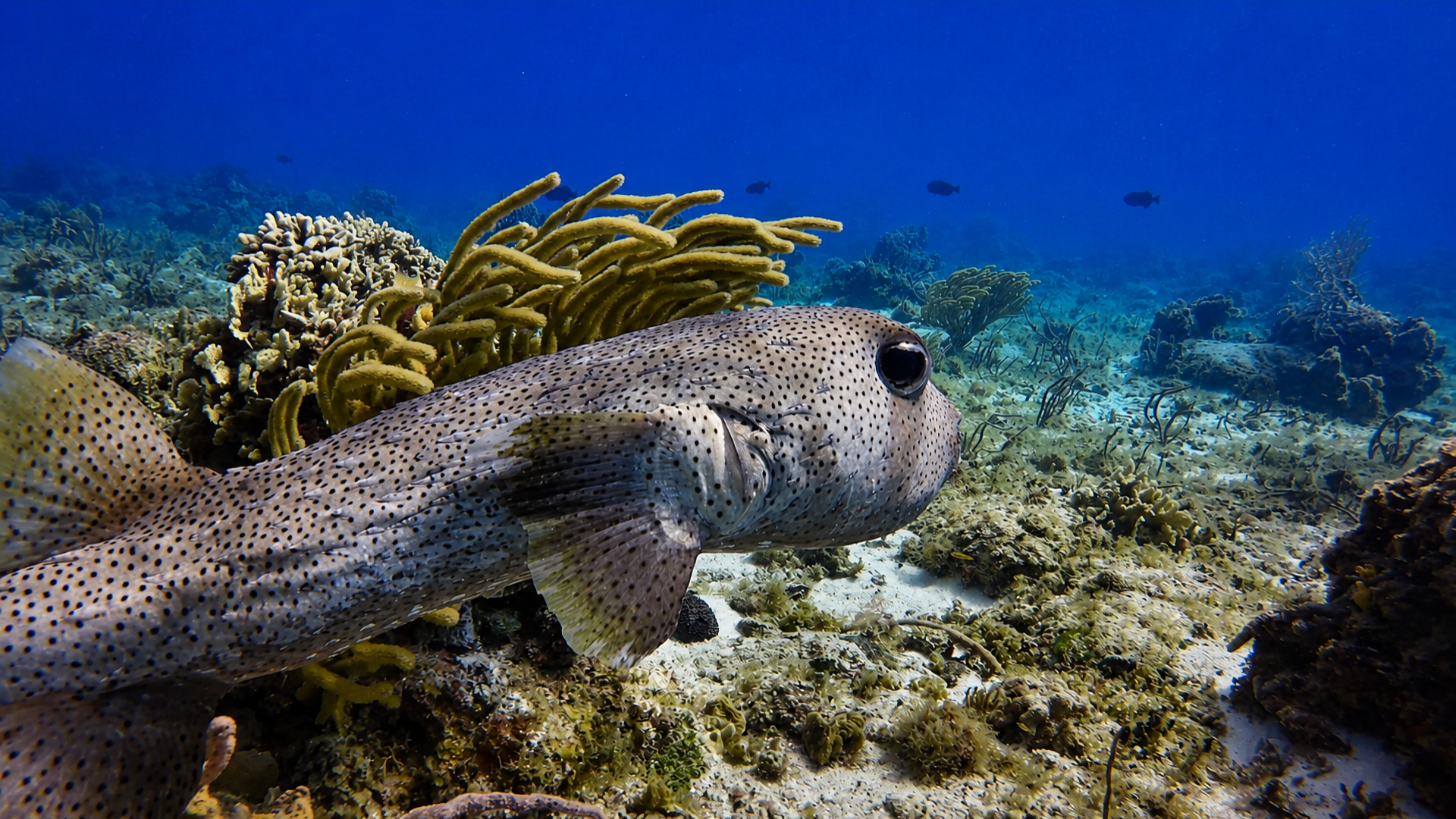
Spotted porcupinefish swimming close to the camera
A porcupinefish gliding past at close range.
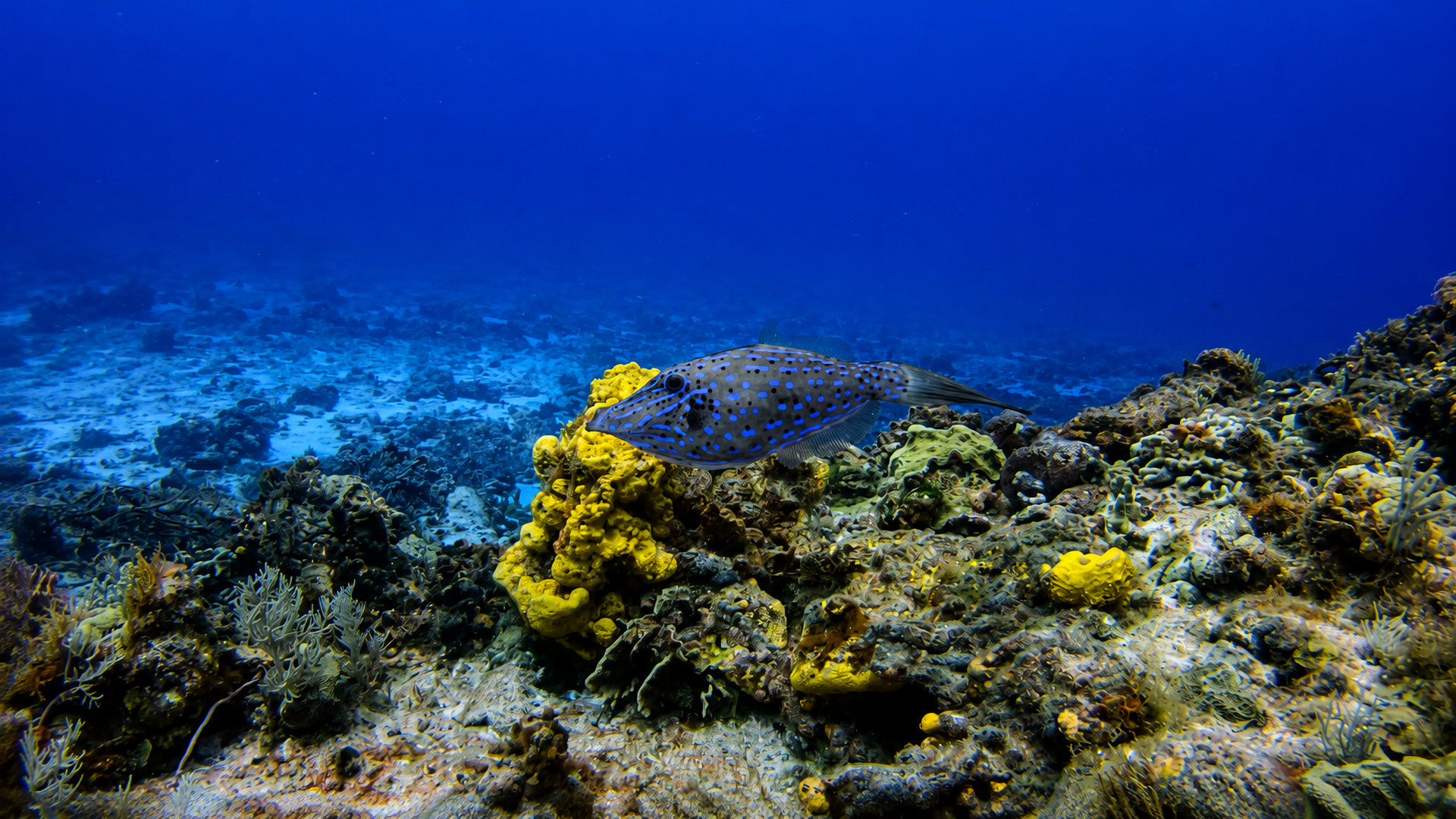
Scrawled filefish above yellow sponge on the reef
A scrawled filefish resting above the coral.
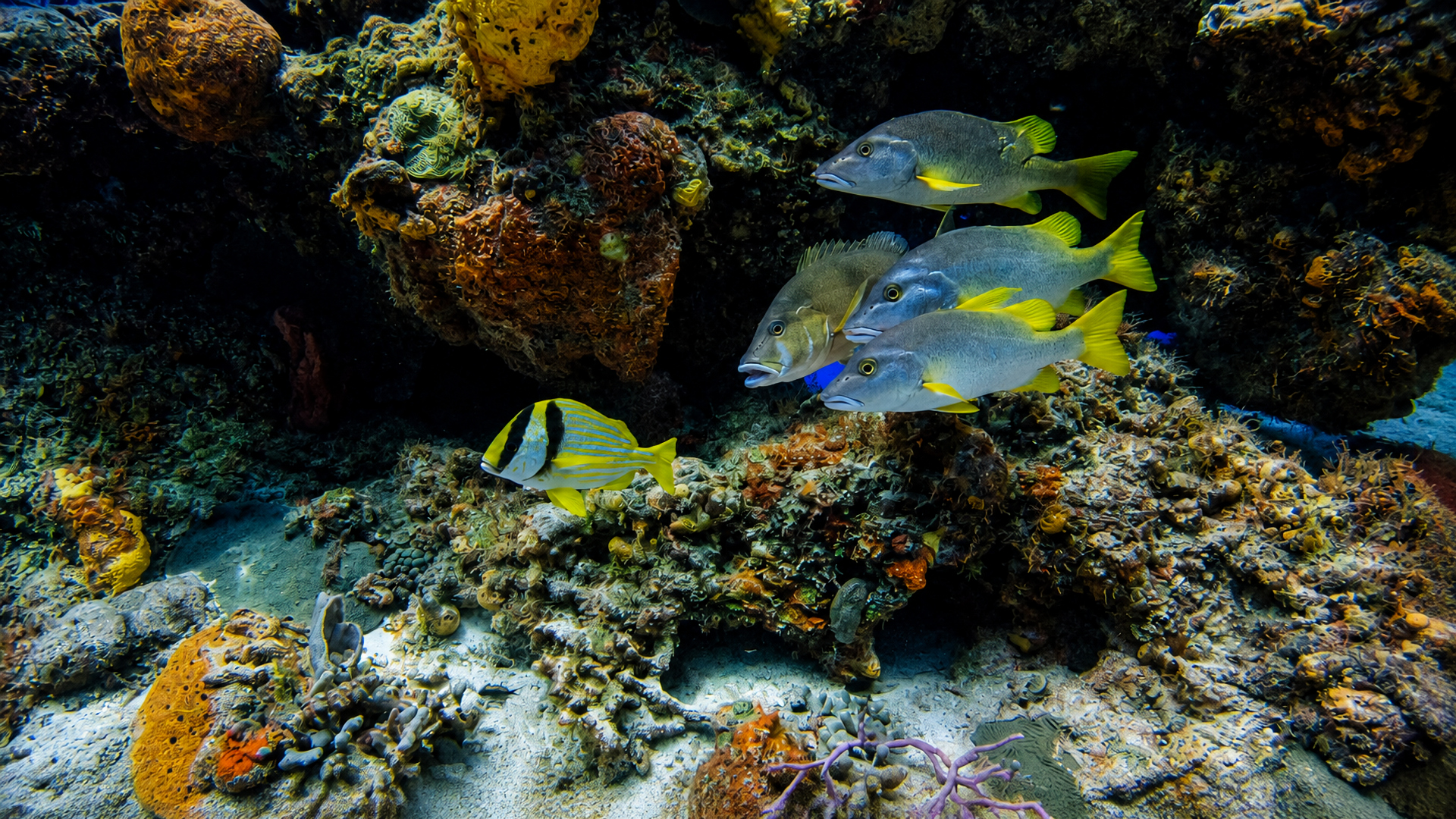
School of grunts gathered beside coral at Paso del Cedral
Grunts gathering in the shelter of the reef.
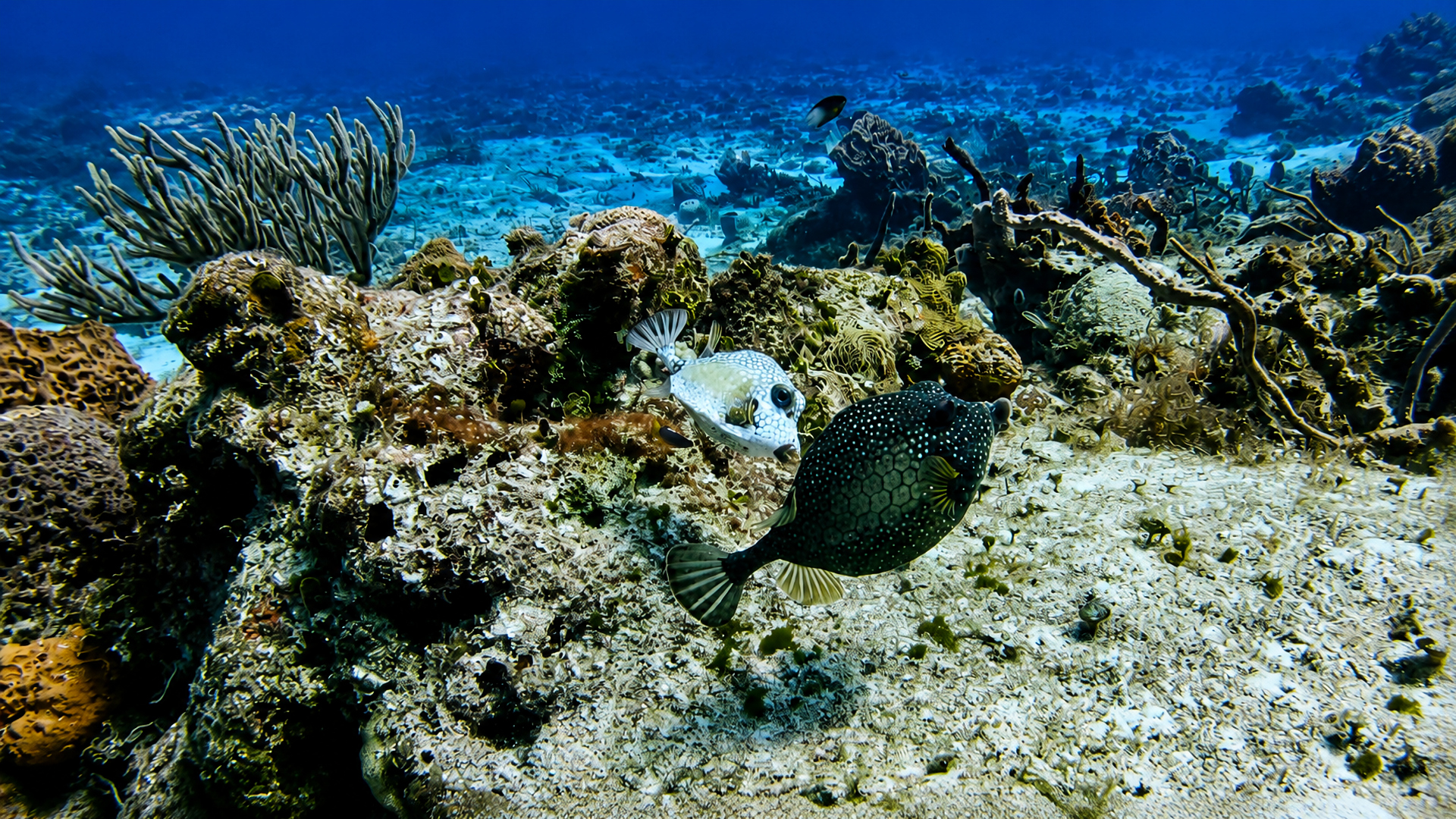
Two trunkfish swimming over coral rubble
A pair flirt, circling in their mating dance.
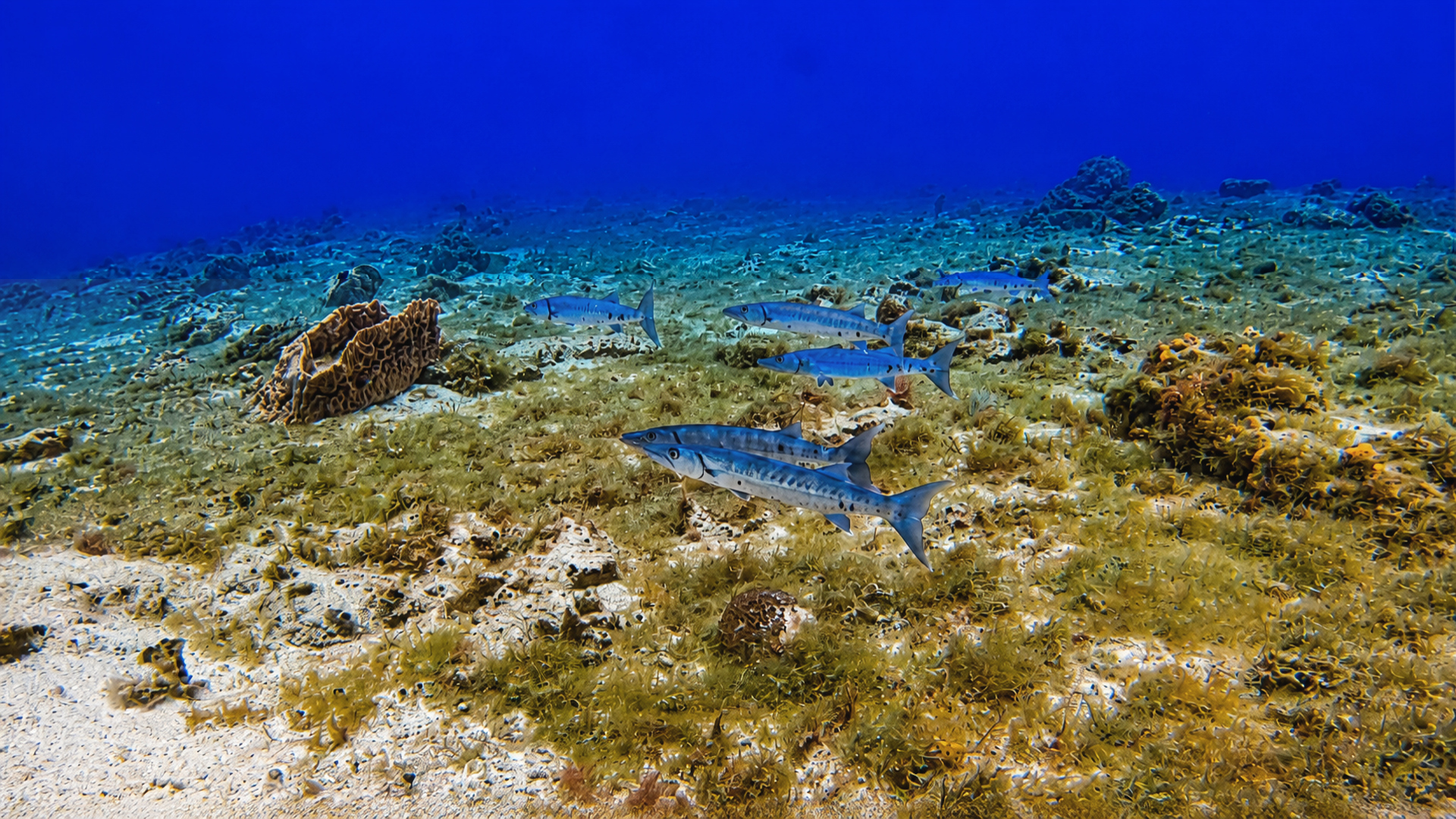
Group of barracuda over the sandy bottom
Barracuda hold position above the seafloor.
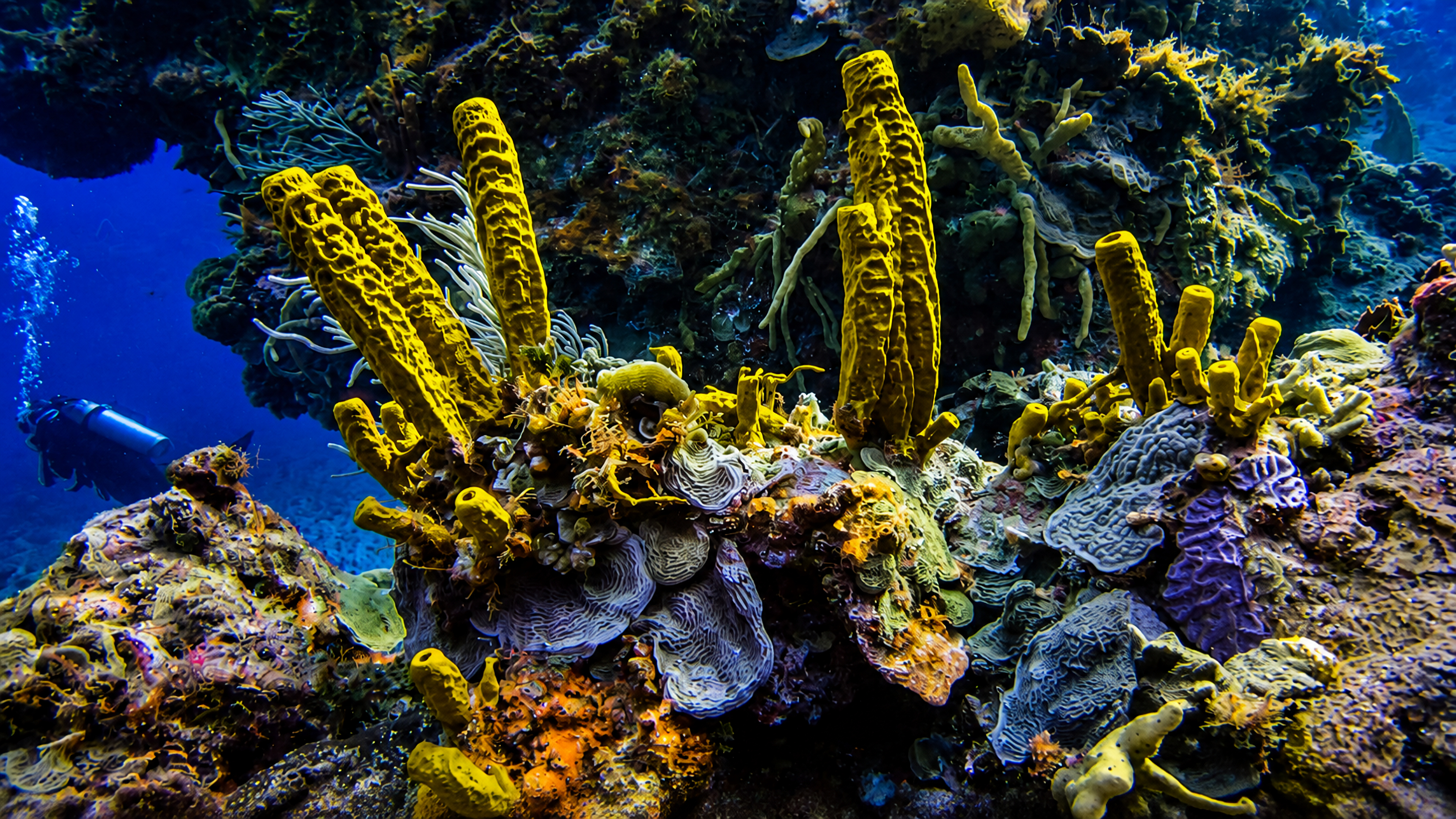
Yellow tube sponges and coral growth at Paso del Cedral
Cedral's structure creates shelter, color, and countless places to search.
Reef Structure

The habitat is part of every encounter.

Tube sponges, coral heads, sandy channels, and low ledges create the spaces where Cedral's marine life gathers.

Instead of treating the reef as background, look at how every animal uses it. The habitat explains where the life is and why it is there.

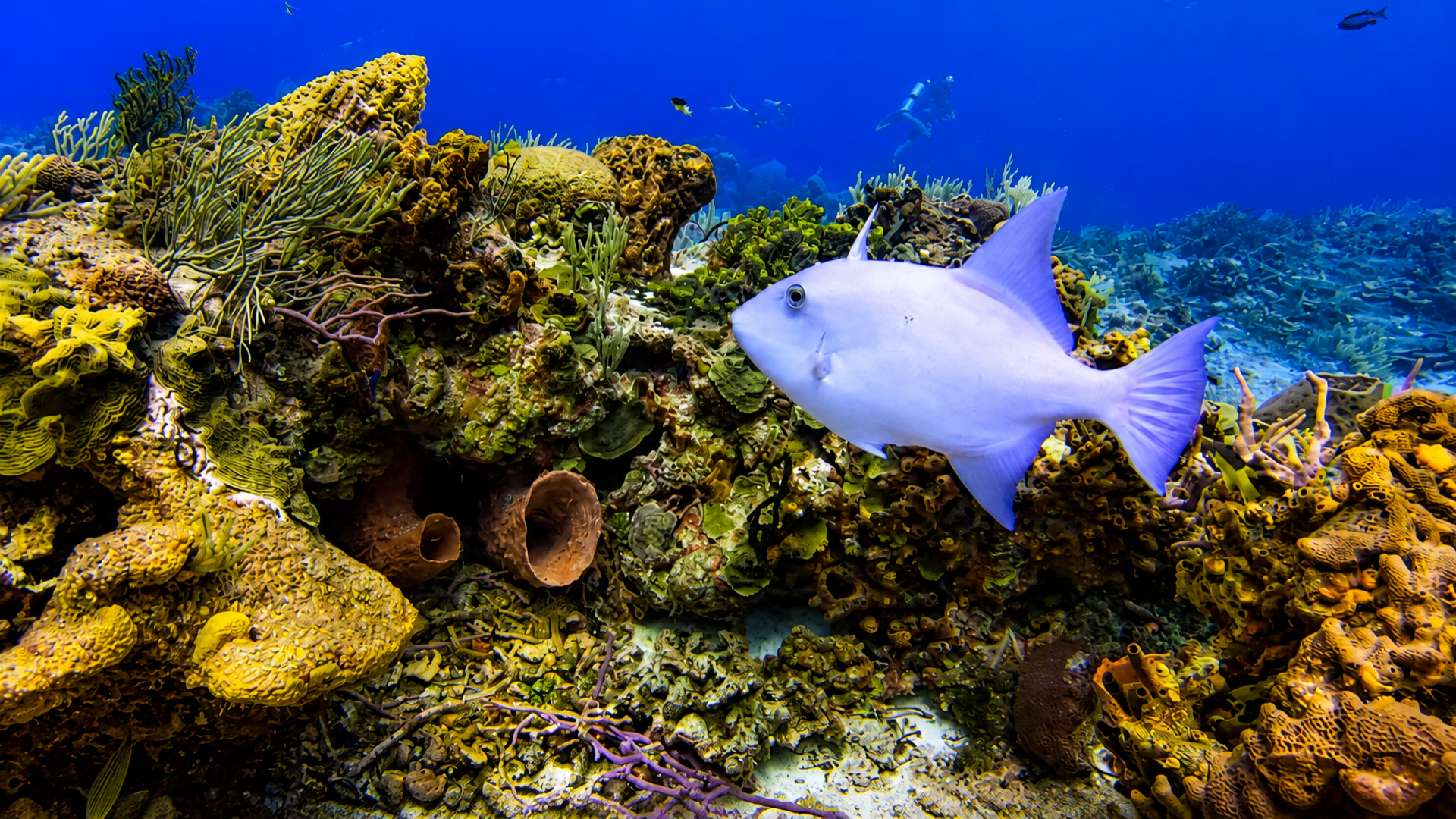
White triggerfish swimming beside a colorful coral reef
A pale triggerfish crossing a richly layered reef.
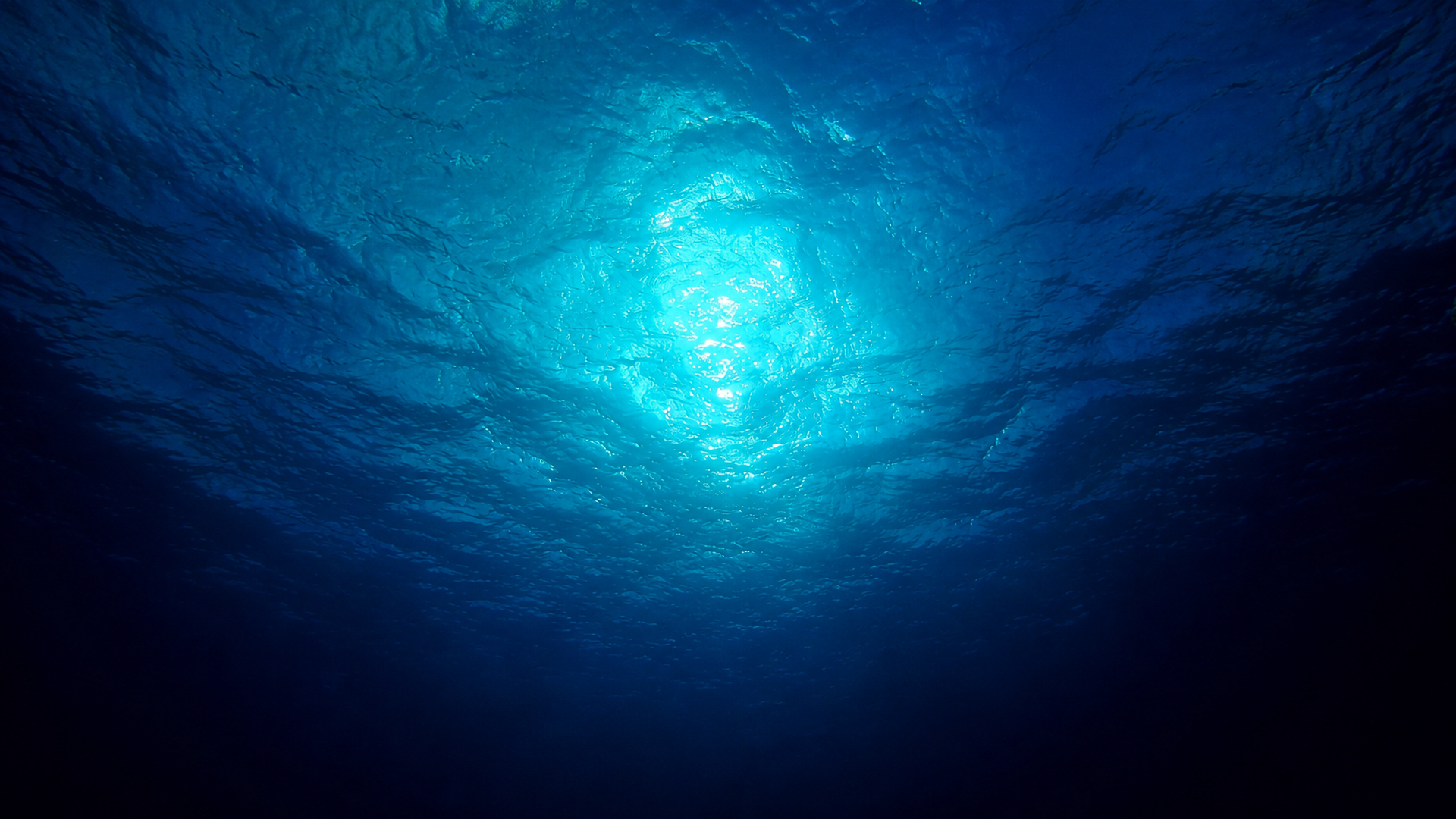
Sunlight shining through the water above Paso del Cedral
The Cozumel sun awaits the diver's return.
Quiet Giants

Nurse sharks beneath the ledges.

Nurse sharks are often encountered resting in shaded spaces during the day. Respectful divers keep distance letting them remain undisturbed.

The strongest photograph is not the closest one. It is the one made without disturbing the animal.

Nurse shark resting on sand beneath a coral overhang
Observe quietly, leave room, and never block the animal's path.
Close view of a nurse shark resting beneath a reef ledge
A close encounter should still feel calm for the animal.
Dive Snapshot

What divers should know.

Conditions vary with weather, current, route, and operator. Treat these as general expectations, not guarantees.

Experience

Often suitable for confident newer divers, but current and route selection matter. Strong buoyancy control makes the dive far more rewarding.

Typical Style

A relaxed drift over reef, sand, coral heads, and low ledges with frequent stops to observe marine life.

Best Skill

Look ahead, scan under ledges, and resist the urge to rush. Observation is the skill that transforms this dive.

Cedral Questions

Before you dive.

Why is Paso del Cedral so popular?

It combines varied reef scenery, frequent marine life, approachable depth profiles on many routes, and the possibility of both large and small encounters during one dive.

Is Cedral a good site for newer divers?

It can be, when conditions and the chosen route are appropriate. Newer divers should be comfortable with buoyancy, current, group spacing, and controlled drifting.

What should photographers watch for?

Do not focus only on the obvious subject. Scan the ledges, sponge openings, sand edges, and fish behavior around coral heads. Many of Cedral's best photographs begin with a small clue.

Can I expect to see nurse sharks or turtles?

They are possible and sometimes seen, but no wild encounter is guaranteed. Cedral is rewarding because the full reef remains interesting even when a particular animal does not appear.

What makes a good Cedral dive?

A calm pace, good buoyancy, respect for the reef, and enough patience to notice what other divers may pass without seeing.

When You Leave Cedral

You begin noticing more on every reef.

The real gift of Paso del Cedral is not only what you see during one dive. It is the habit of slowing down, reading the reef, and recognizing that the smallest details can hold the best encounters.

Explore More Featured Destinations
Top ↑