Featured Marine Life

Stingrays of Cozumel

Masters of the sand. The lesson is not only to look for the animal, but to read the seafloor.

Gallery Facts Questions Respect
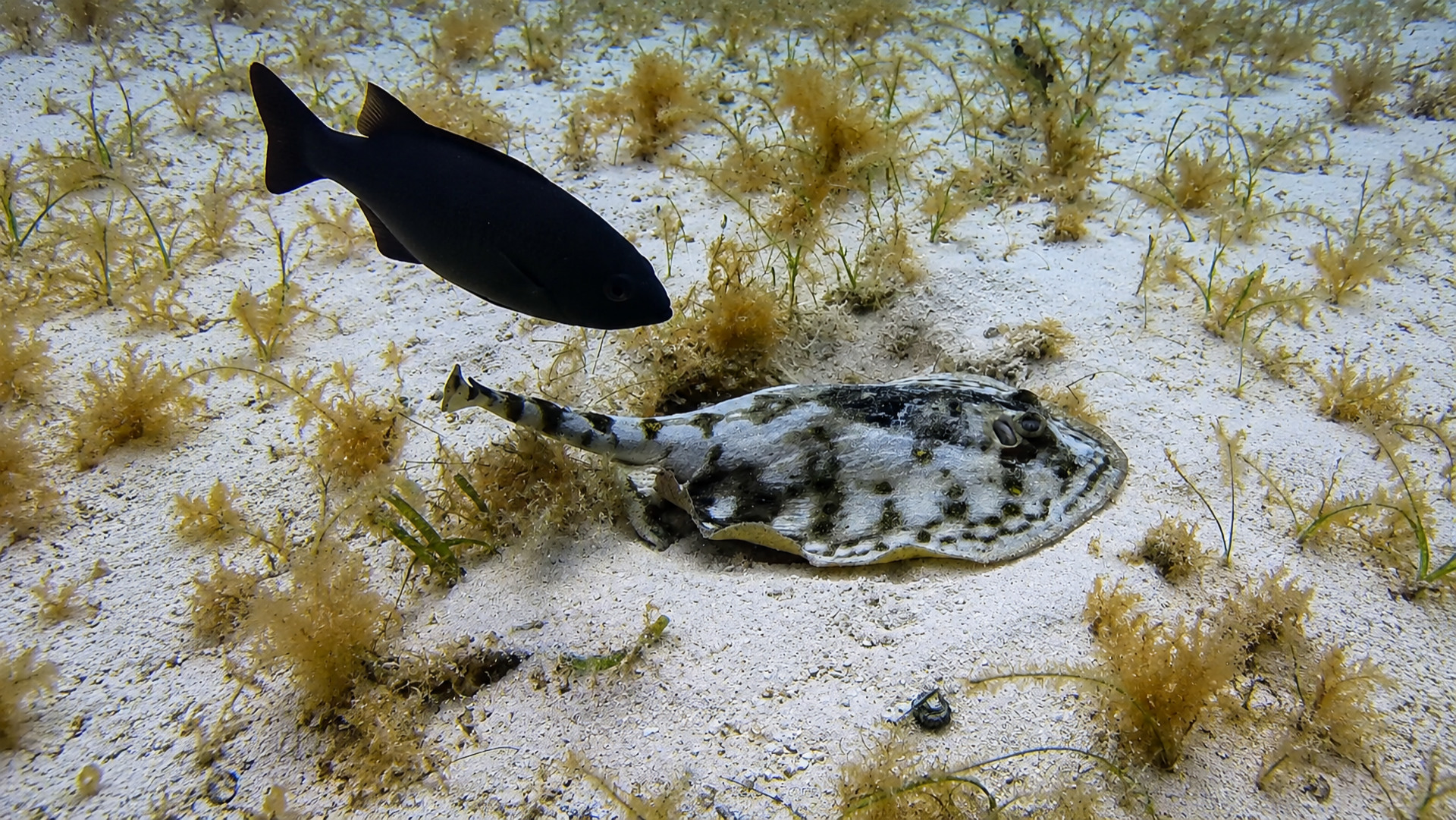
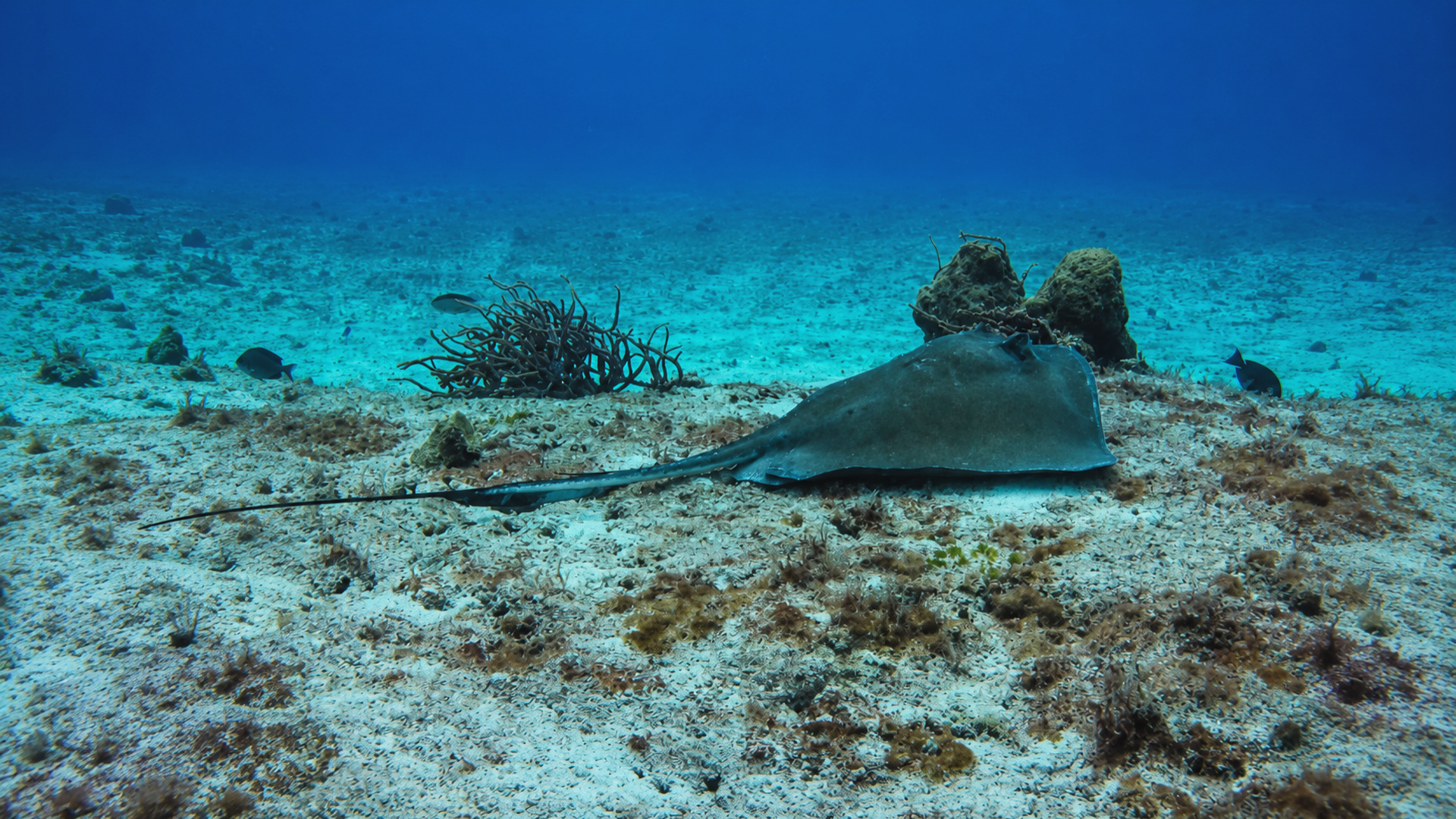
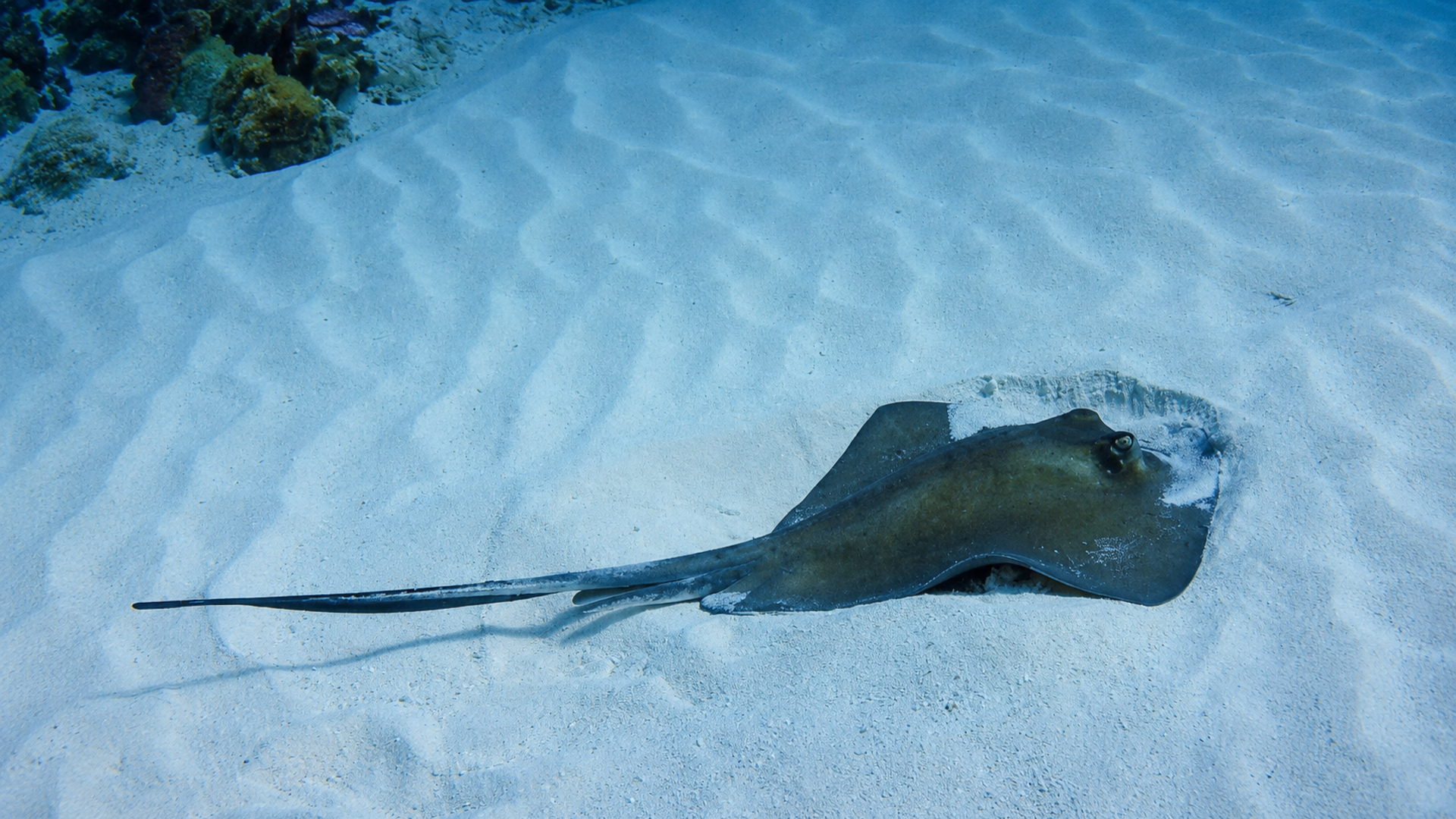
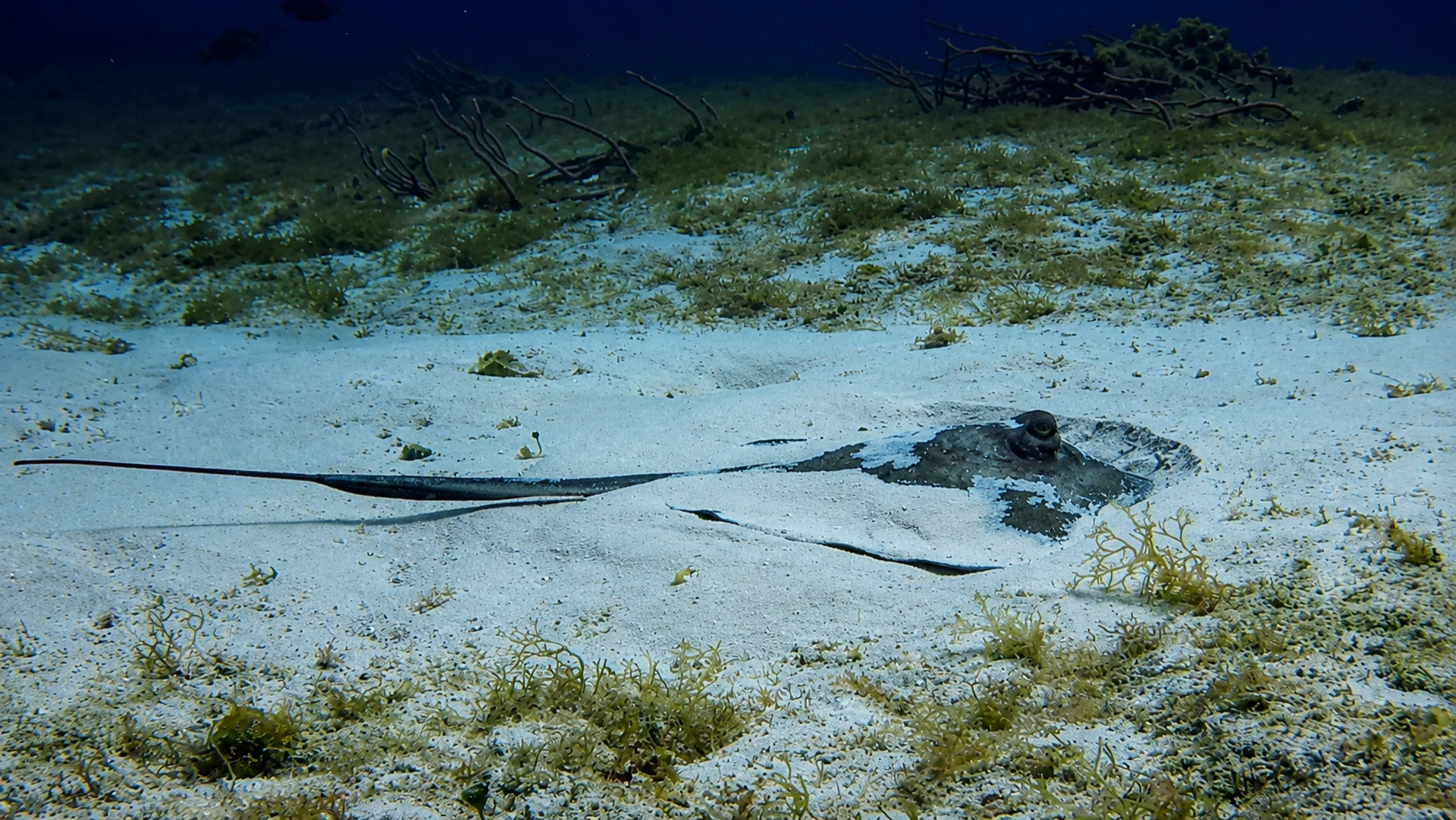
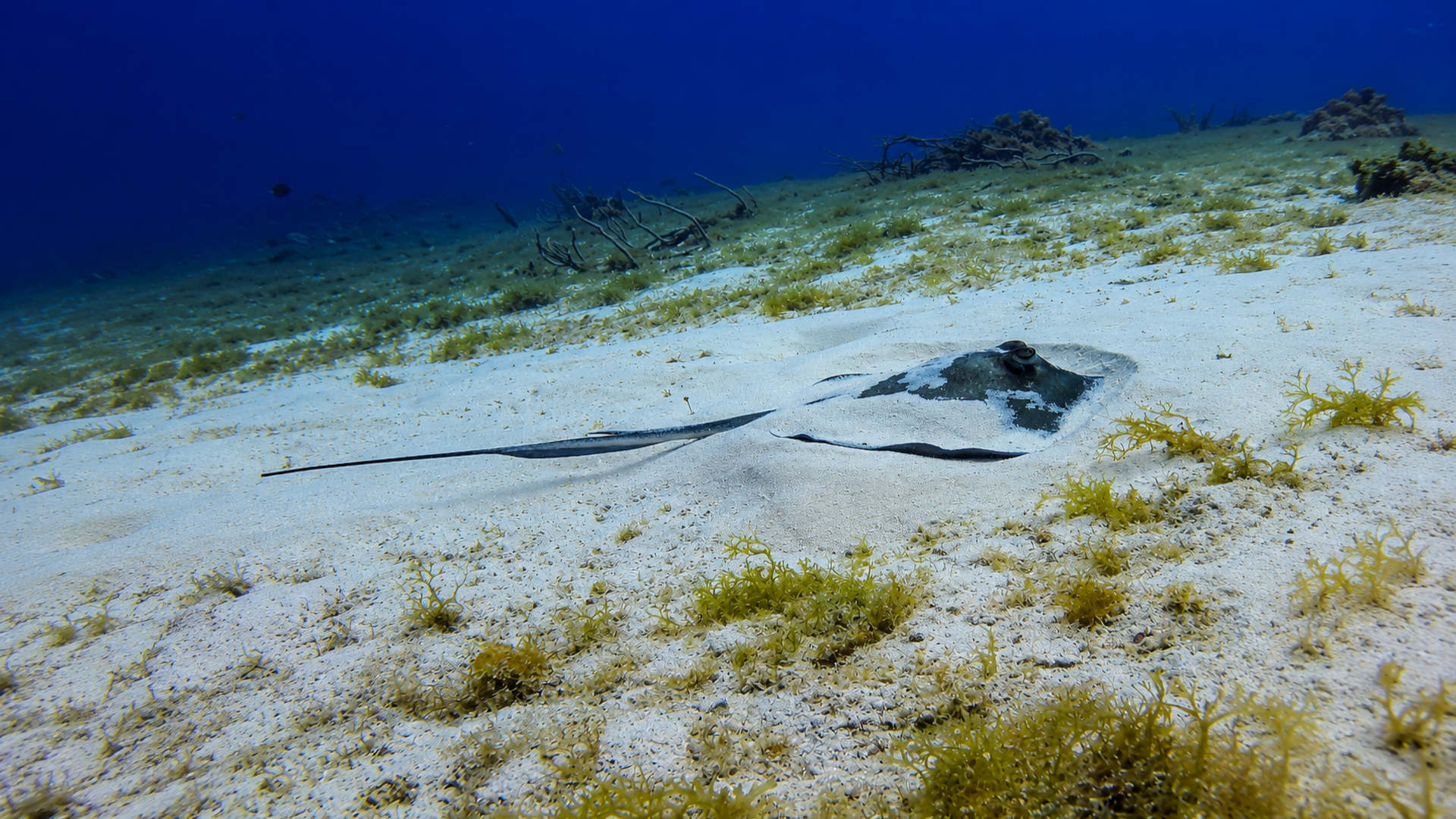
A stingray mostly hidden in the sand on a Cozumel reef
The first clue is often not the ray itself, but the shape, trail, or outline it leaves in the sand.
Masters of the Sand

Do not just look for the animal - read the sand.

Stingrays can be surprisingly easy to swim past. Their colors, patterns, and quiet movements help them disappear into the seafloor.

A diver who is moving too fast may see only sand, ripples, scattered seagrass, and coral rubble. Slow down and look again. A raised edge, a pair of eyes, a tail line, or a small puff of sediment may reveal the animal that was there all along.
Diver Observation

How to spot a hidden stingray.

Cozumel stingrays reward patient divers. The best sightings often begin with one small detail that does not quite match the surrounding sand.

Look for the outline

A buried ray may create a faint oval or diamond shape where sand has settled over the wings.

Watch for eyes

Sometimes only the eyes and spiracles are visible, appearing as tiny raised points above the sand.

Notice disturbed sand

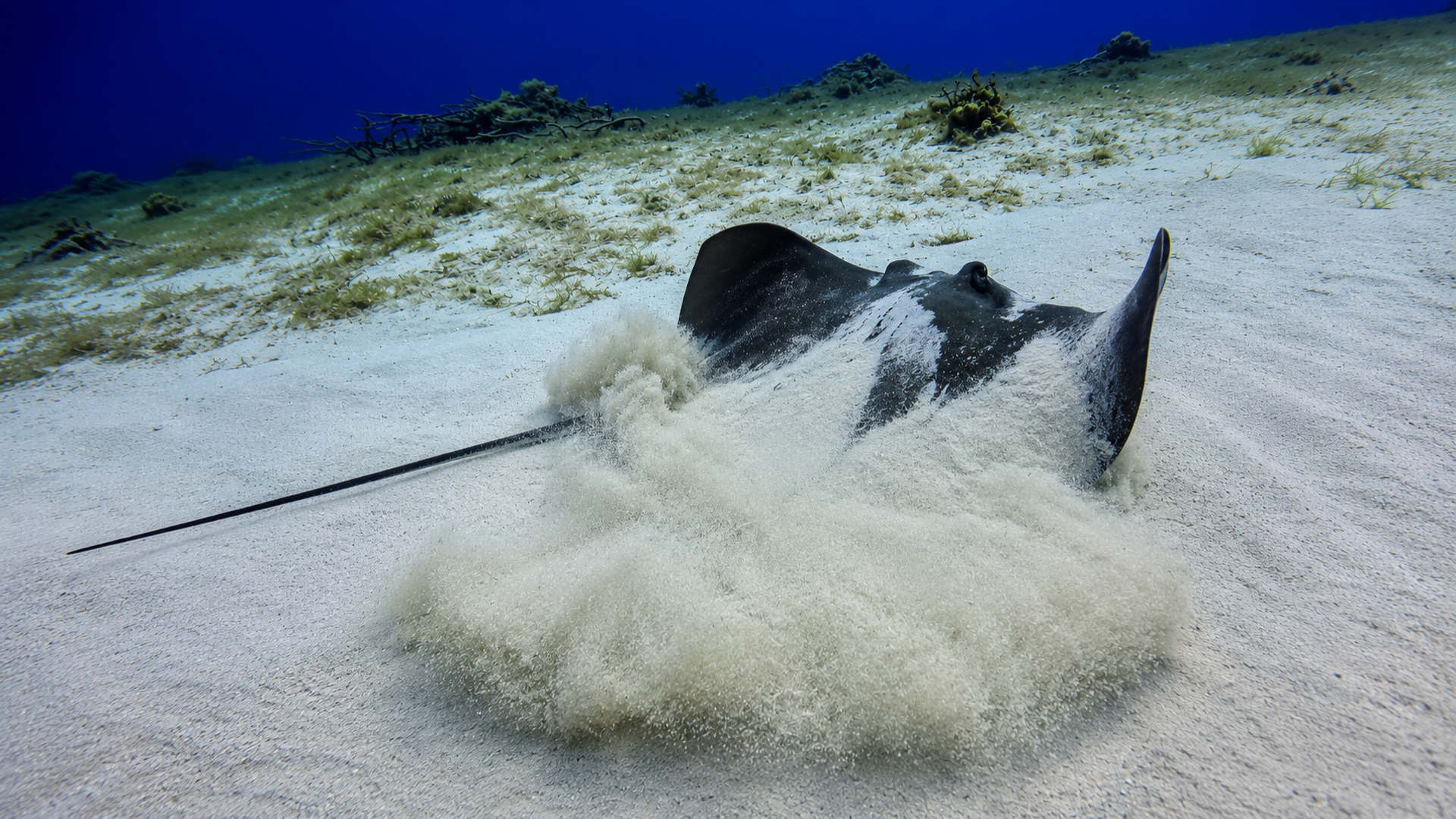
A sudden puff, trail, or small cloud near the bottom may reveal a ray lifting from its resting place.

Behavior Gallery

What stingrays are doing.

These photographs show some behaviors divers may see.

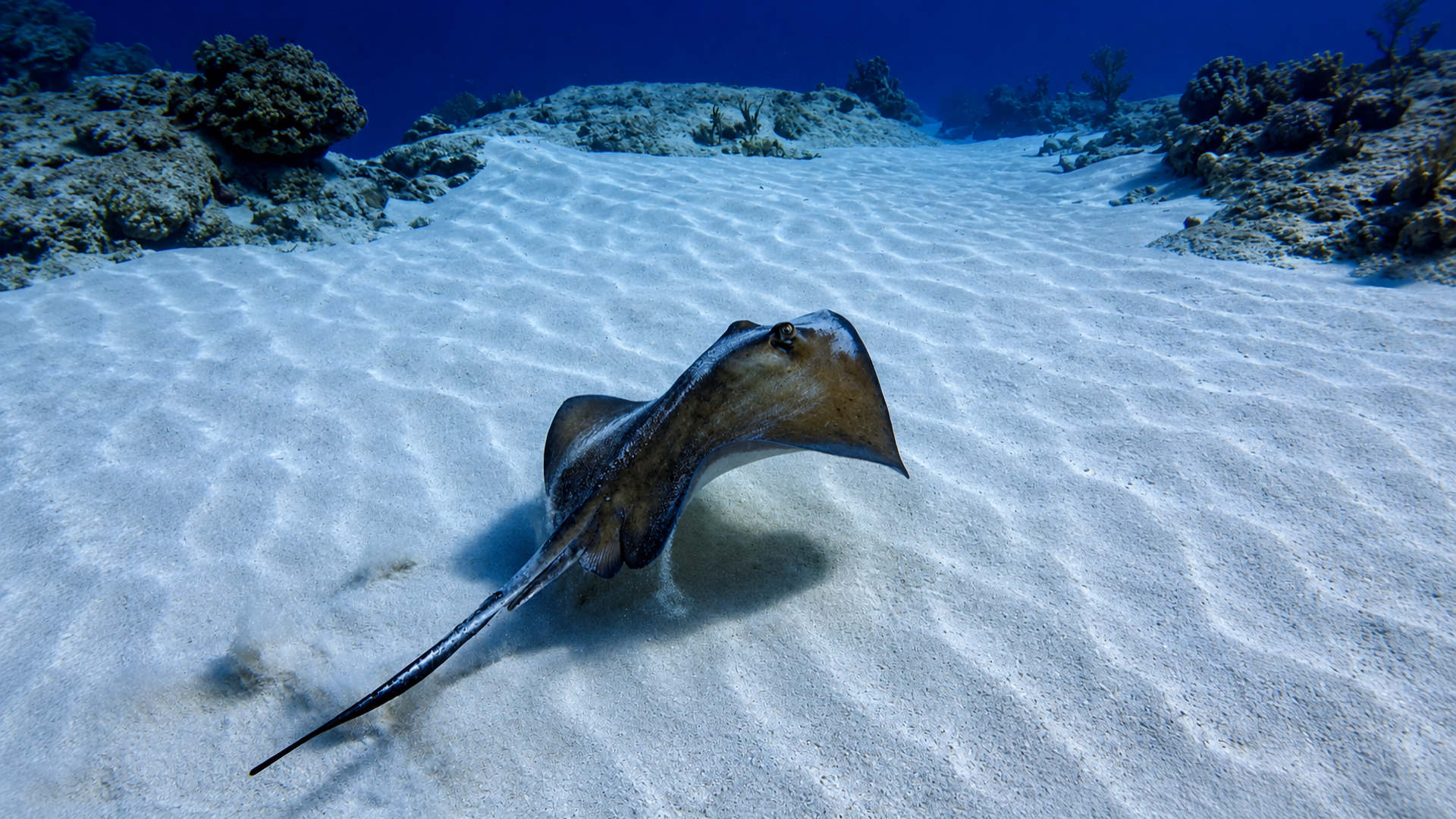
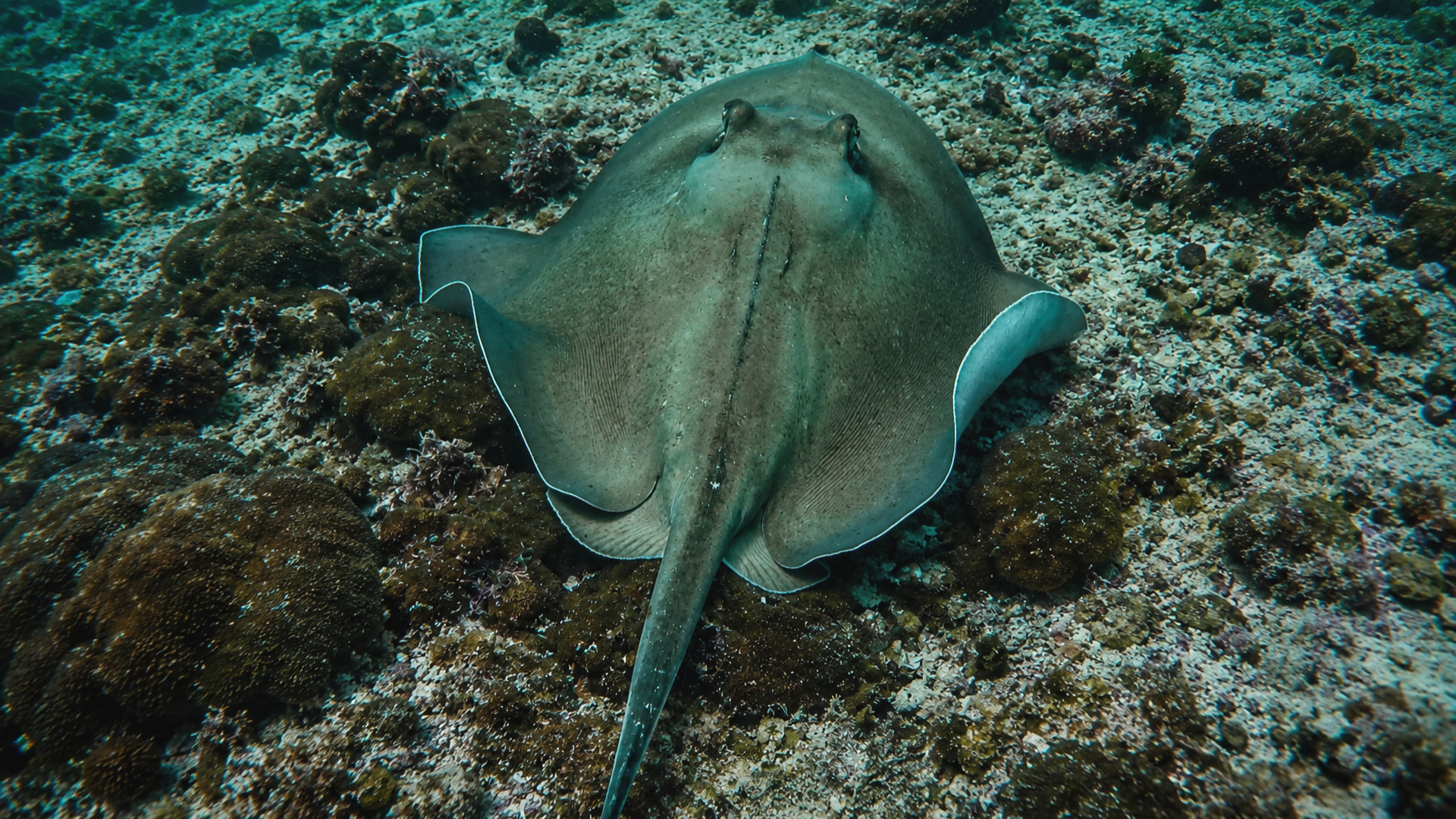
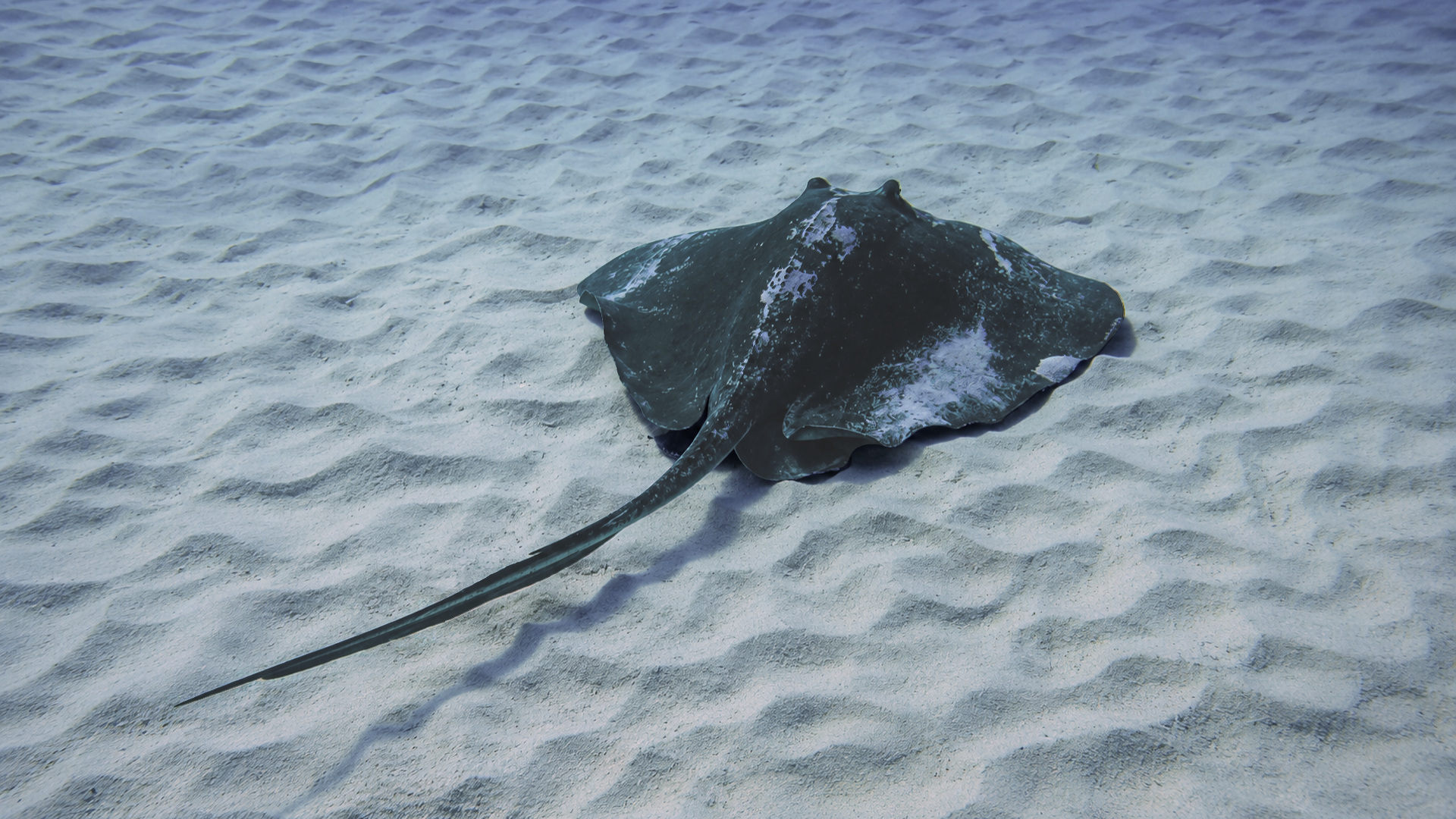
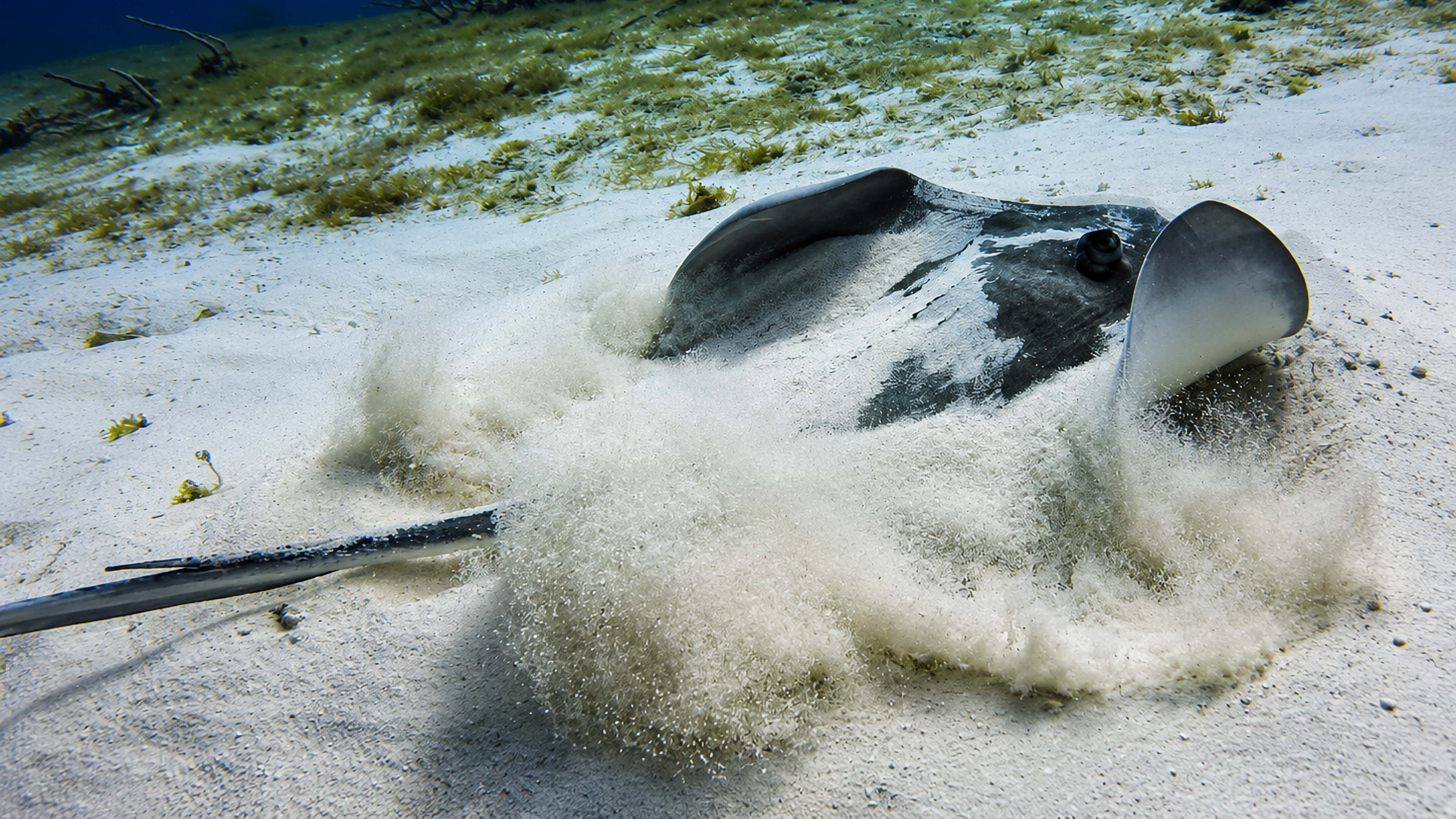
A stingray stirring sand as it rises from the seafloor
Rising from a hidding place below the sand.
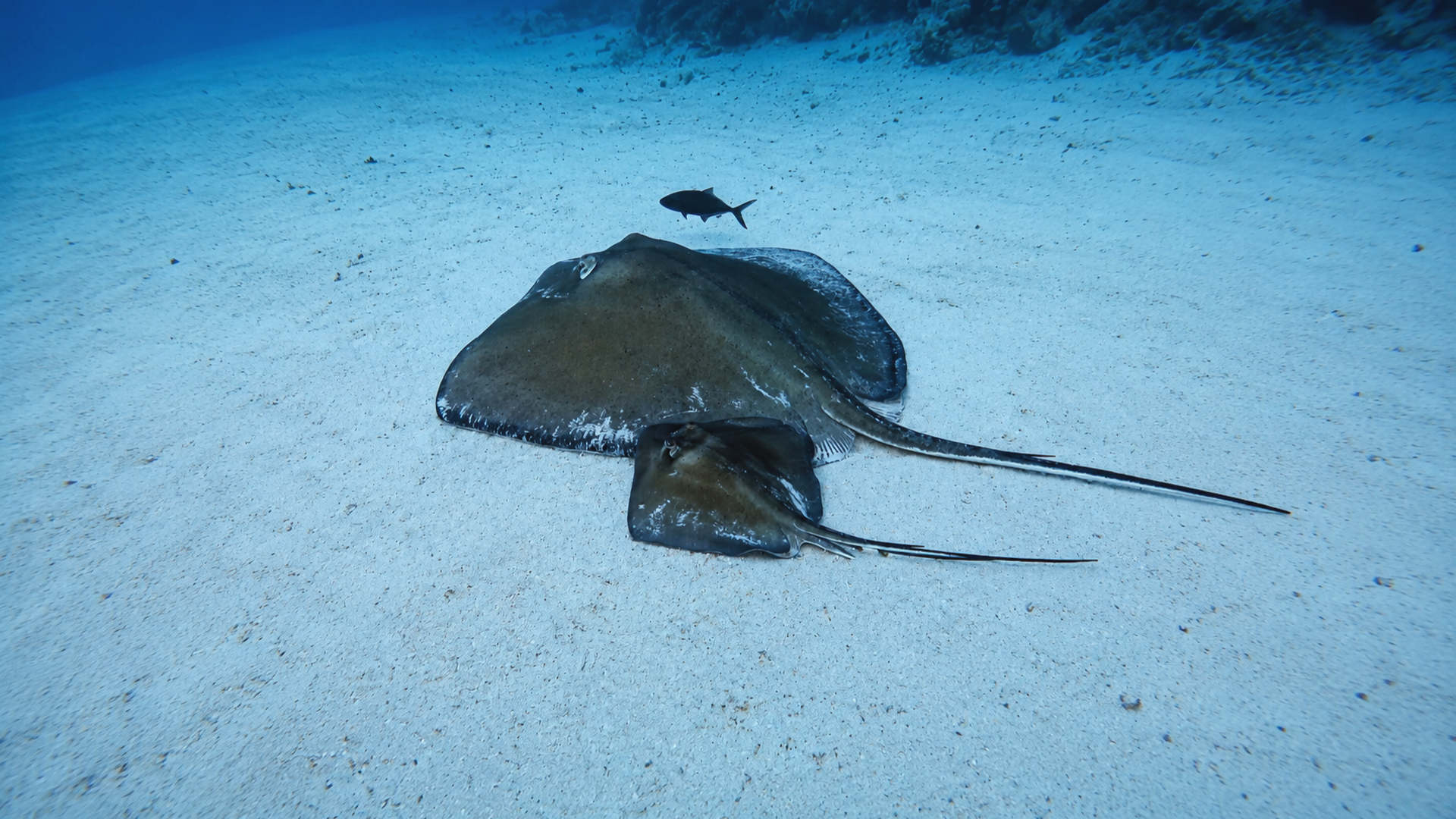
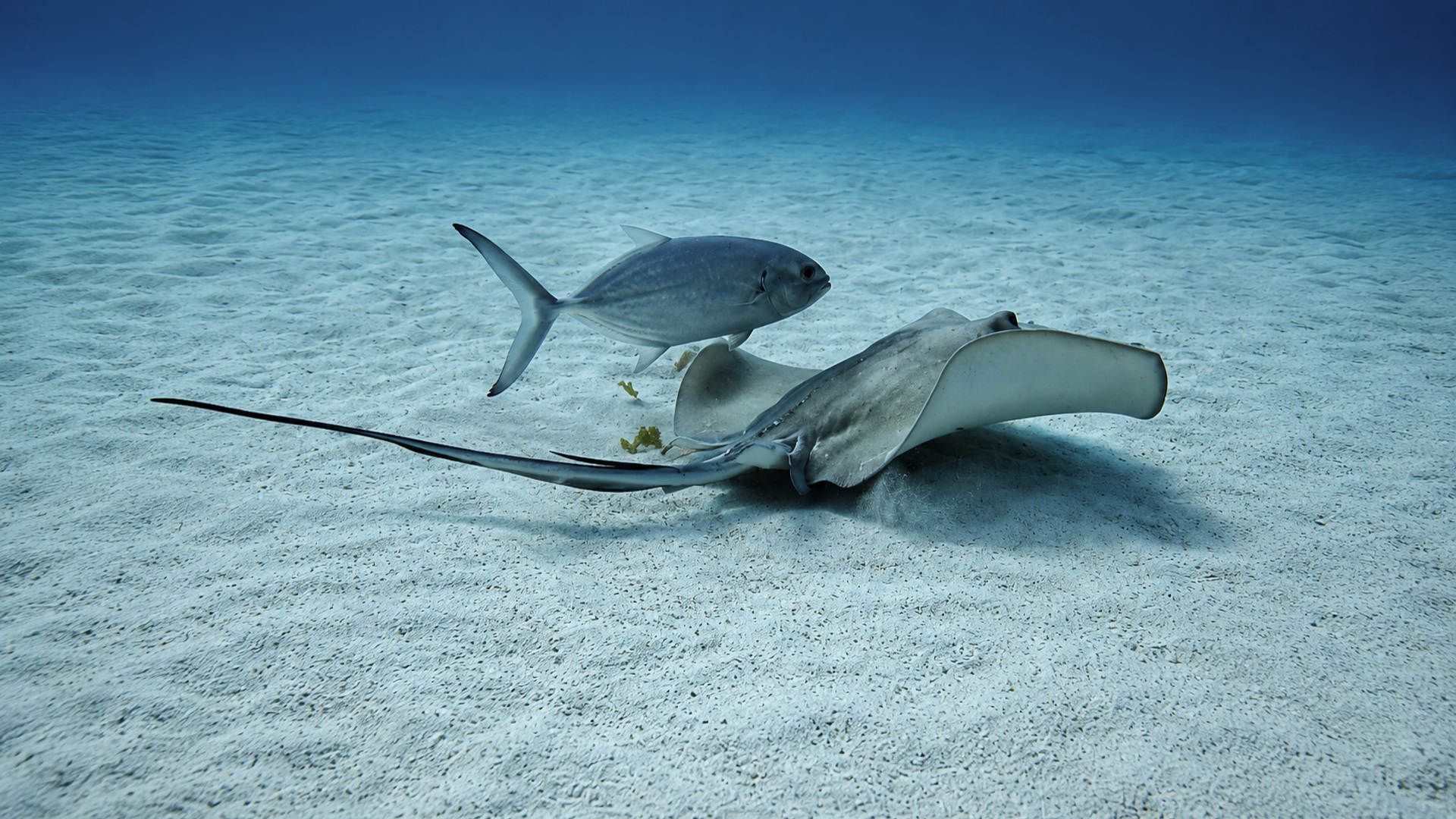
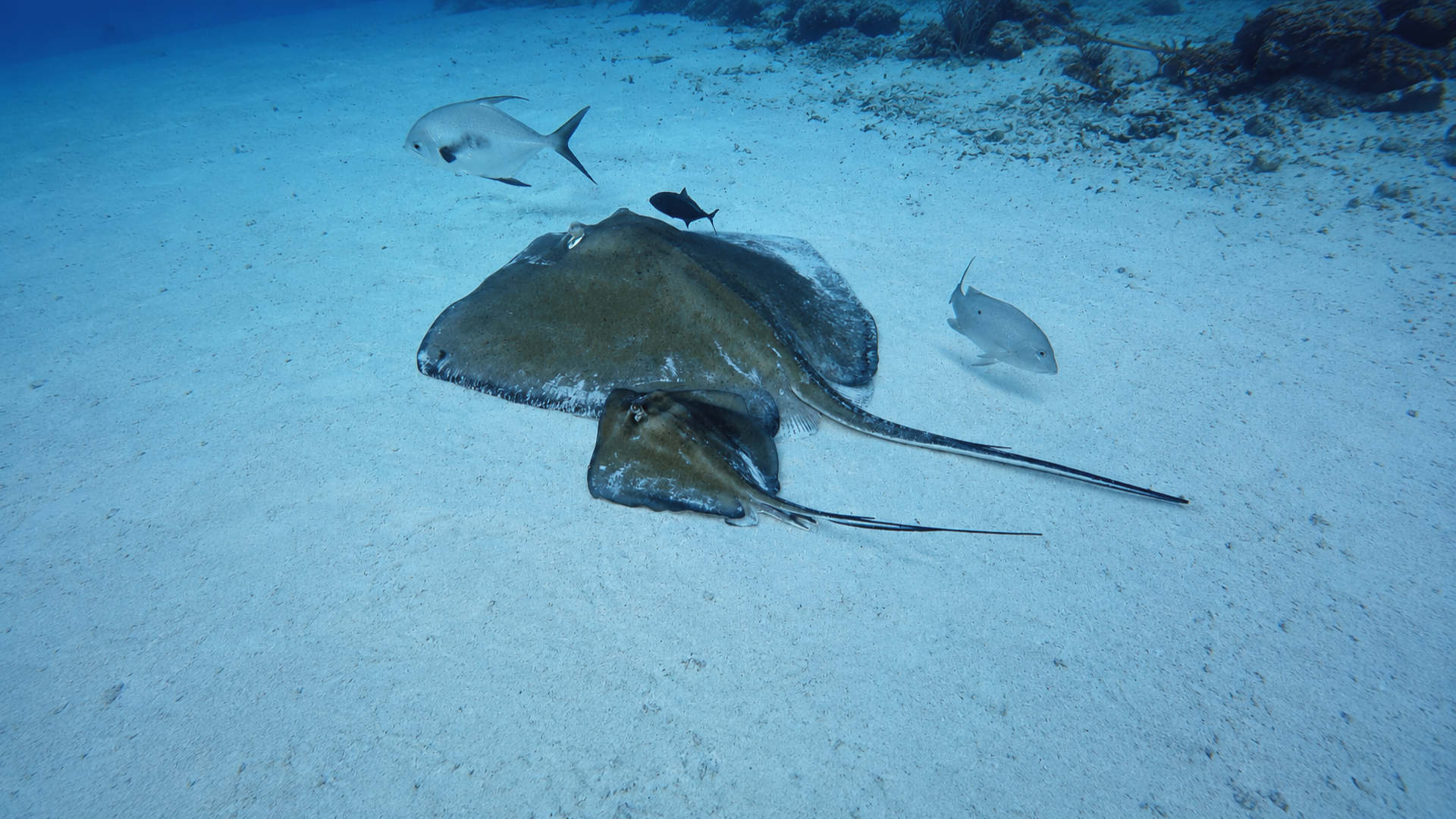
Two stingrays resting together with fish nearby
A quiet moment with a mother and her pup.
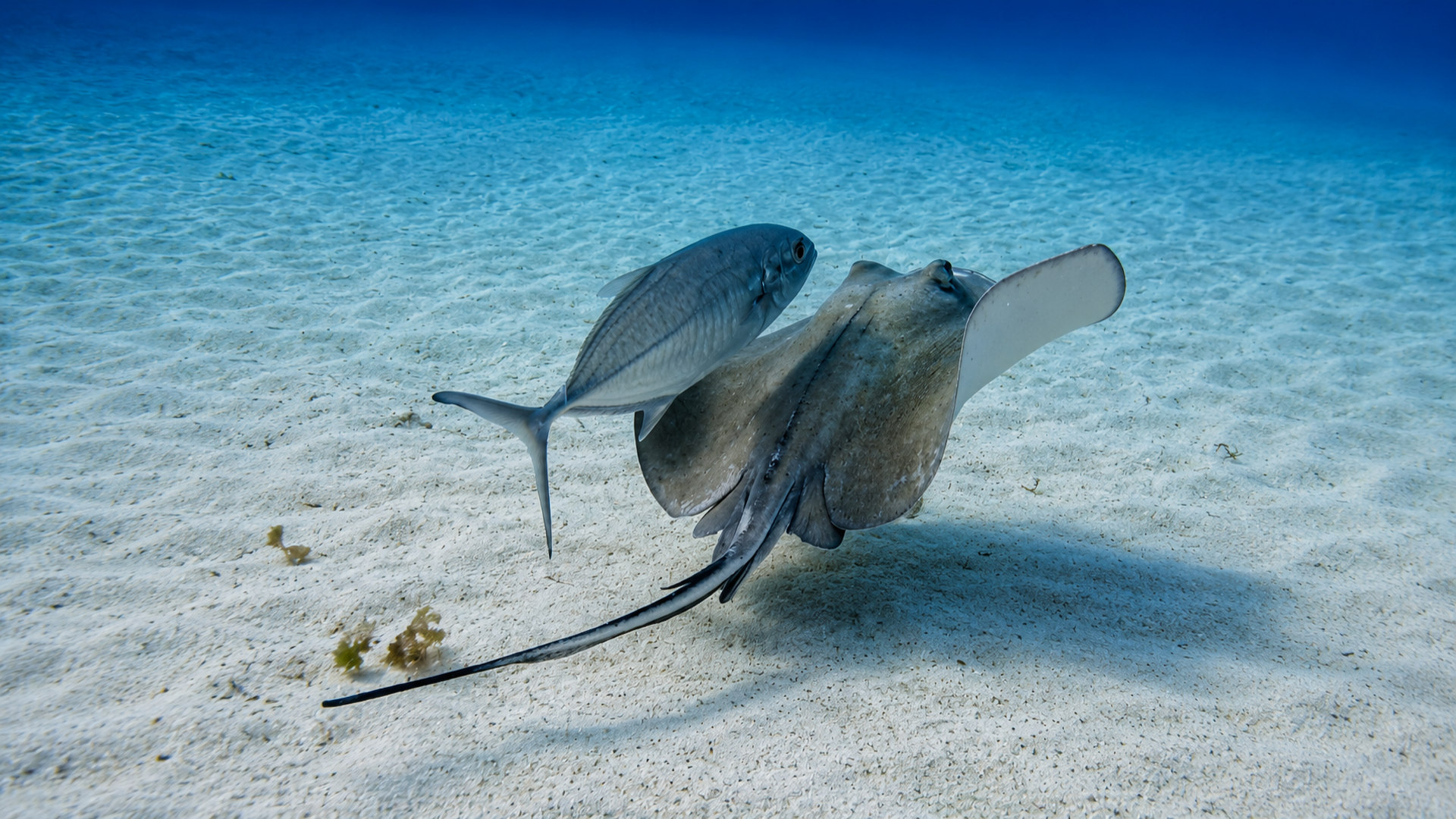
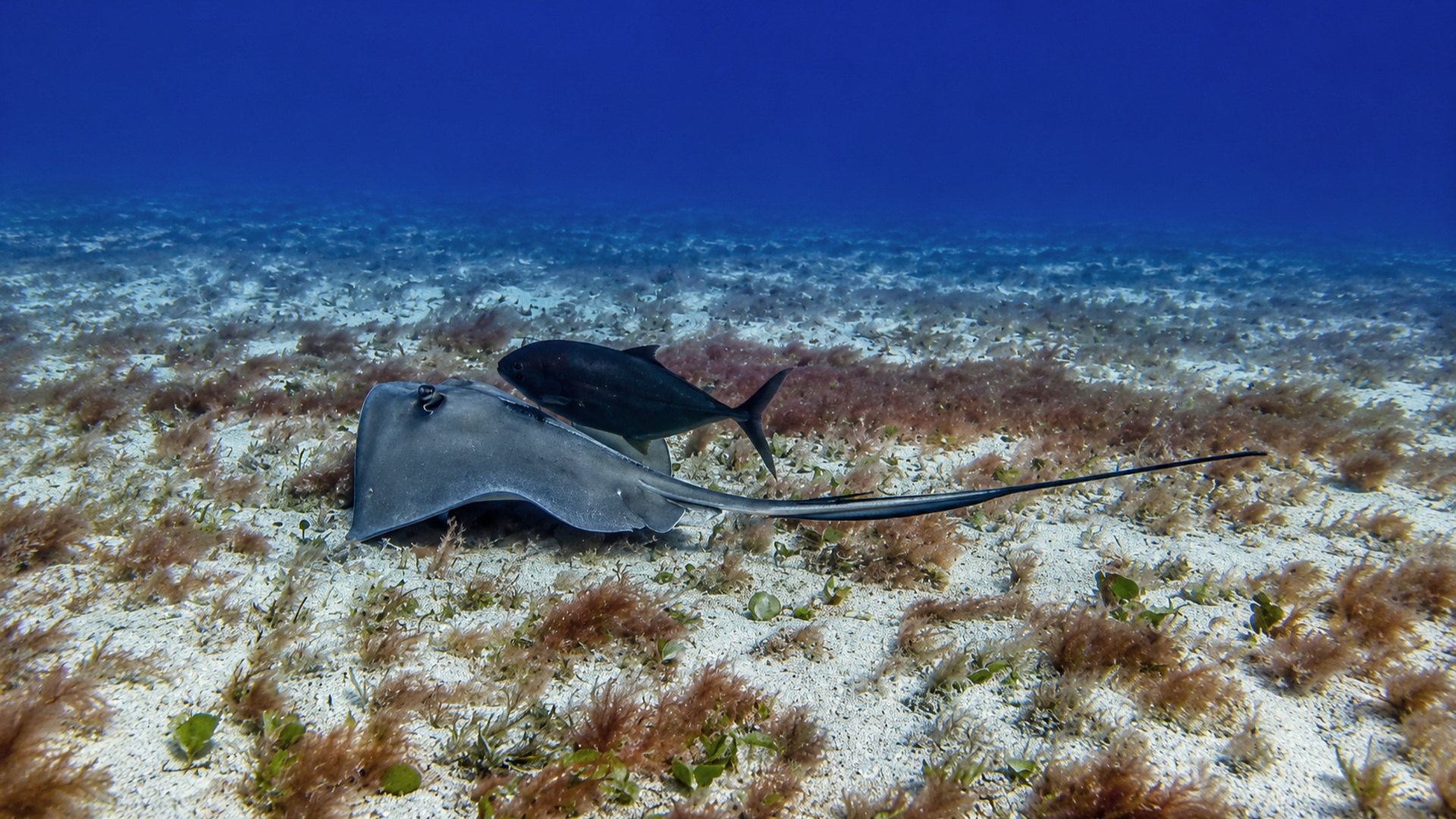
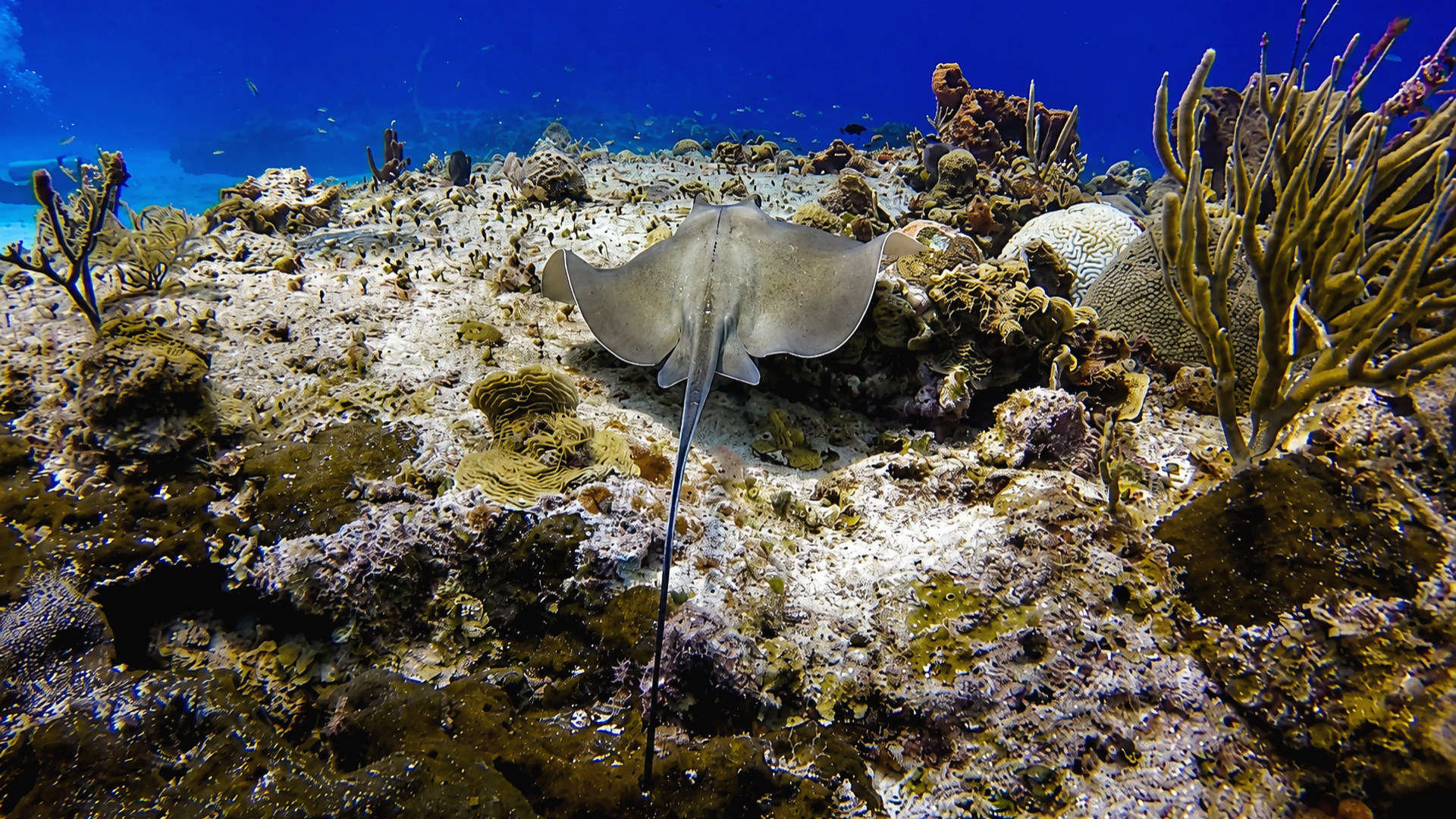
A stingray lifting from the sand with a fish swimming nearby
Lifting into the blue with a companion.
Camouflage

The sand is part of the story.

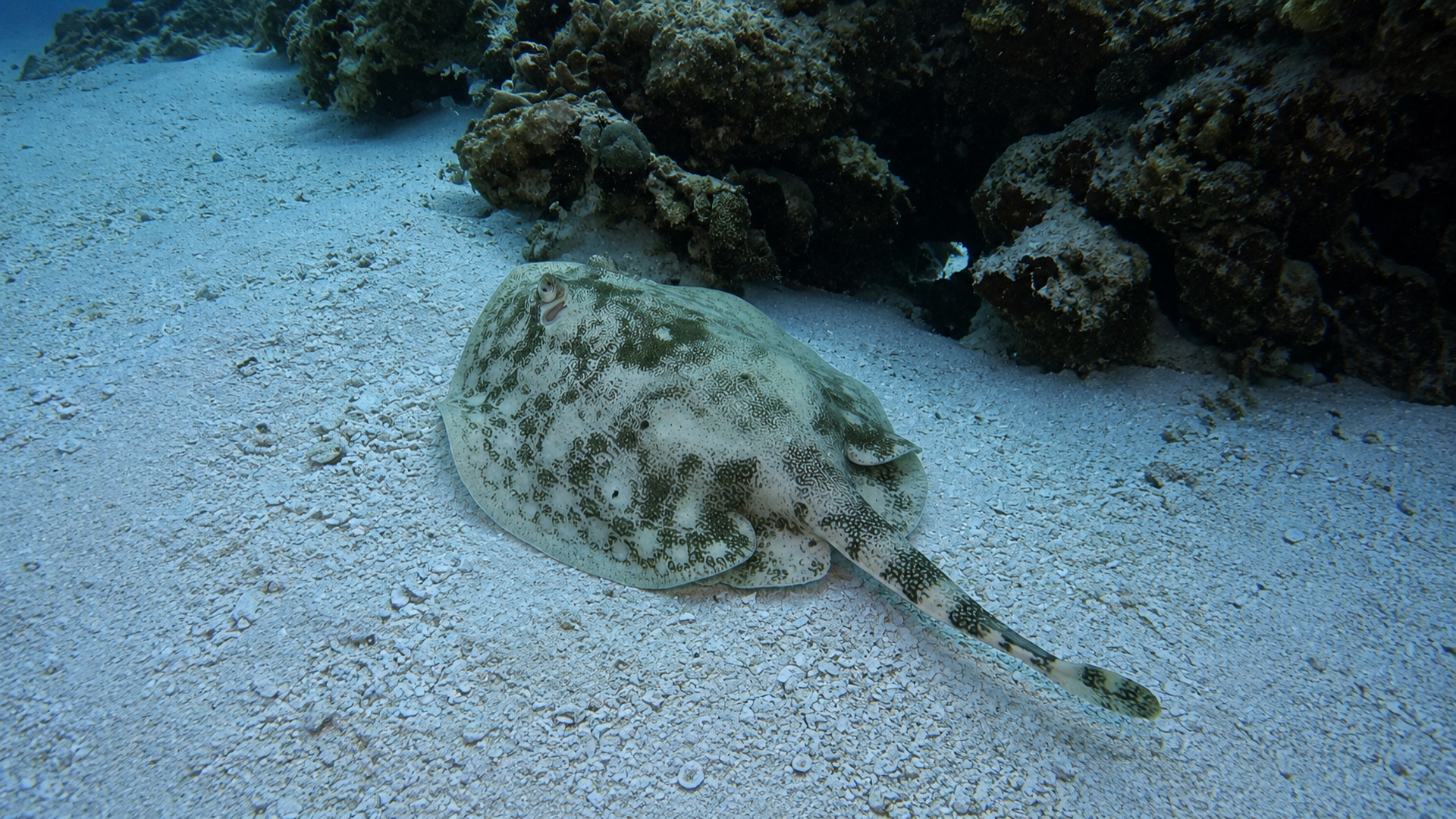
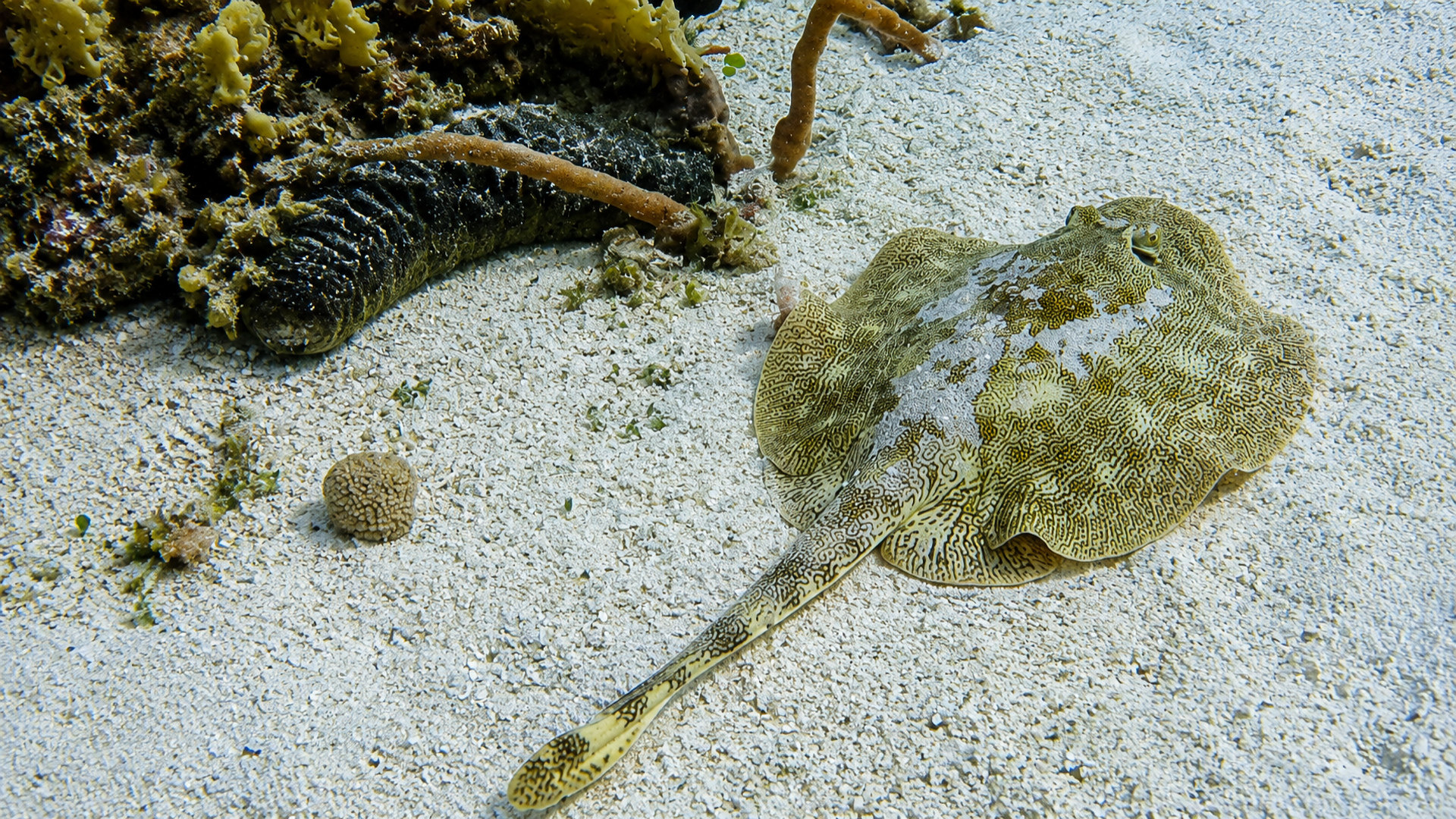
Stingrays use color, texture, stillness, and the sand itself to break up the shape of the body.

From a distance, a ray may look like a darker patch, a rounded shadow, or a slightly raised area of bottom. Up close, the patterns become beautiful, but from a diver's normal distance they are practical camouflage.

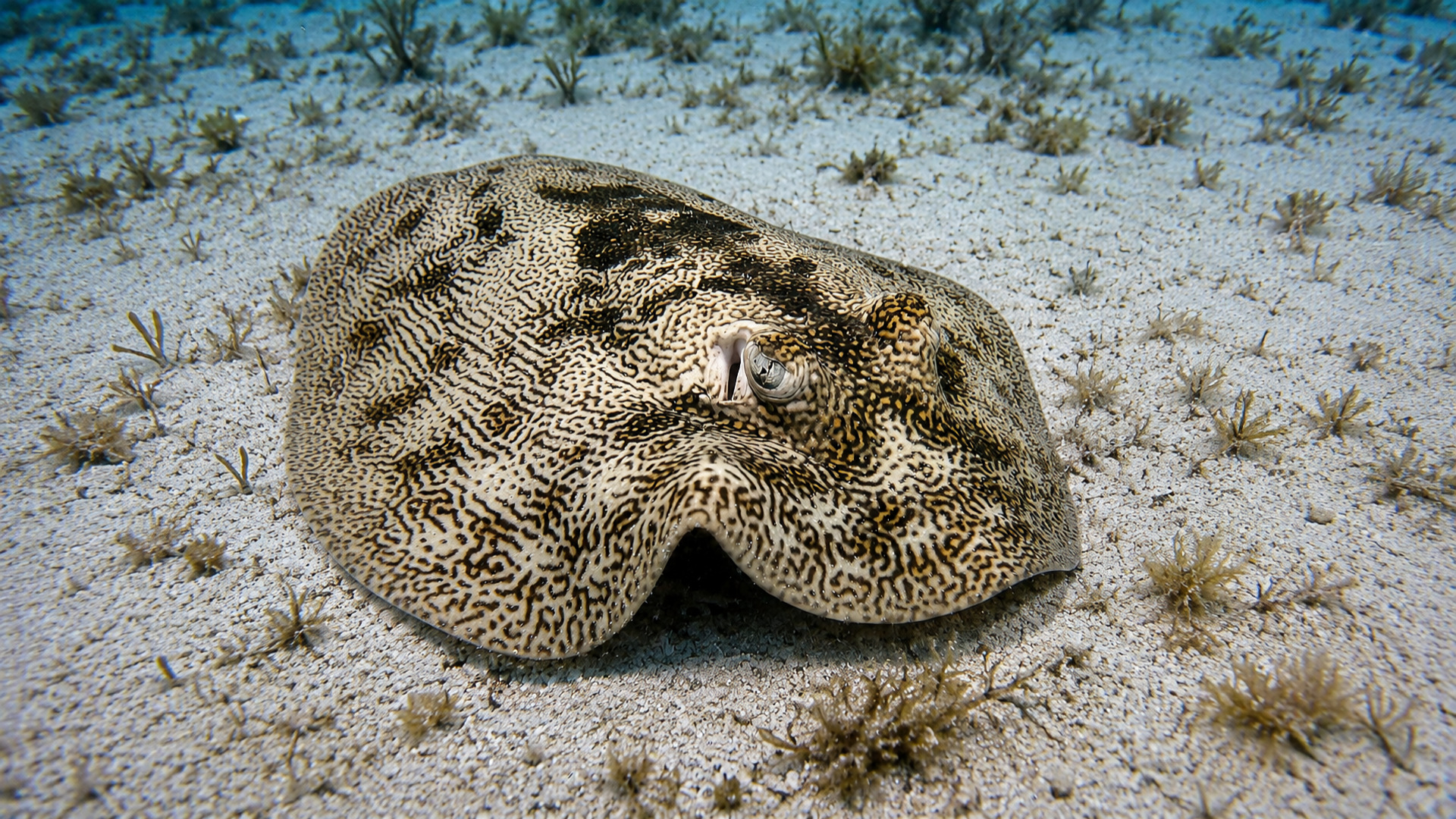
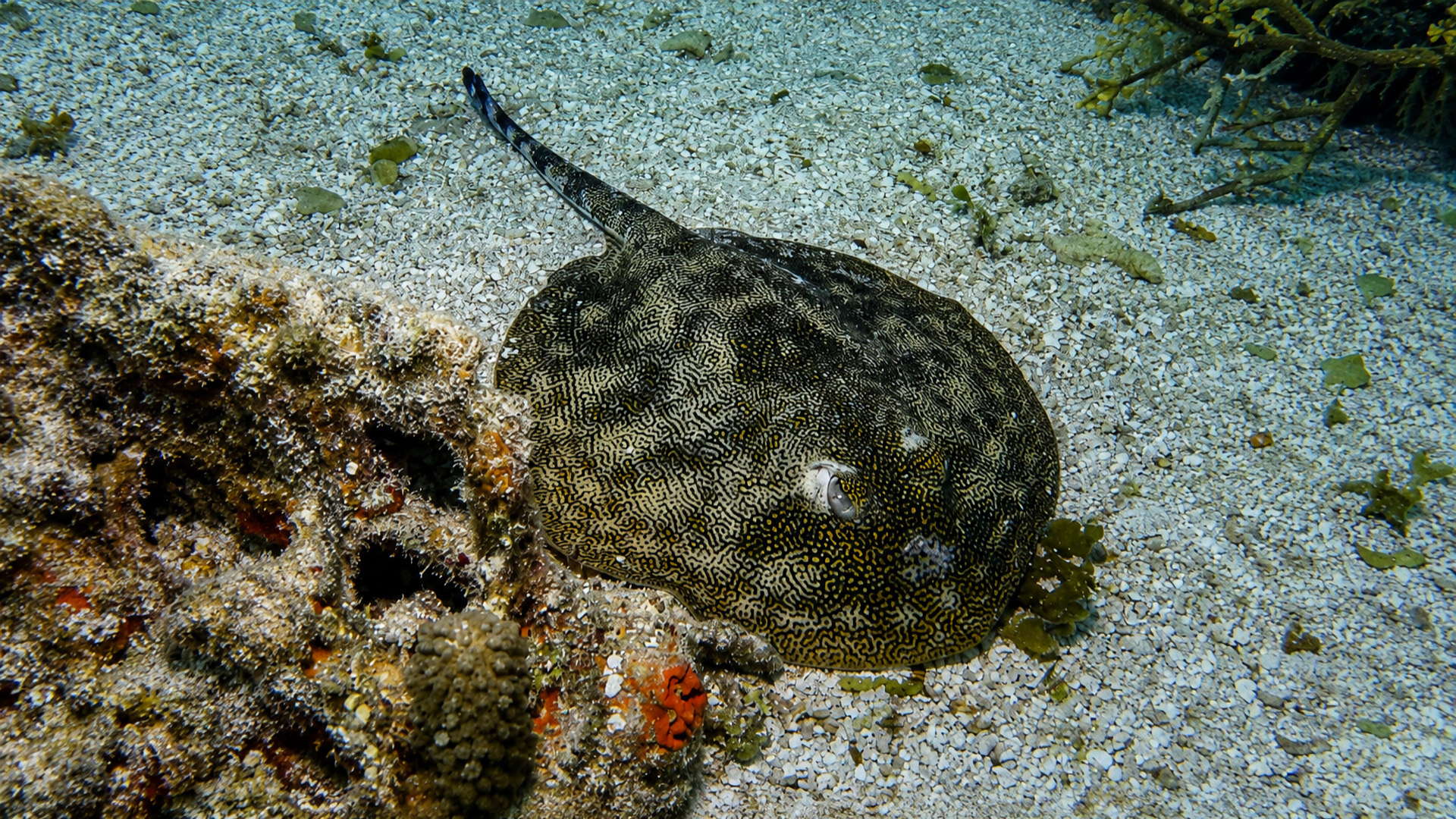
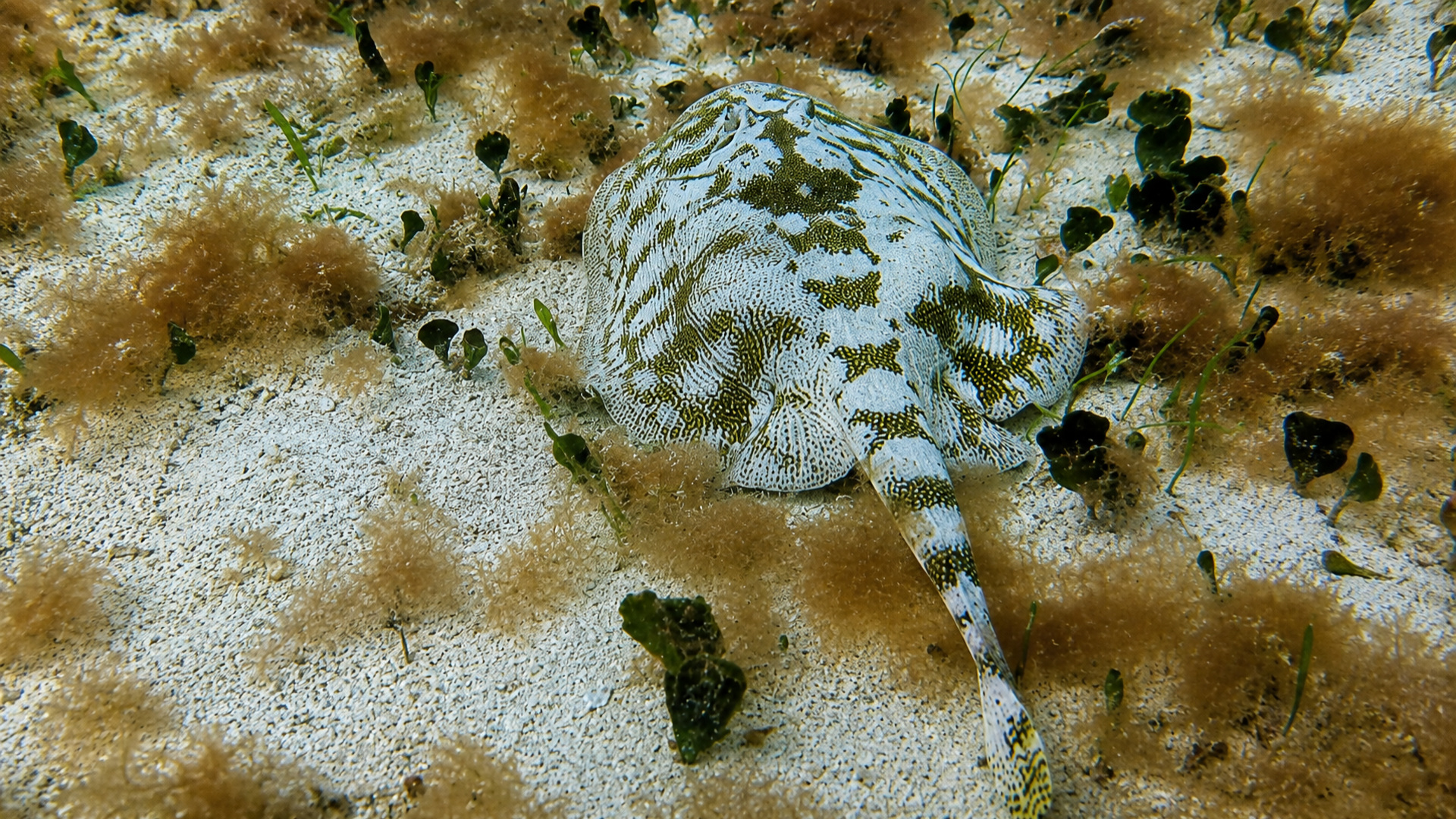
Close view of a camouflaged stingray eye and patterned body
The pattern is beautiful. From a distance, it helps the ray disappear.
Quick Facts

What divers are seeing.

Bottom Specialists

Stingrays spend much of their time close to the seafloor, where they rest, feed, and hide.

Sand Clouds

A cloud of sand can mean a ray has just lifted, settled, or searched the bottom for food.

Quiet Movement

Even a large ray can move with slow, controlled wingbeats that make the encounter feel calm and graceful.

Stingray Questions

Questions divers often ask

Click a question to open the answer.

Are stingrays dangerous to divers?

Most stingray encounters are calm and uneventful. Problems are usually caused when an animal is stepped on, touched, chased, or trapped. Give them space and observe respectfully.

Why do stingrays hide in the sand?

Sand helps protect them and may also help them ambush small prey. It makes them difficult for predators, snorkelers, and divers to notice.

What should I look for when trying to spot one?

Look for eyes, a raised outline, a wing edge, a tail line, or a fresh trail in the sand. Sometimes the clue is only a patch of sand that looks slightly different from everything around it.

Should I touch a stingray?

No. The best encounter is one where the animal is left undisturbed. Watch from a respectful distance and let the stingray choose whether to stay or move away.

Why are stingrays important to the reef story?

They remind divers that a reef is not only coral heads and colorful fish. The sand is alive too, and careful observation can reveal animals that are almost invisible at first glance.

What does it mean to read the sand?

It means looking for small signs on the seafloor: trails, depressions, raised edges, shadows, or disturbed sediment. Those clues often appear before the animal is obvious.

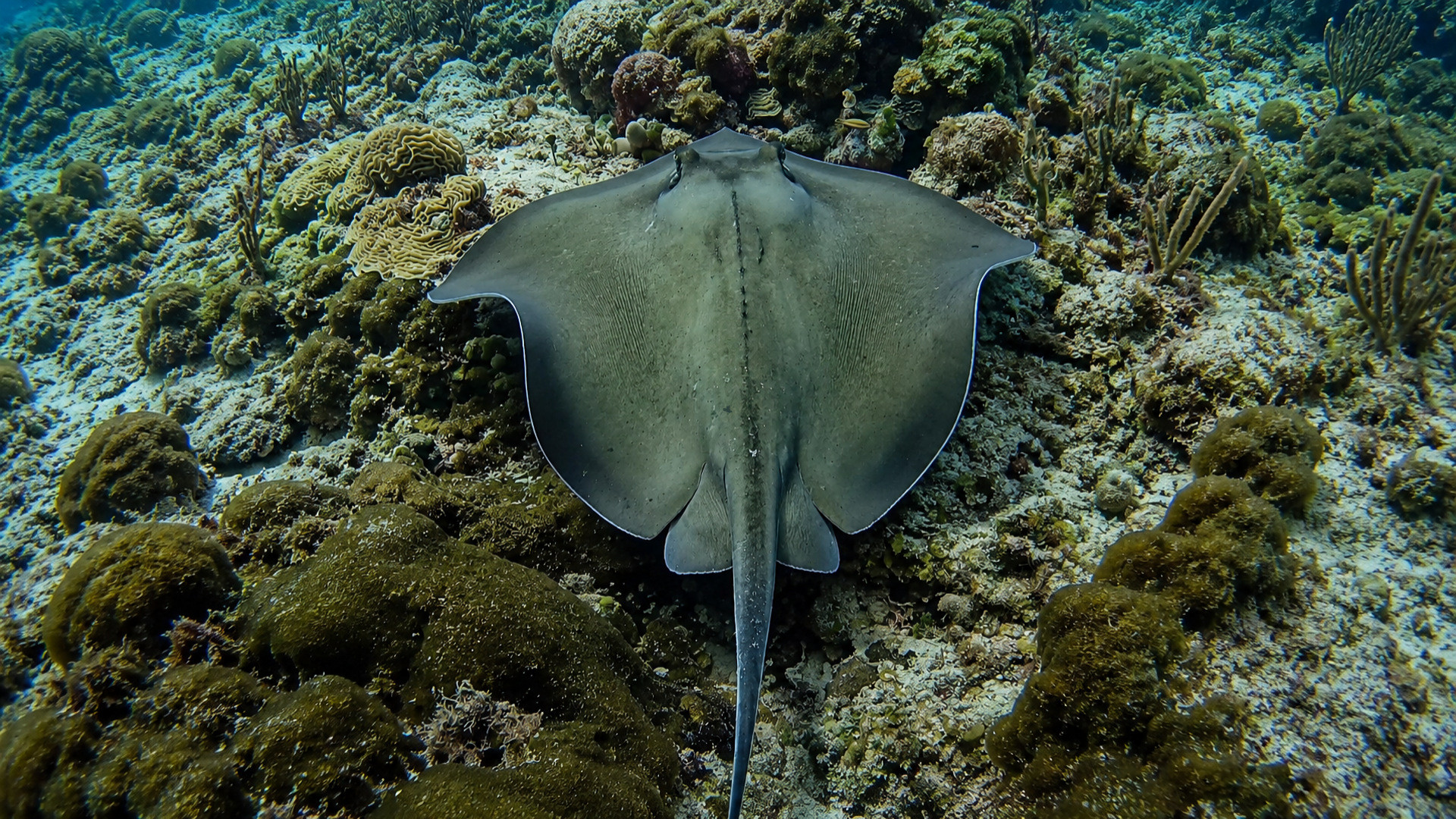
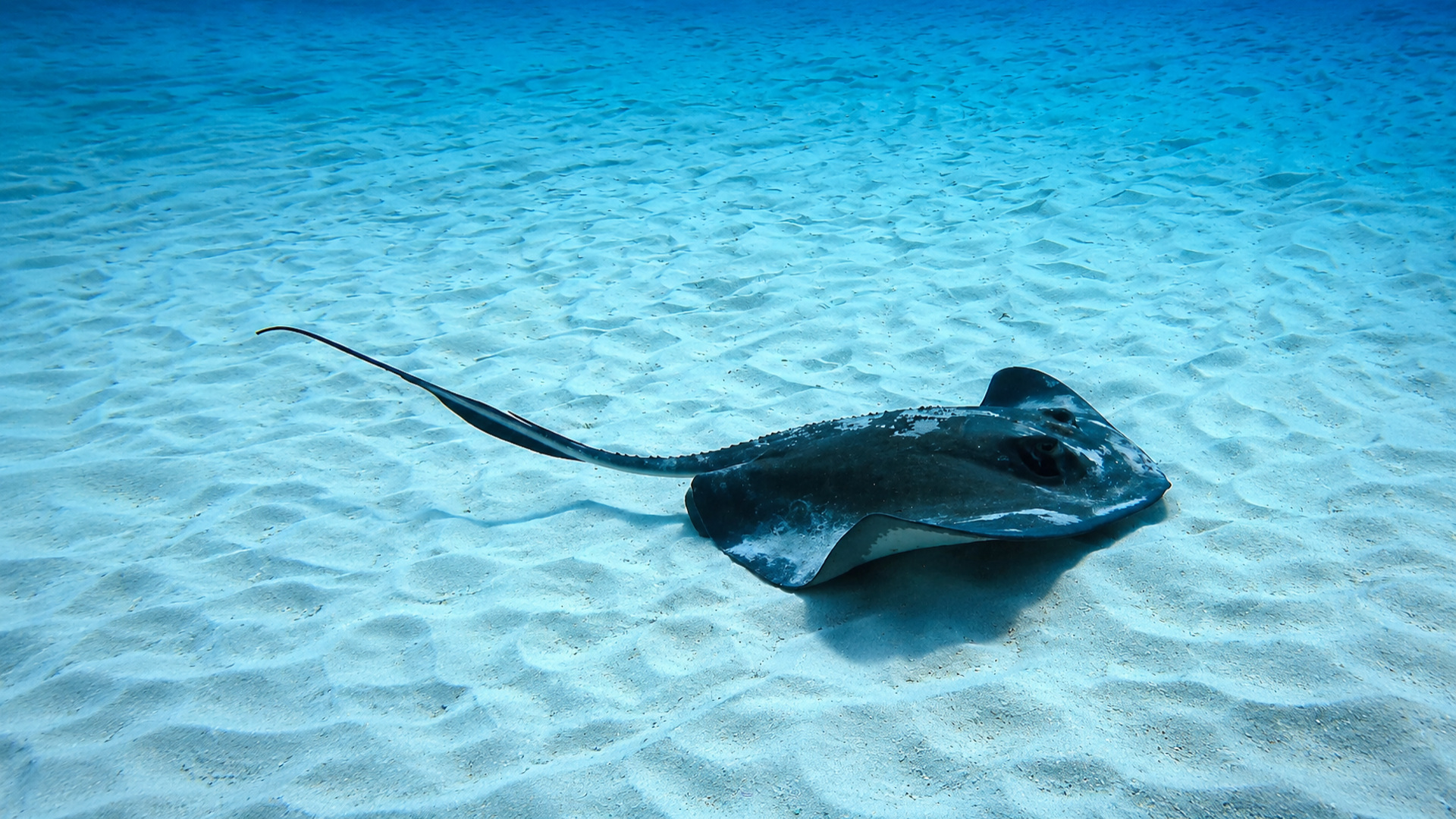
A large stingray stirring sand on the seafloor
A ray reveals itself through motion and sand.
Respectful Encounters

Give them space.

Stingrays are not looking for trouble. Most encounters are peaceful when divers and snorkelers stay calm, avoid chasing, and give the animal room to move.

In shallow sandy areas, the classic advice is to shuffle your feet rather than step down suddenly. For divers, the same idea applies underwater: watch your buoyancy, avoid kneeling in sand where you cannot see clearly, and never touch or corner a ray.

Continue Your Dive

Every reef has another story waiting to be discovered.

Explore more of Cozumel's marine life through personal encounters, underwater photography, and stories from the blue.

Explore More Featured Marine Life
Top ↑