Featured Marine Life

Splendid Toadfish of Cozumel

One of Cozumel's best-kept secrets. The reef rewards the diver who slows down, looks into the shadows, and notices what others swim past.

Gallery Oyster Toadfish Facts Questions
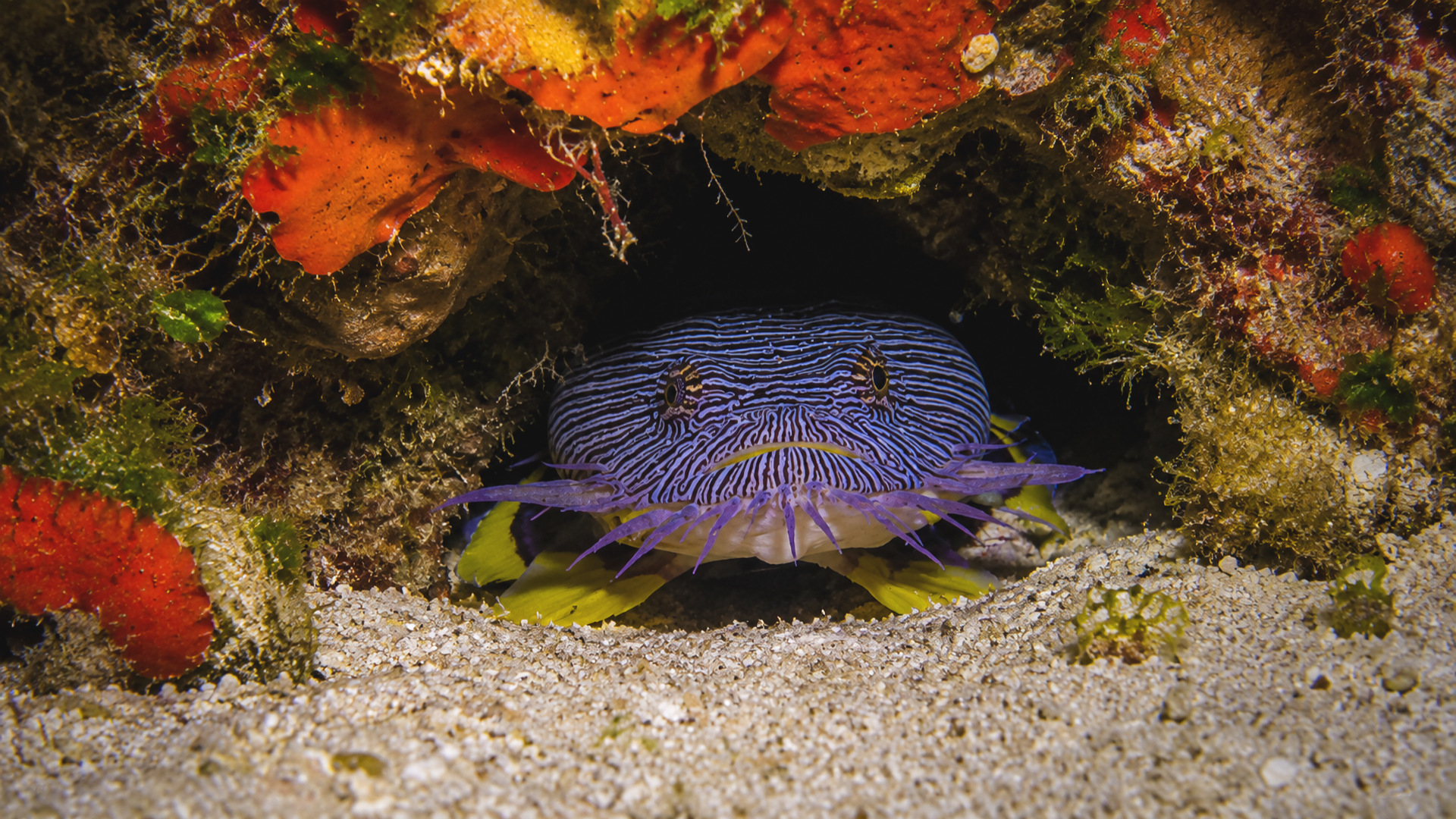
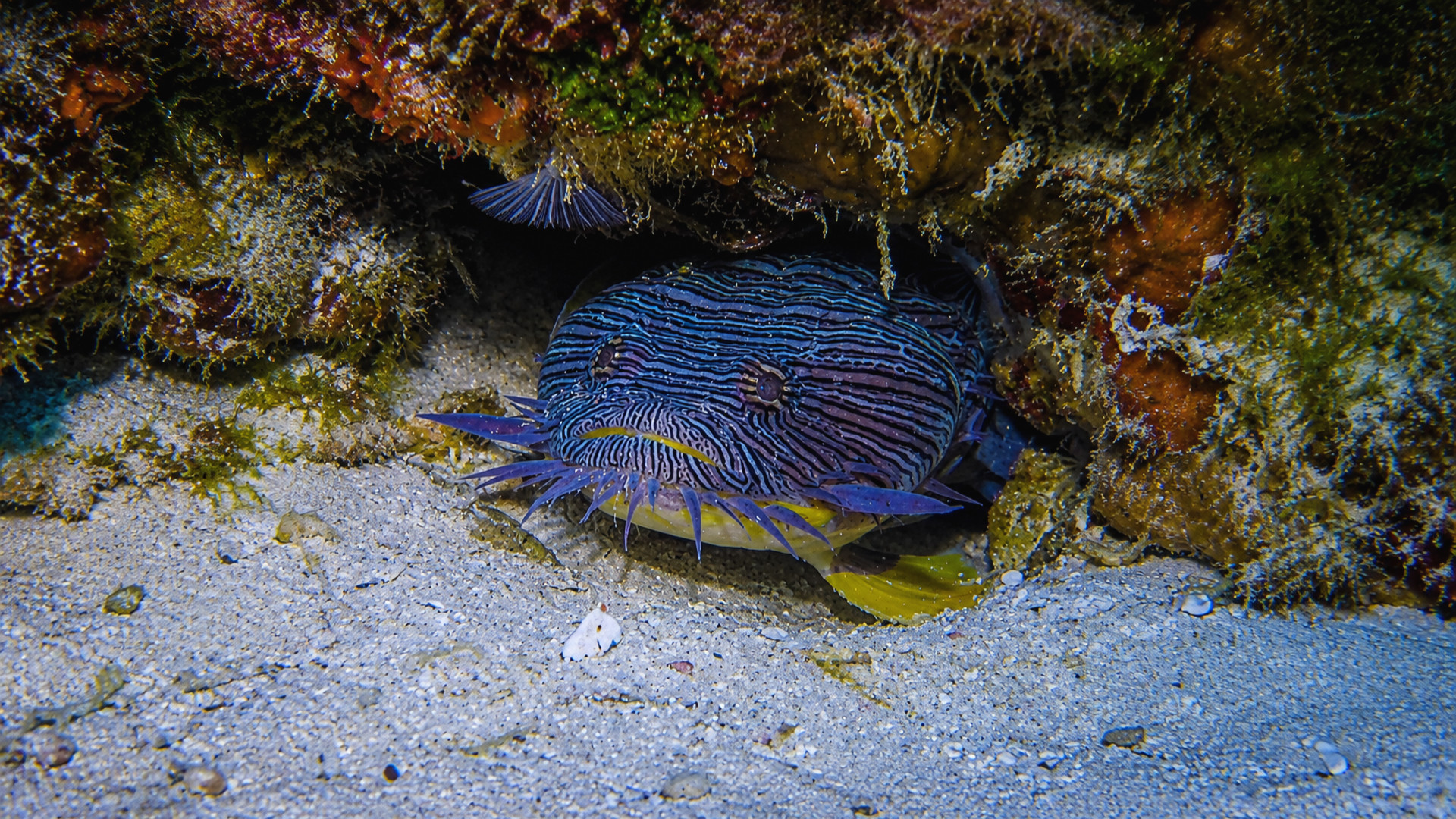
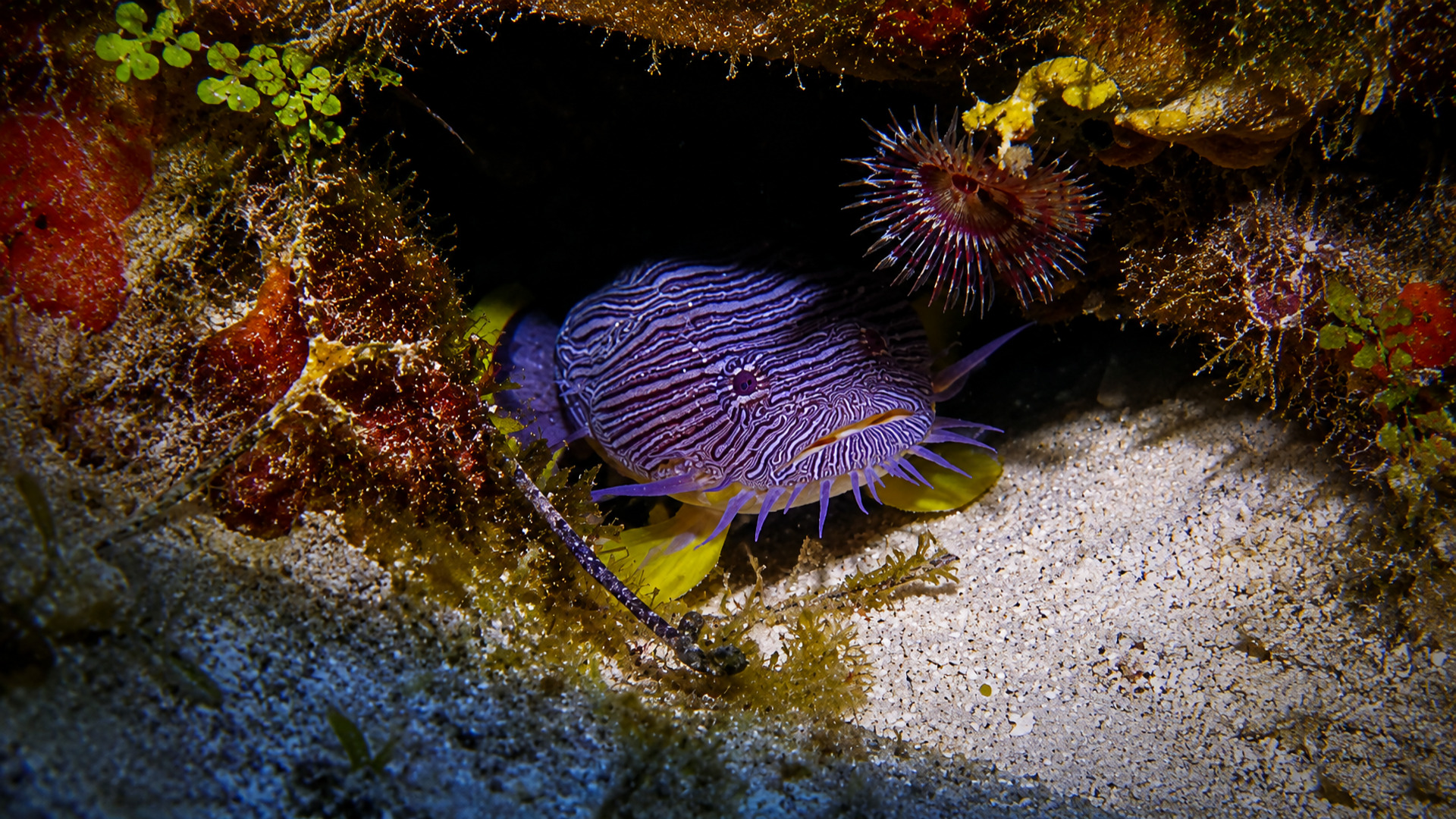
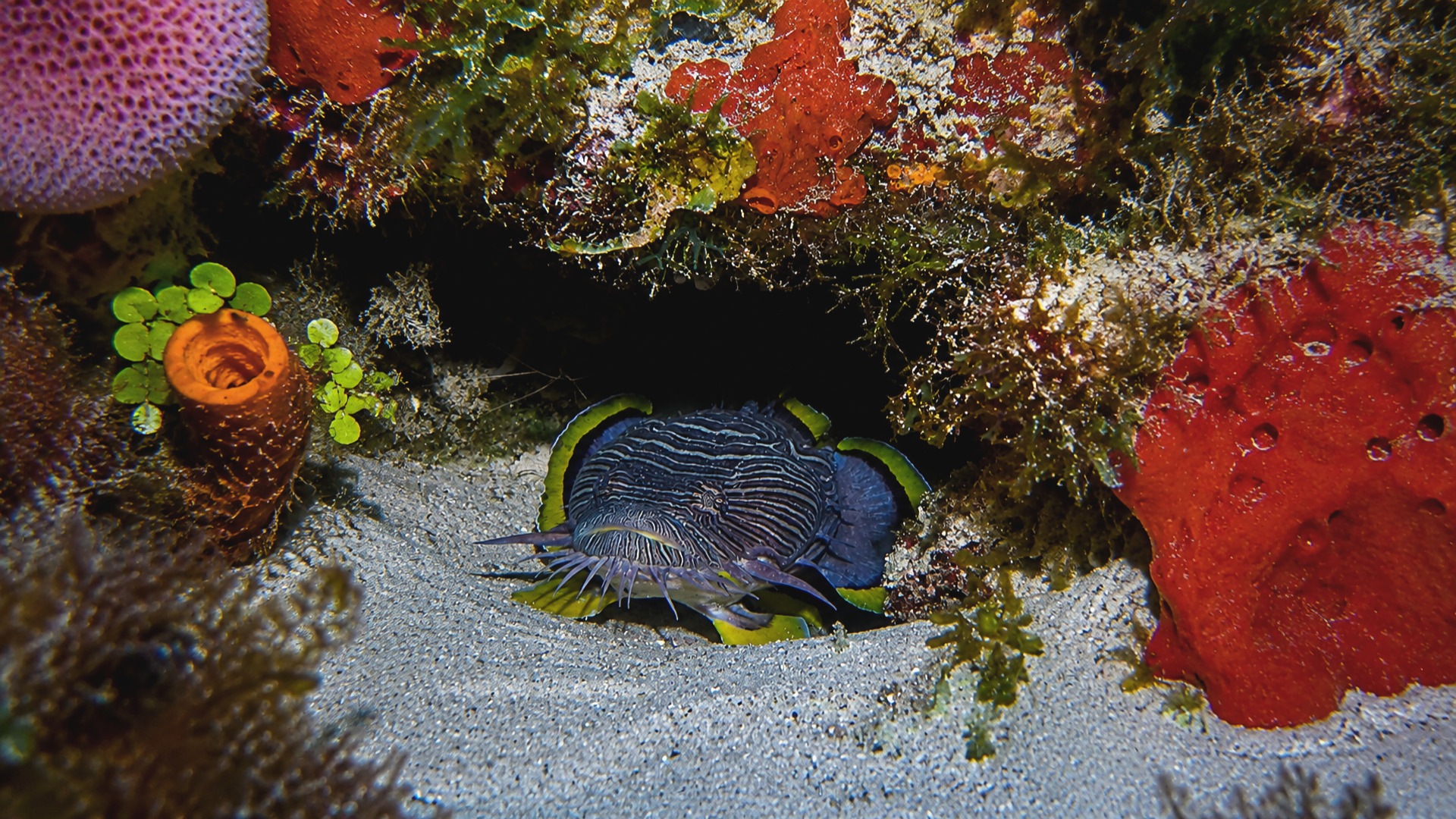
A Splendid Toadfish tucked beneath a colorful Cozumel reef ledge
At first glance, the reef opening may look empty. Then the stripes, eyes, and yellow-edged fins begin to appear.
Cozumel's Hidden Jewel

The rarest discoveries are often hiding in plain sight.

Many divers visit Cozumel without ever seeing a Splendid Toadfish. The fish is not absent - it is simply easy to overlook.

Its home is usually a dark opening beneath coral, rock, or sponge growth. A diver moving quickly may see only a shadow. A patient diver begins to notice the striped face, the broad head, the whisker-like barbels, and the bright yellow edges of the fins.
Diver Observation

How to find a Splendid Toadfish.

The lesson is not to search harder. It is to slow down, look into the reef, and allow your eyes time to adjust.

Search beneath ledges

Look along low coral shelves, small caves, and sponge-covered overhangs close to the sand.

Look for stripes

The maze-like lines on the head may be the first part of the fish that separates from the darkness.

Notice yellow edges

Bright yellow fin margins can reveal the fish even when most of its body remains hidden inside the den.

Face to Face

A portrait unlike any other on the reef.

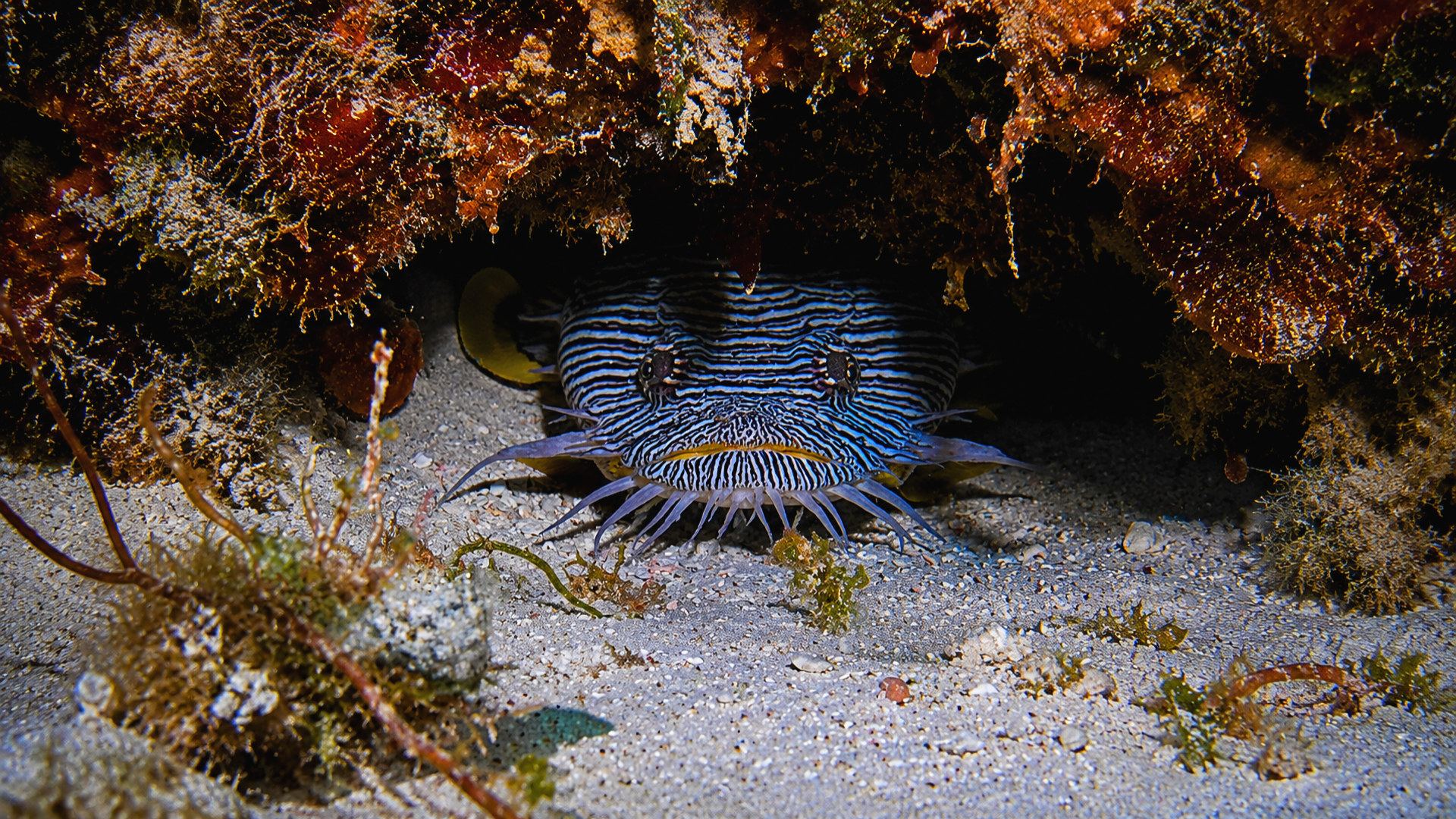
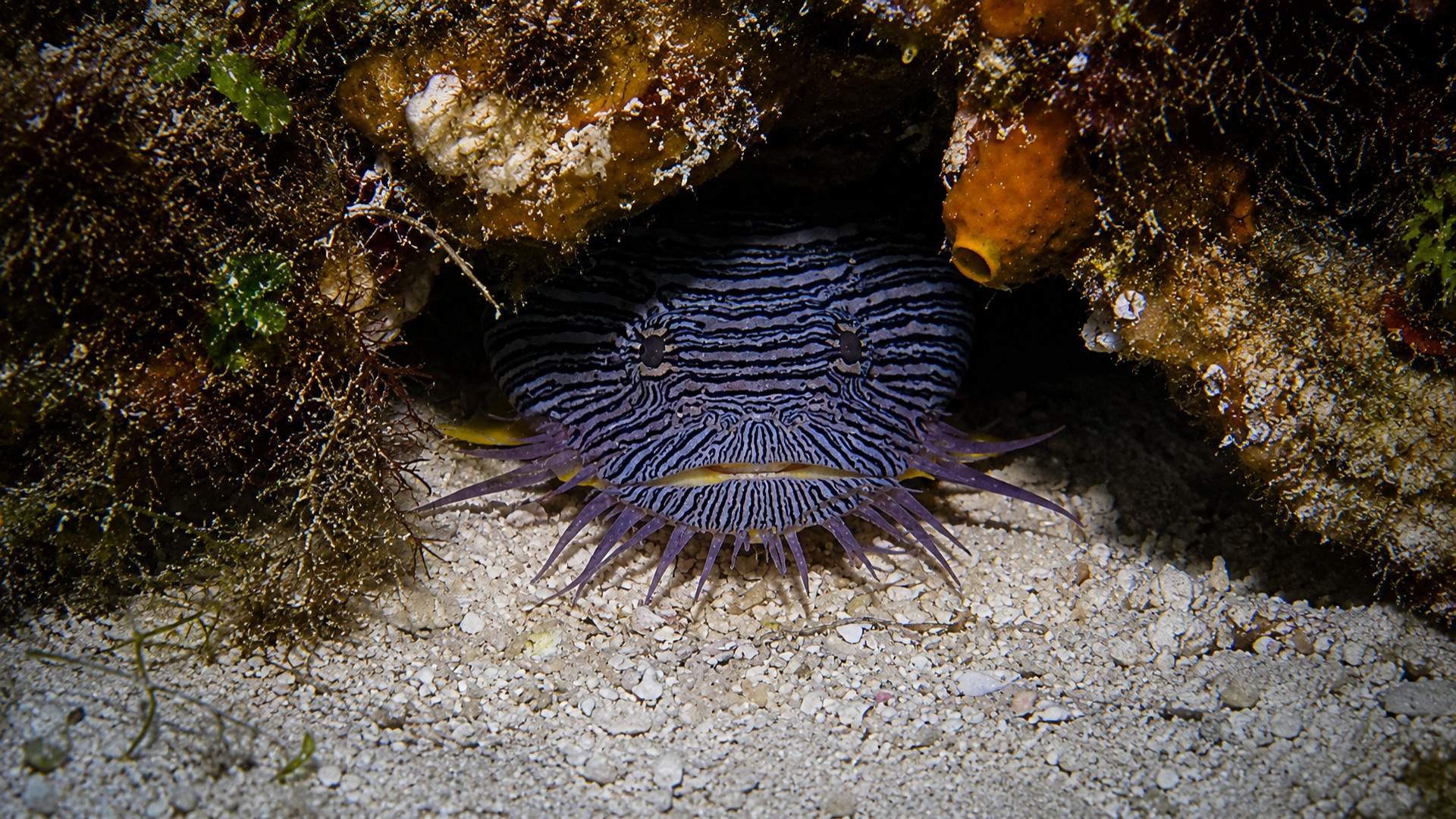
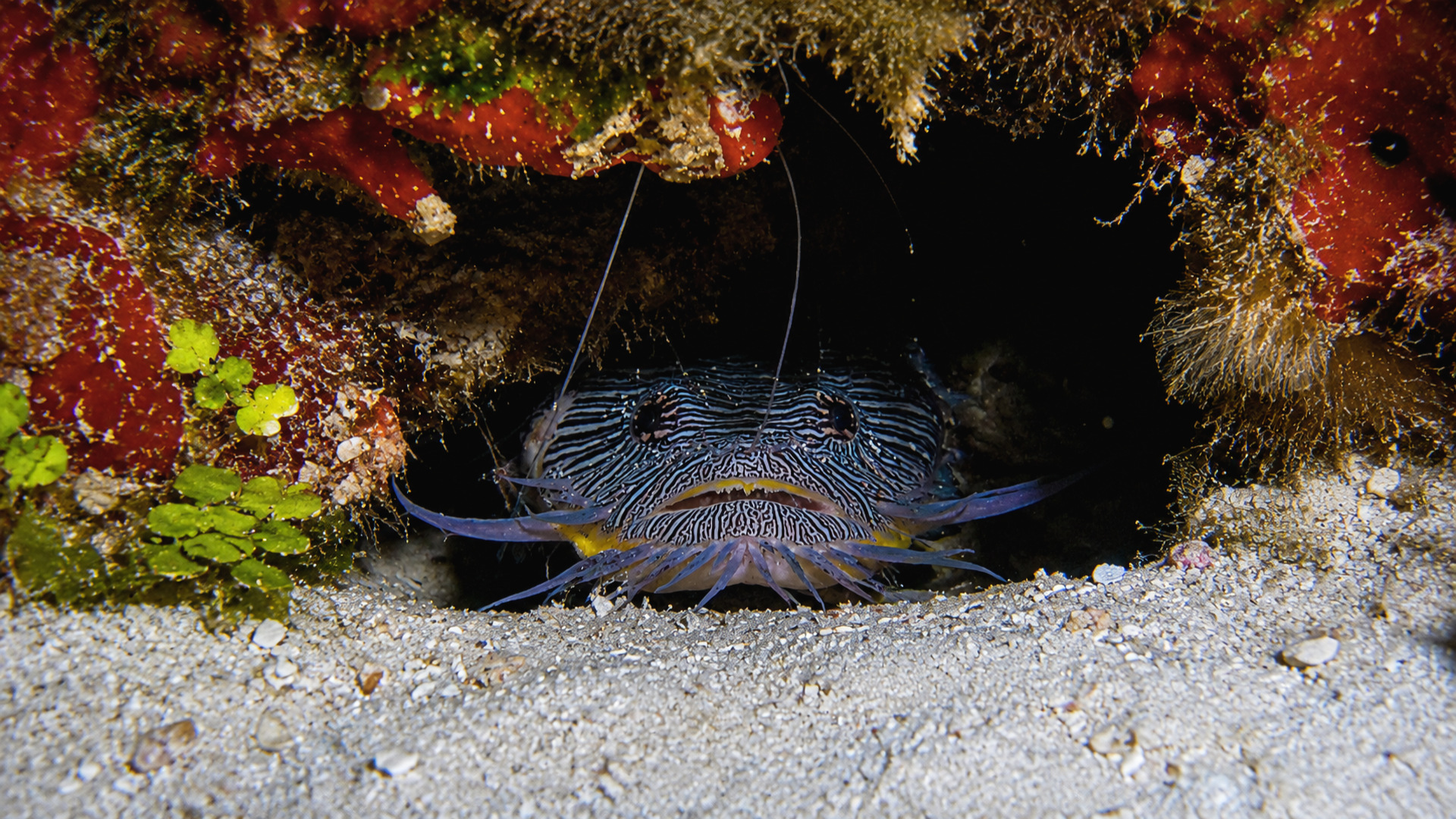
The Splendid Toadfish has a broad flattened head, small raised eyes, intricate facial striping, and delicate barbels around the mouth.

Front view of a Splendid Toadfish watching from its den
A direct look from the shadows - the face that many divers never notice.
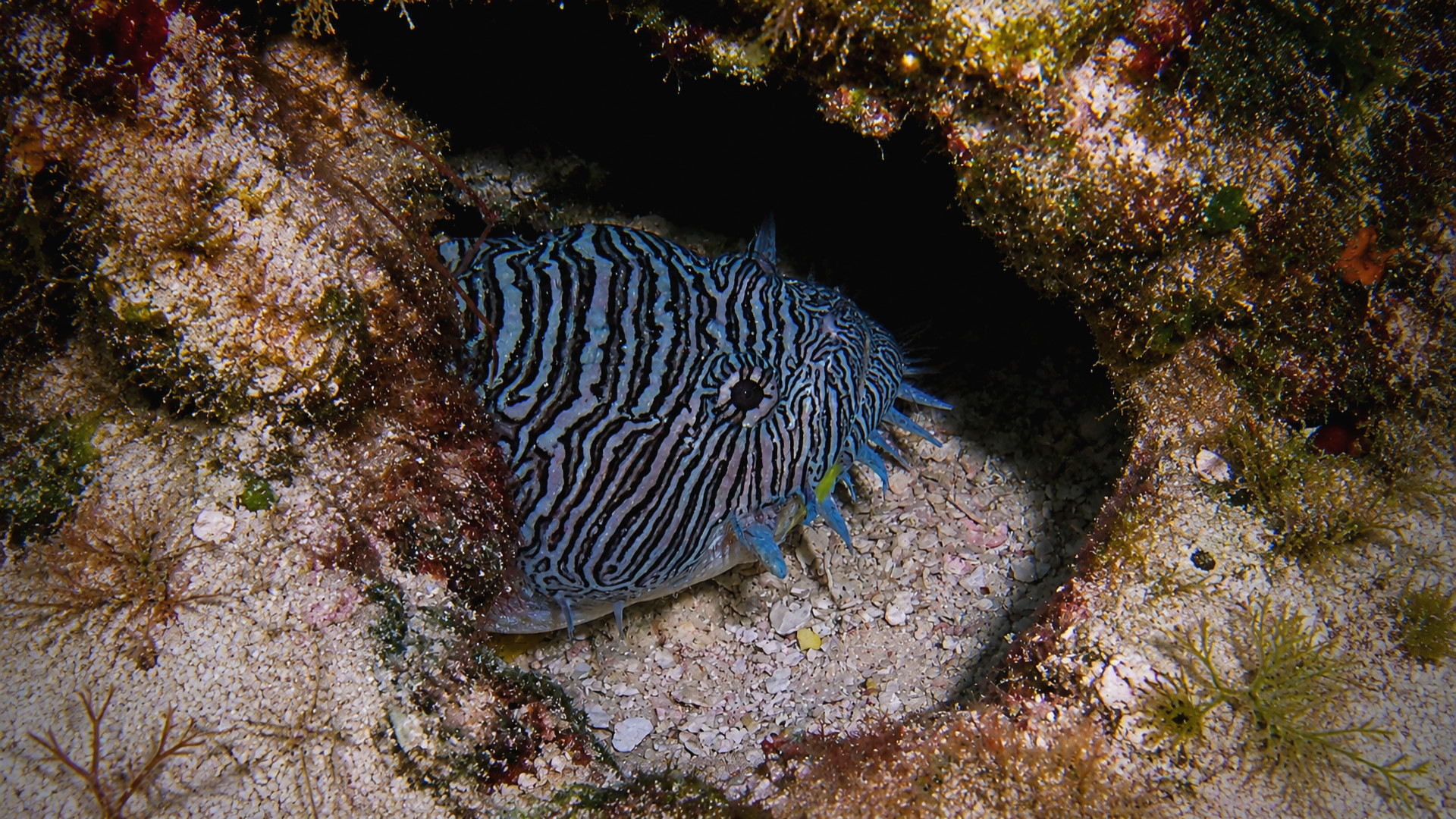
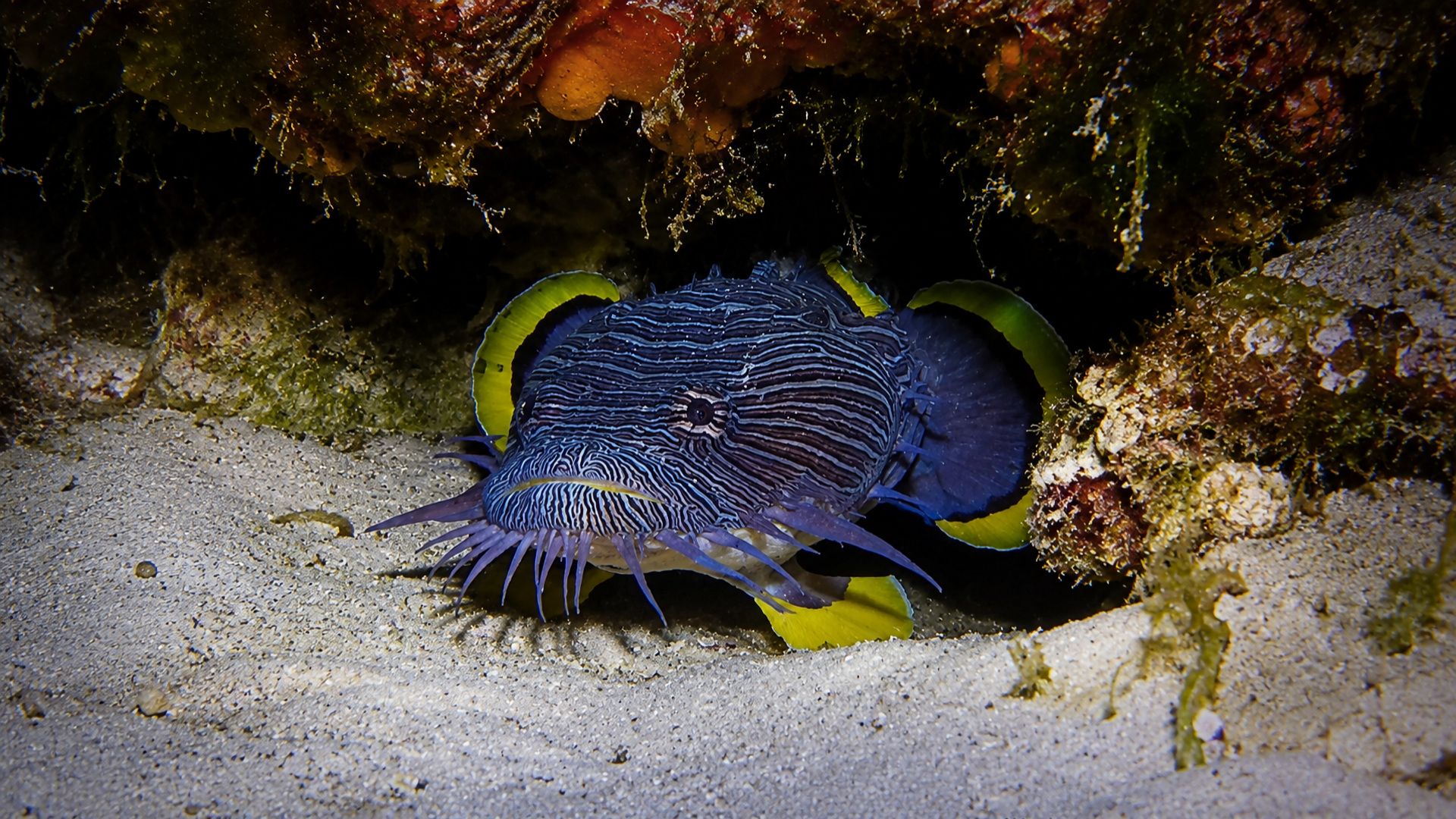
Close portrait of a Splendid Toadfish with yellow-edged fins
The maze-like lines, purple barbels, and yellow-edged fins give the fish its unmistakable appearance.
Symmetrical close portrait of a Splendid Toadfish in a reef opening
From the front, the fish seems almost designed to fit the dark doorway of its reef home.
Life Beneath the Reef

The den is part of the animal's story.

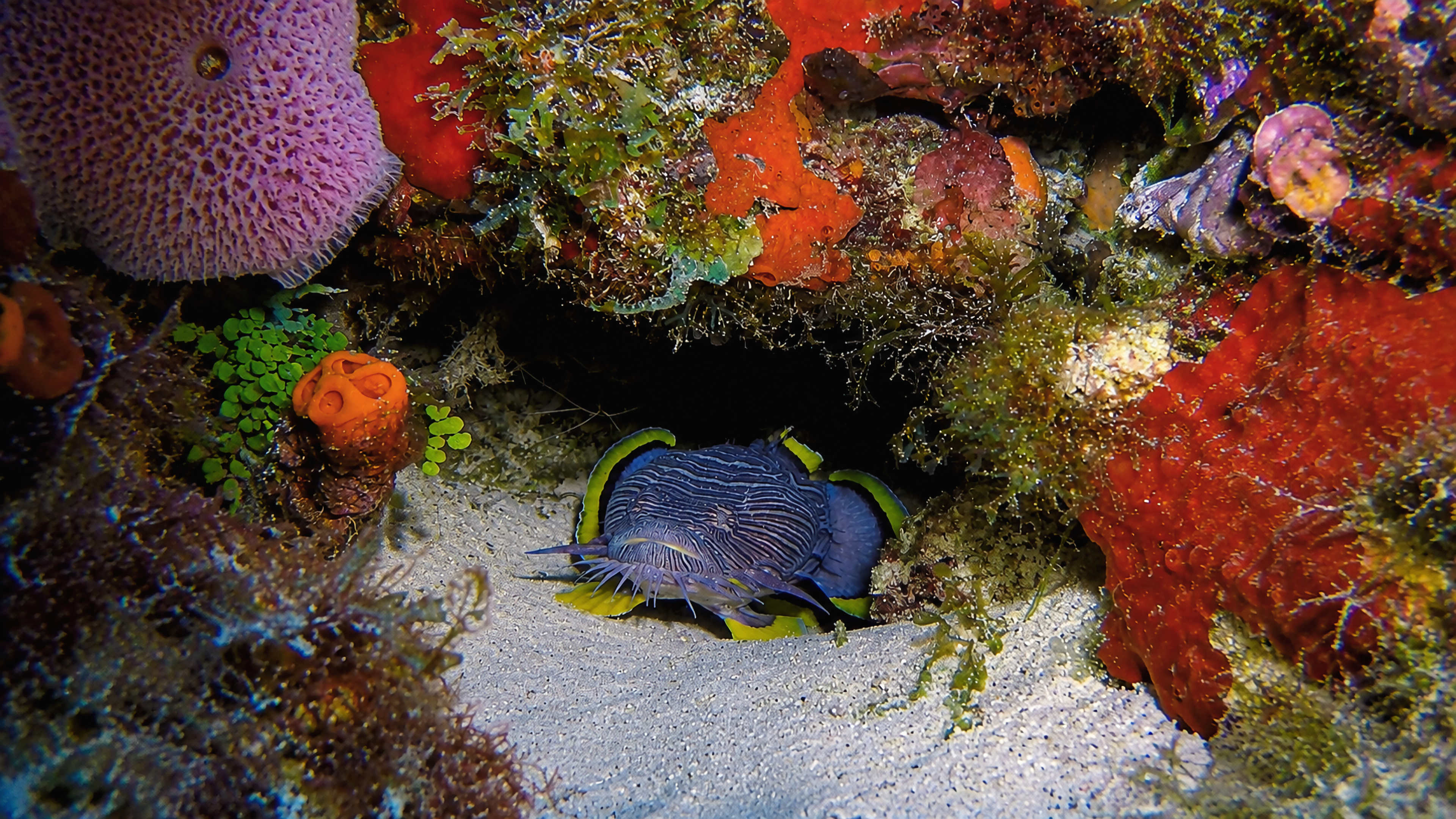
Splendid Toadfish are strongly associated with sheltered reef openings where they can remain concealed while watching the world outside.

The surrounding sponges, algae, sand, coral growth, and shadows are not background decoration. They explain why the fish is so easy to miss and why careful buoyancy matters when approaching for a photograph.

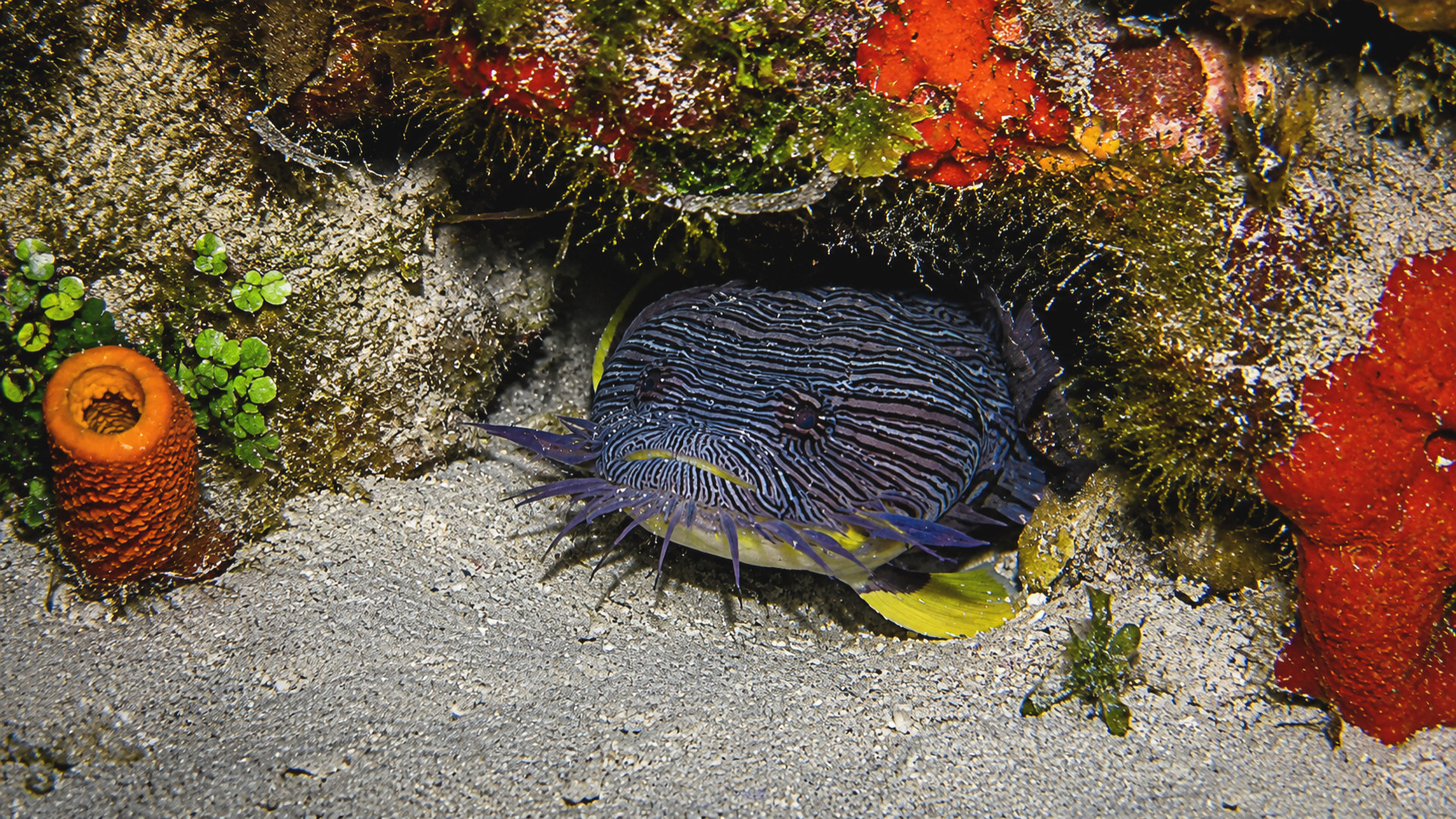
A Splendid Toadfish framed by a colorful Cozumel reef opening
The fish and its shelter form one complete scene - a hidden life beneath a busy reef.
A Related Toadfish

The Oyster Toadfish - similar family, very different appearance.

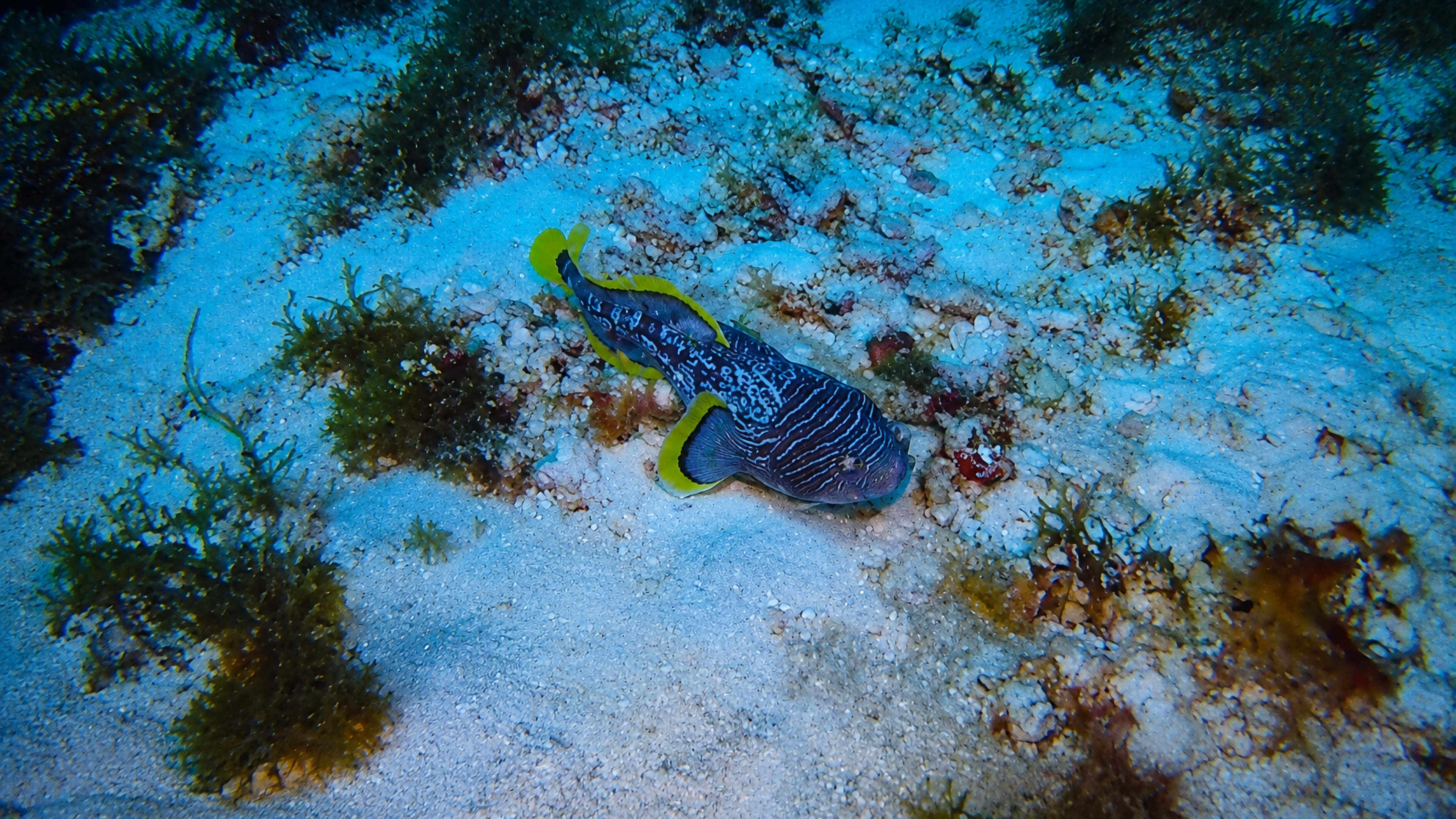
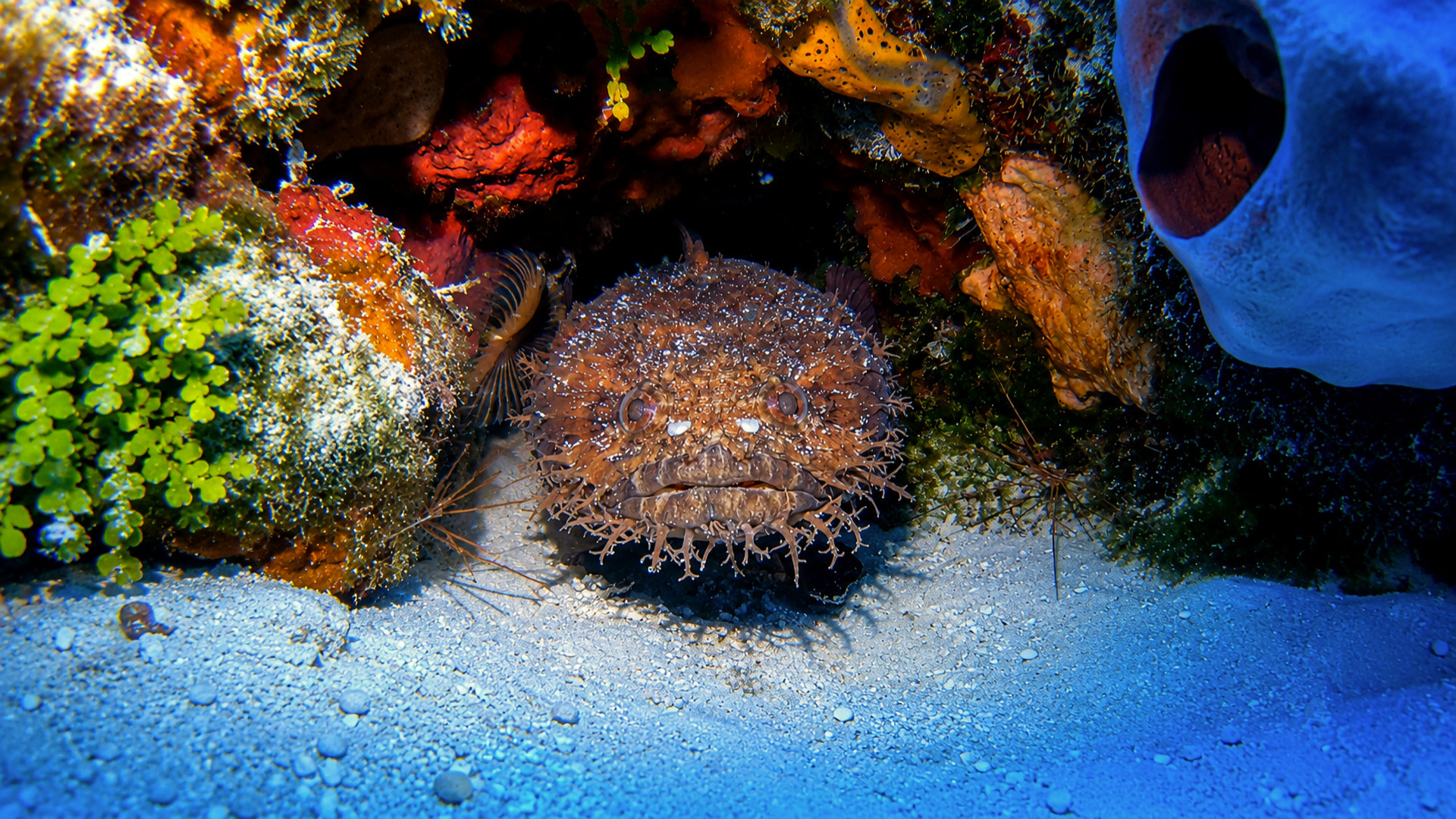
The Oyster Toadfish is included here as a comparison, not as a second star. It helps show how varied the toadfish family can be.

An Oyster Toadfish resting in a colorful reef crevice
The Oyster Toadfish has a rougher, brown, heavily textured appearance and lacks the Splendid Toadfish's bold stripes and yellow fin edges.
A Useful Comparison

Related does not mean identical.

Both fish share the broad head, bottom-dwelling posture, large mouth, and preference for shelter, but their appearance tells two very different stories.

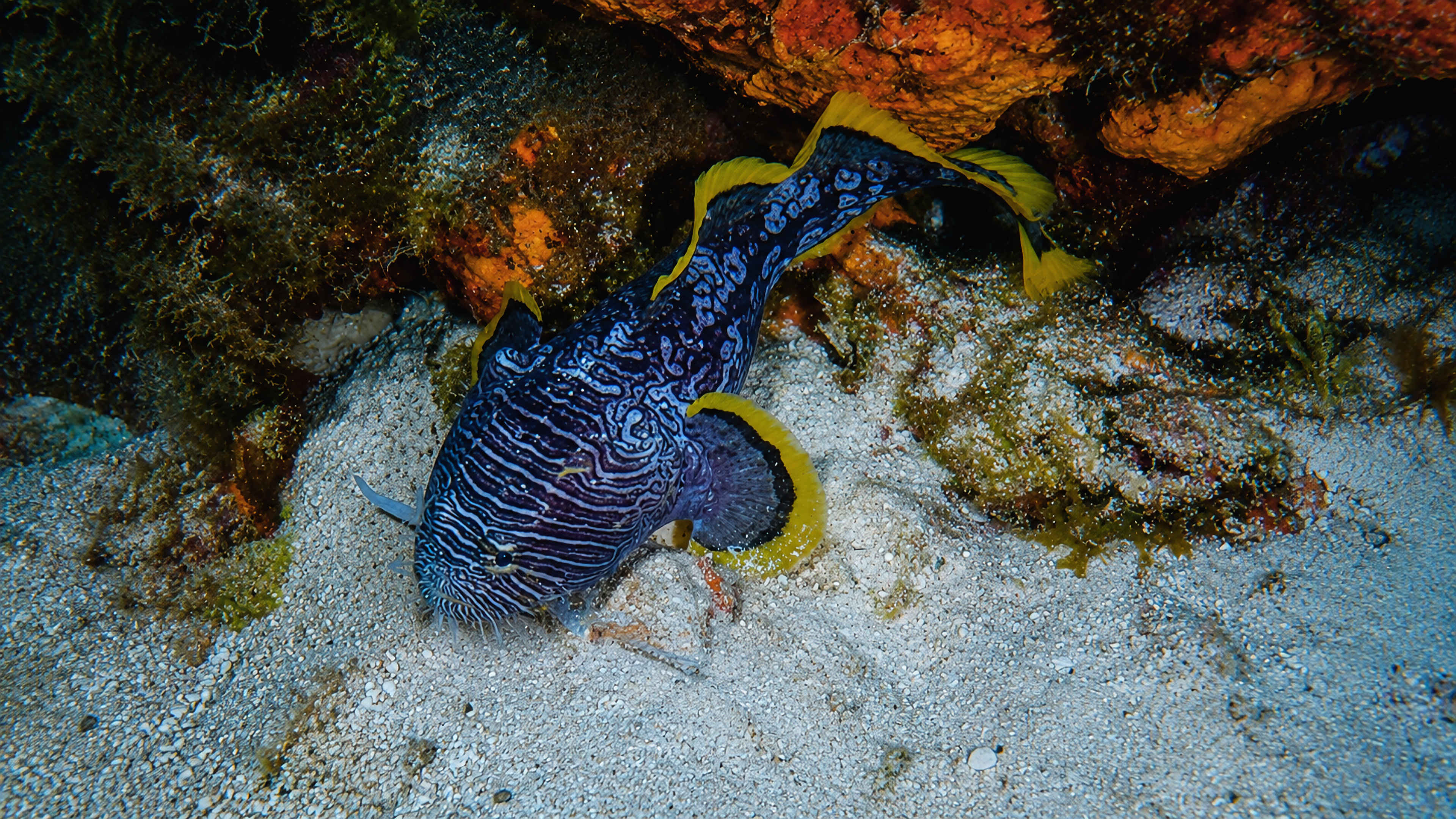
The Oyster Toadfish is mottled brown and covered with fleshy projections that blend into rock and reef growth. The Splendid Toadfish is marked by elegant dark lines, pale blue-violet tones, purple barbels, and brilliant yellow-edged fins. Seeing them together makes Cozumel's endemic species feel even more distinctive.

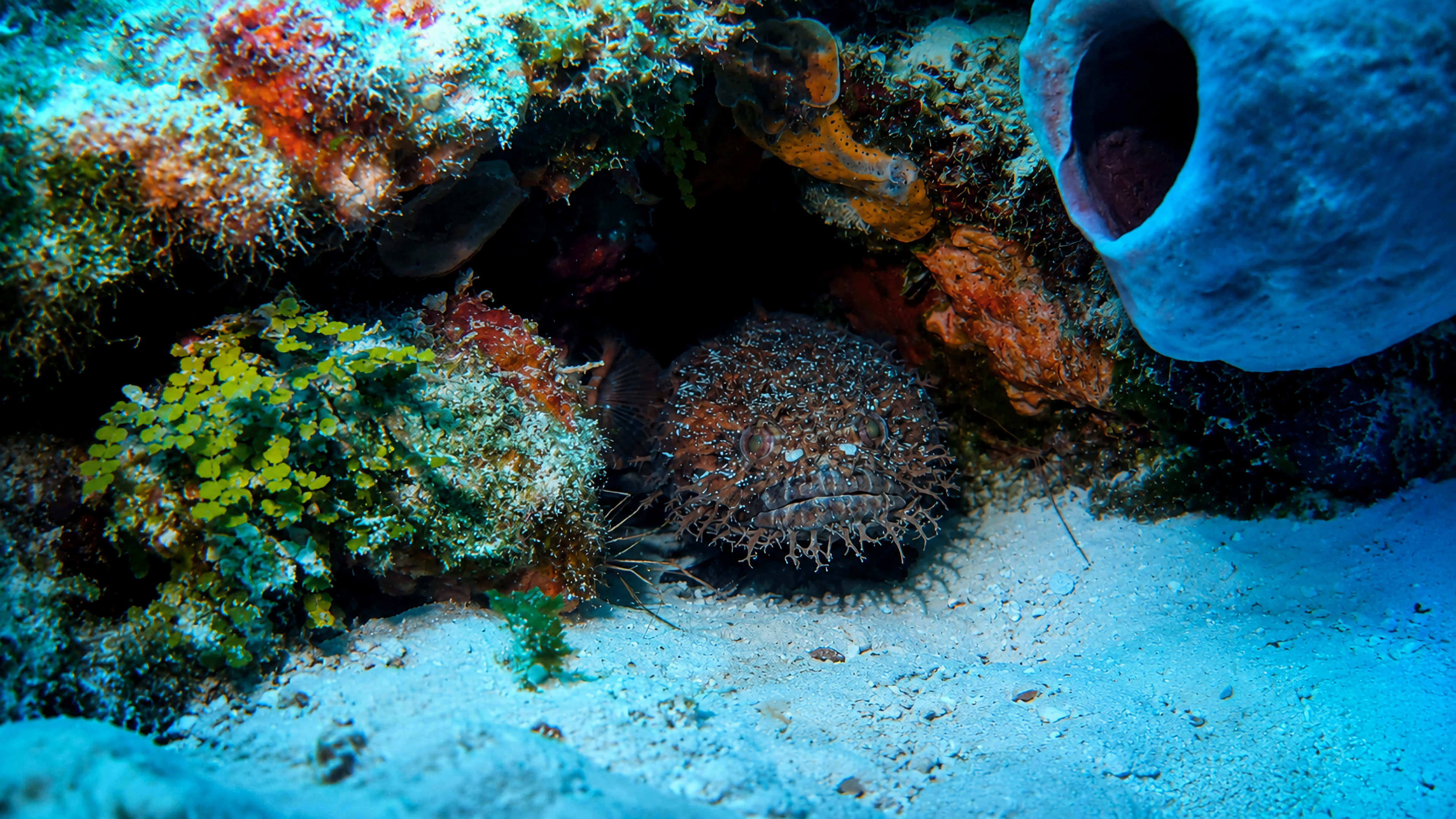
Close environmental portrait of an Oyster Toadfish beneath reef growth
A second view of the Oyster Toadfish shows how strongly its rough texture and earthy color merge with the surrounding reef.
Quick Facts

What makes the Splendid Toadfish special.

A Cozumel Specialty

The Splendid Toadfish is closely associated with Cozumel and is one of the island's most celebrated underwater discoveries.

A Hidden Resident

Most sightings are of the head and front fins because the fish commonly remains inside a protected reef opening.

A Fish You May Hear

Toadfish are known for sound production. Divers may hear low calls underwater without realizing a hidden fish is nearby.

Toadfish Questions

Questions divers often ask

Click a question to open the answer.

Why is it called the Splendid Toadfish?

The name reflects its unusually striking appearance. The intricate stripes, blue-violet tones, purple facial barbels, and yellow-edged fins make it far more colorful than many other toadfish.

Is the Splendid Toadfish found anywhere besides Cozumel?

It is regarded as a Cozumel endemic and is one of the species most closely identified with the island's reefs.

Why is it so difficult to find?

It usually stays beneath ledges or inside small reef cavities. A diver may see only the face, eyes, or edges of the fins, and the dark shelter can hide even those details.

Does a Splendid Toadfish make sounds?

Yes. Like other toadfish, it can produce low calls using muscles associated with the swim bladder. The sound may travel farther than the fish is visible.

Is a Splendid Toadfish dangerous to divers?

No. It is a secretive reef fish that normally remains in its shelter. Divers should simply avoid touching, crowding, or blocking the entrance to its den.

How can I photograph one without disturbing it?

Approach slowly, maintain careful buoyancy, avoid placing hands or equipment on the reef, and do not push a camera into the opening. Let the fish remain in control of the encounter.

How is the Oyster Toadfish different?

The Oyster Toadfish has a rough brown appearance with fleshy projections that help it blend into the reef. The Splendid Toadfish is more boldly patterned, with striped facial markings and yellow-edged fins.

A Splendid Toadfish resting quietly at the entrance of its den
The best photograph is one that leaves the fish, its den, and the surrounding reef exactly as they were found.
Respectful Encounters

Observe the doorway. Do not enter it.

A Splendid Toadfish den is a home, not a stage. The fish should never be coaxed out, touched, blocked, or surrounded for a photograph.

Stay neutrally buoyant, keep fins away from the sand and reef, limit strong light, and allow other divers room to look without crowding. The reward is a natural encounter with one of Cozumel's most remarkable residents.

Continue Your Dive

Every reef has another story waiting to be discovered.

Explore more of Cozumel's marine life through personal encounters, underwater photography, and stories from the blue.

Explore More Featured Marine Life
Top ↑