
Featured Marine Life

Sharks of Cozumel

Quiet hunters, curious visitors, and misunderstood animals sharing the reef with divers who slow down long enough to understand them.

A Lesson Hammerheads Facts Questions Respect
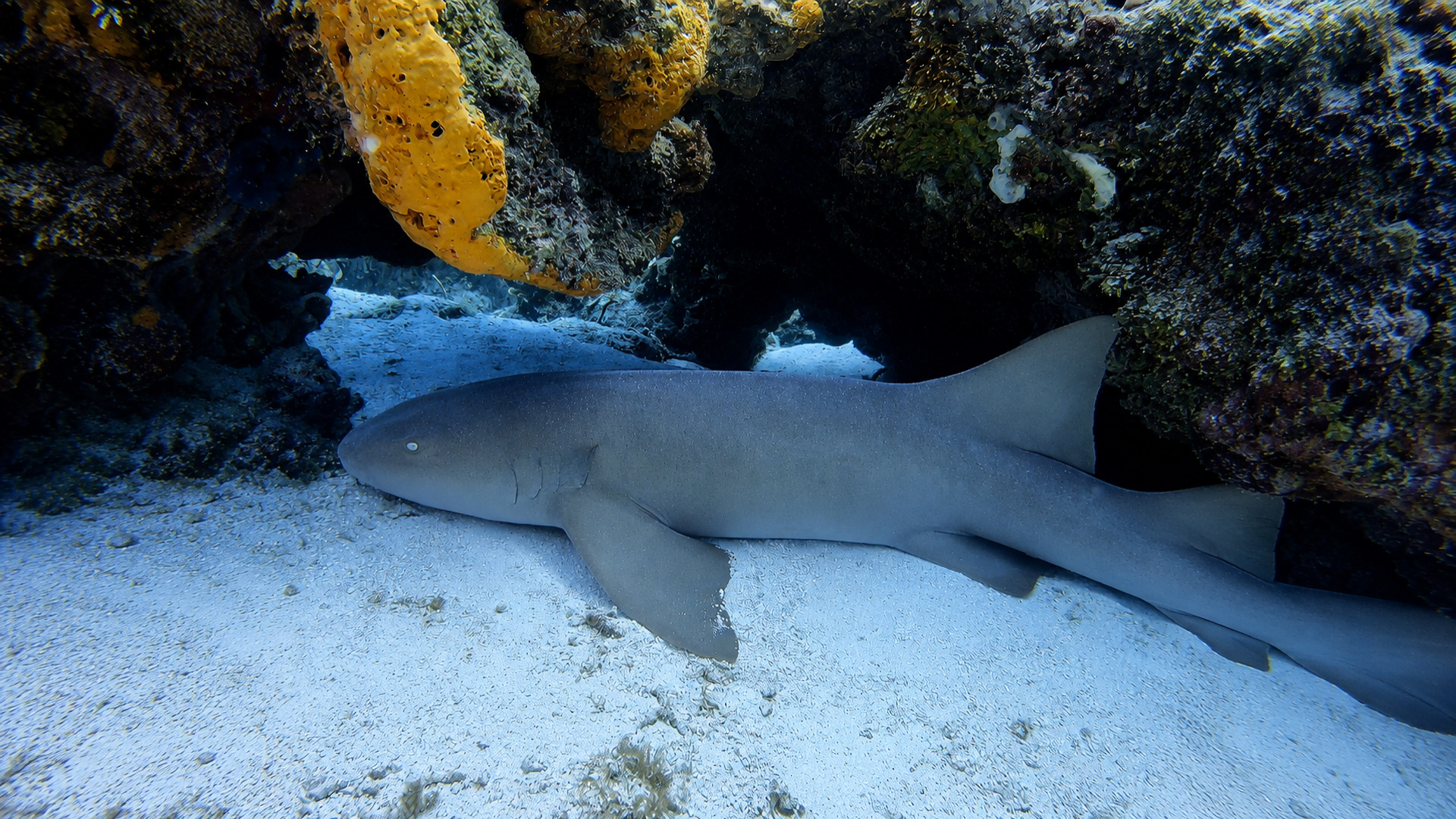
A shark cruising above a colorful Cozumel reef
A calm reef scene where the shark is only one part of a much larger marine world.
The Encounter

Not monsters. Not pets. Wildlife.

For many divers, seeing a shark is unforgettable. The first reaction may be excitement, nervousness, or awe.

But the longer you watch, the clearer it becomes: most shark encounters are not dramatic confrontations. They are brief moments of shared space.

In Cozumel, divers most often see nurse sharks resting under ledges or moving slowly across the reef. Reef sharks may appear in open water, and hammerheads are rare but possible. Each encounter is a reminder that the ocean is not a stage for us. It is their home.

Diver Encounters

Distance and respect shape the moment.

The best shark encounters are not about chasing. They are about patience, awareness, and letting the animal decide how close the moment becomes.

A diver watches a nurse shark swim across a reef
A diver and shark move through the same reef without conflict or pursuit.
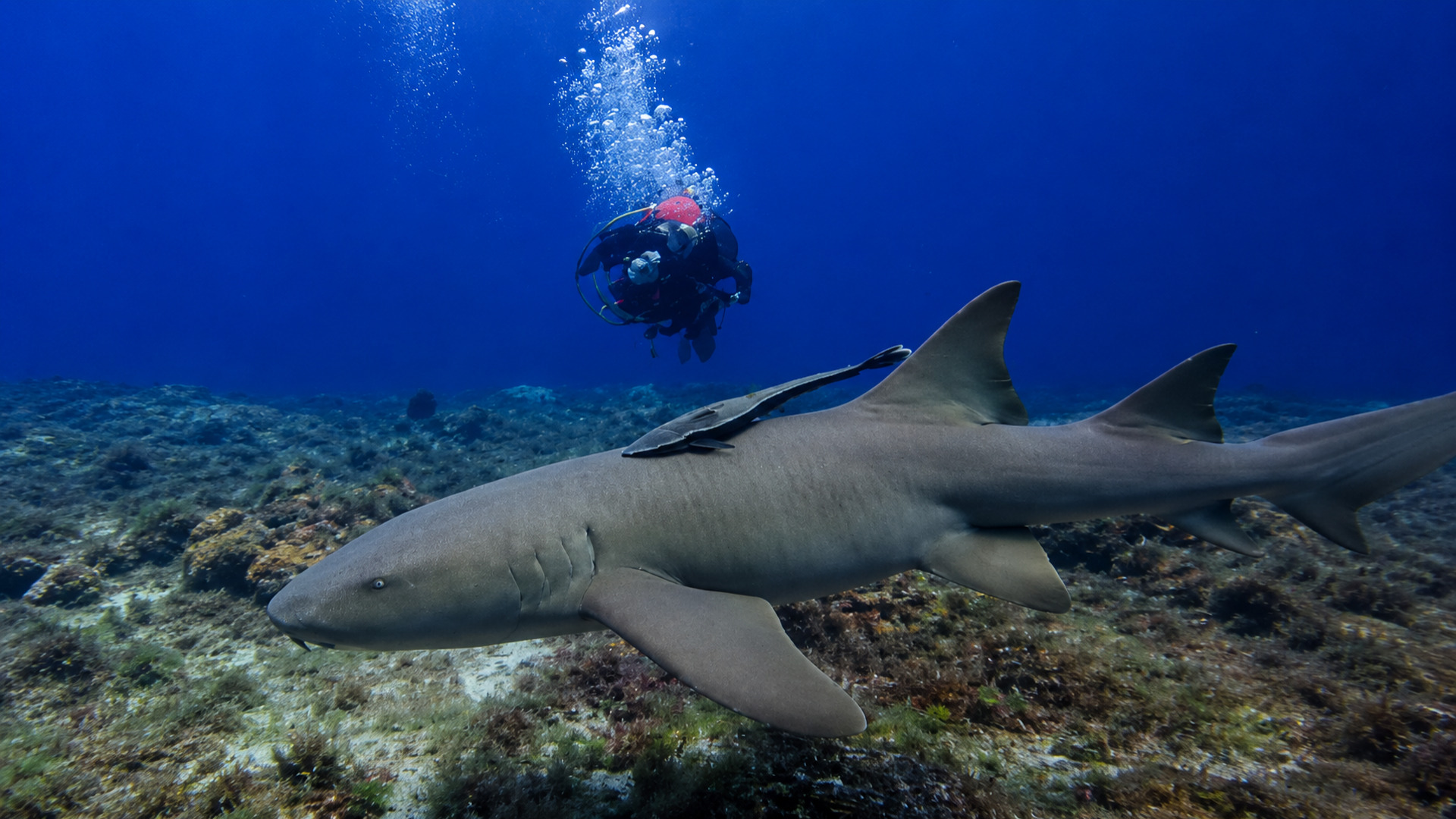
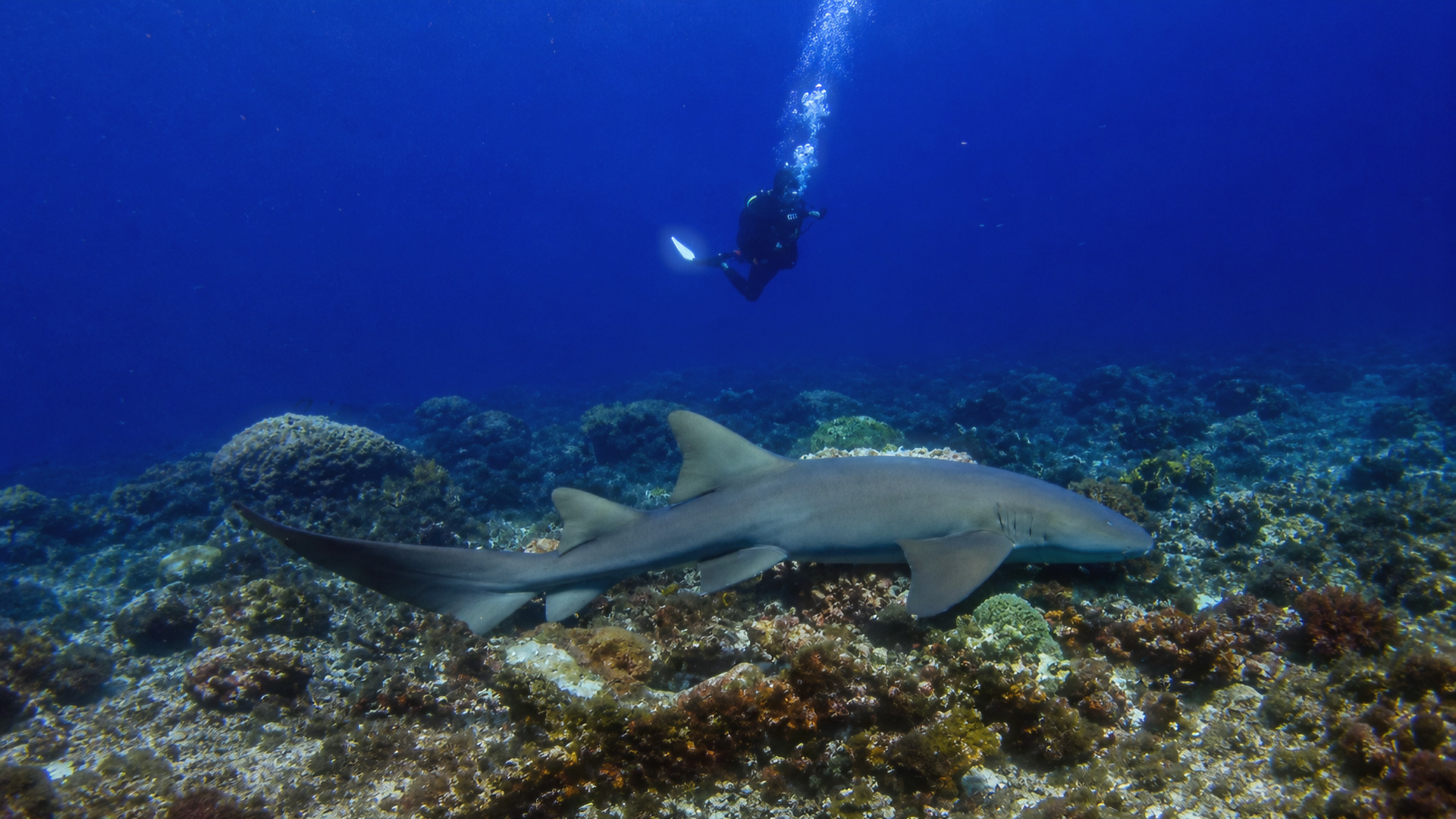
A nurse shark gliding past a reef with a diver in the distance
The diver gives context while the shark remains the natural subject of the reef.
A diver passing above a resting nurse shark near a large sponge
Good buoyancy and distance help keep resting animals undisturbed.
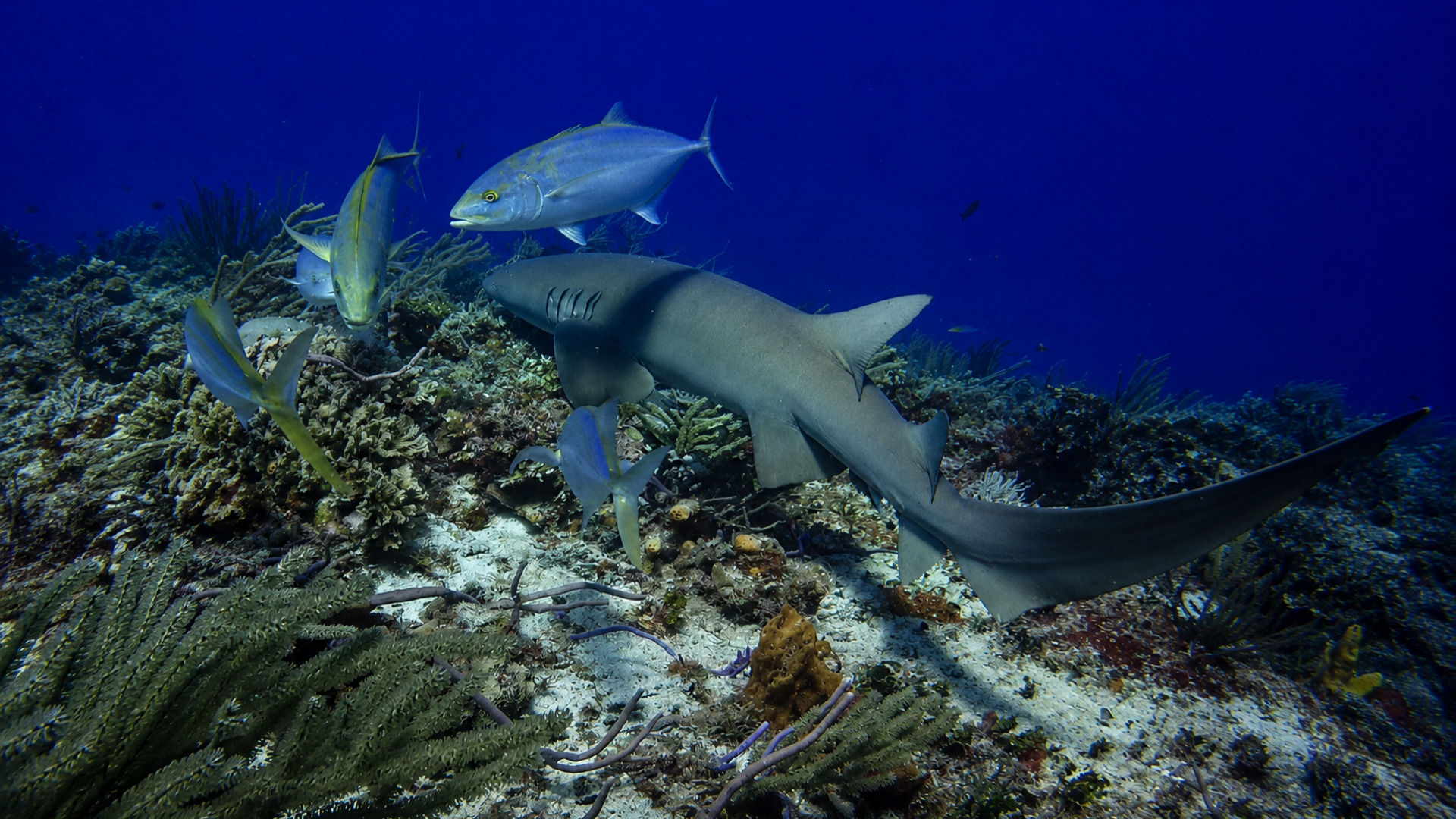
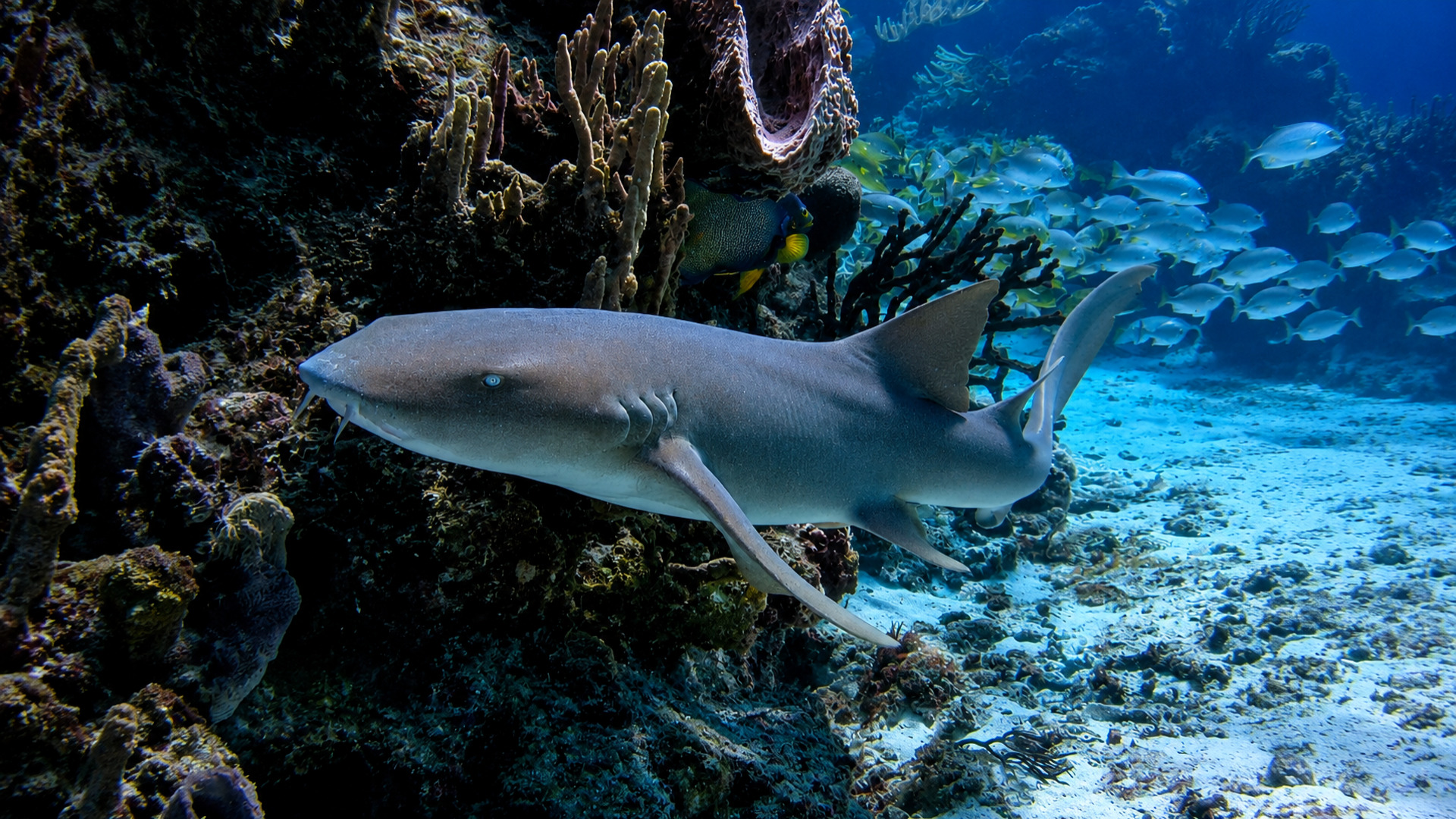
Close view of a nurse shark beside the reef with schooling fish in the background
Nurse sharks are often calm, bottom-oriented sharks that use the reef for shelter and movement.
Nurse Sharks

Calm does not mean casual.

Nurse sharks are among the most familiar sharks for many Cozumel divers. They are often seen resting under coral ledges, tucked into sandy channels, or cruising slowly over the reef.

Their relaxed appearance can be misleading. They are still wild animals. The right lesson is not to fear them or to treat them casually. The right lesson is to respect their space and let their behavior guide the encounter.

Resting Under Ledges

Many shark encounters begin with stillness.

A ledge, a sandy floor, a quiet animal, and a diver who notices without disturbing.

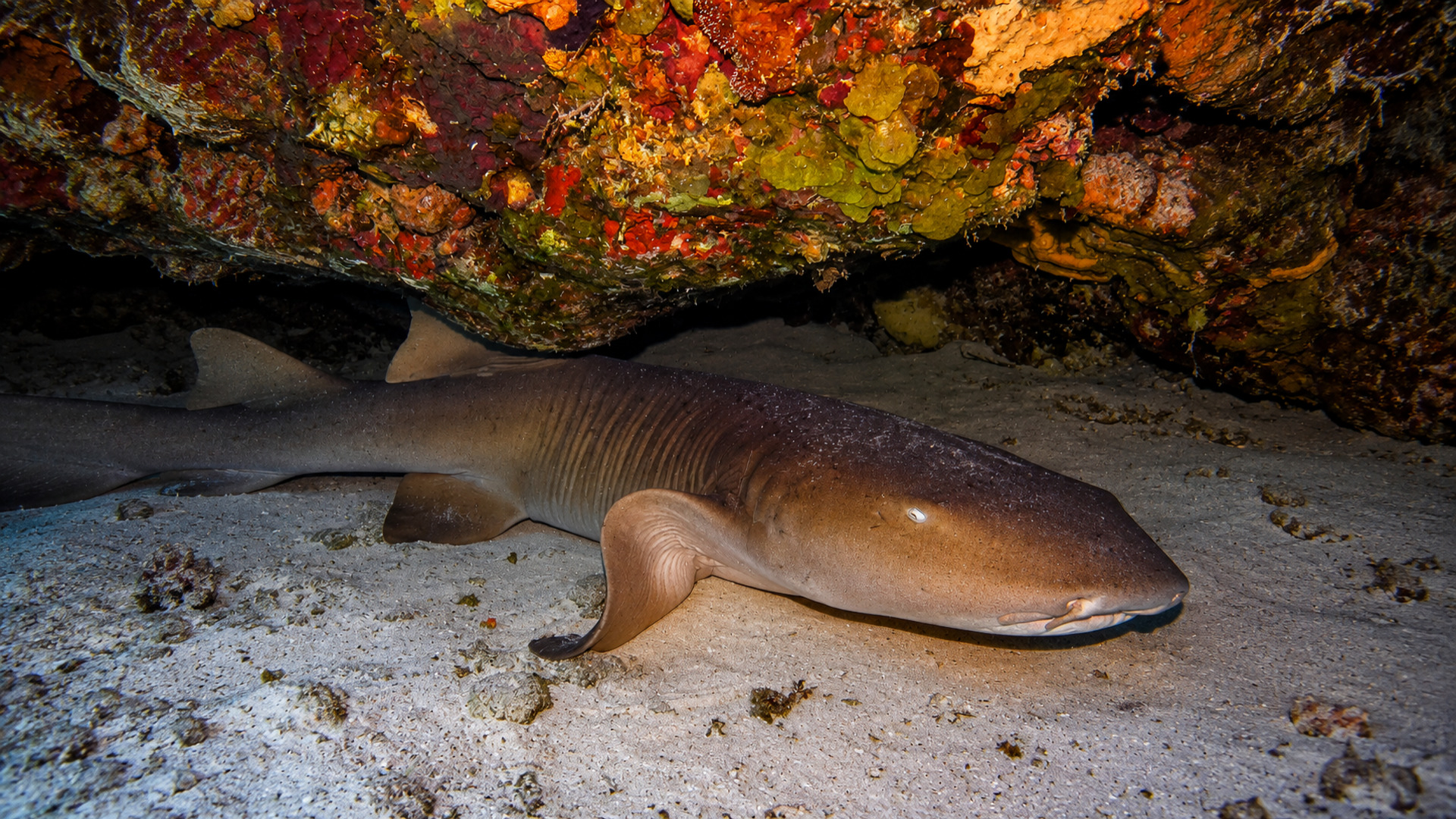
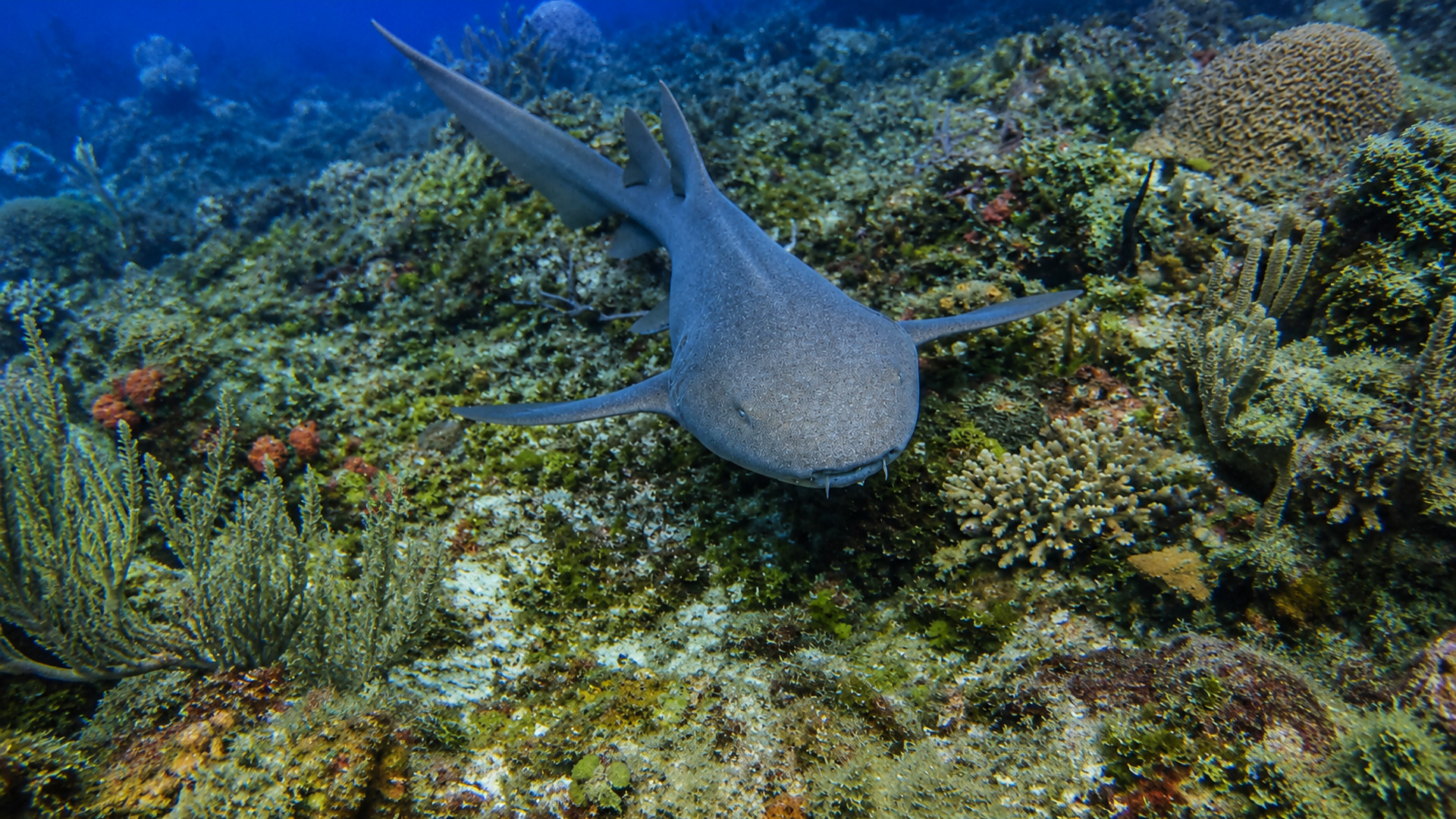
A nurse shark resting beneath a colorful ledge
A resting nurse shark protected by a reef overhang.
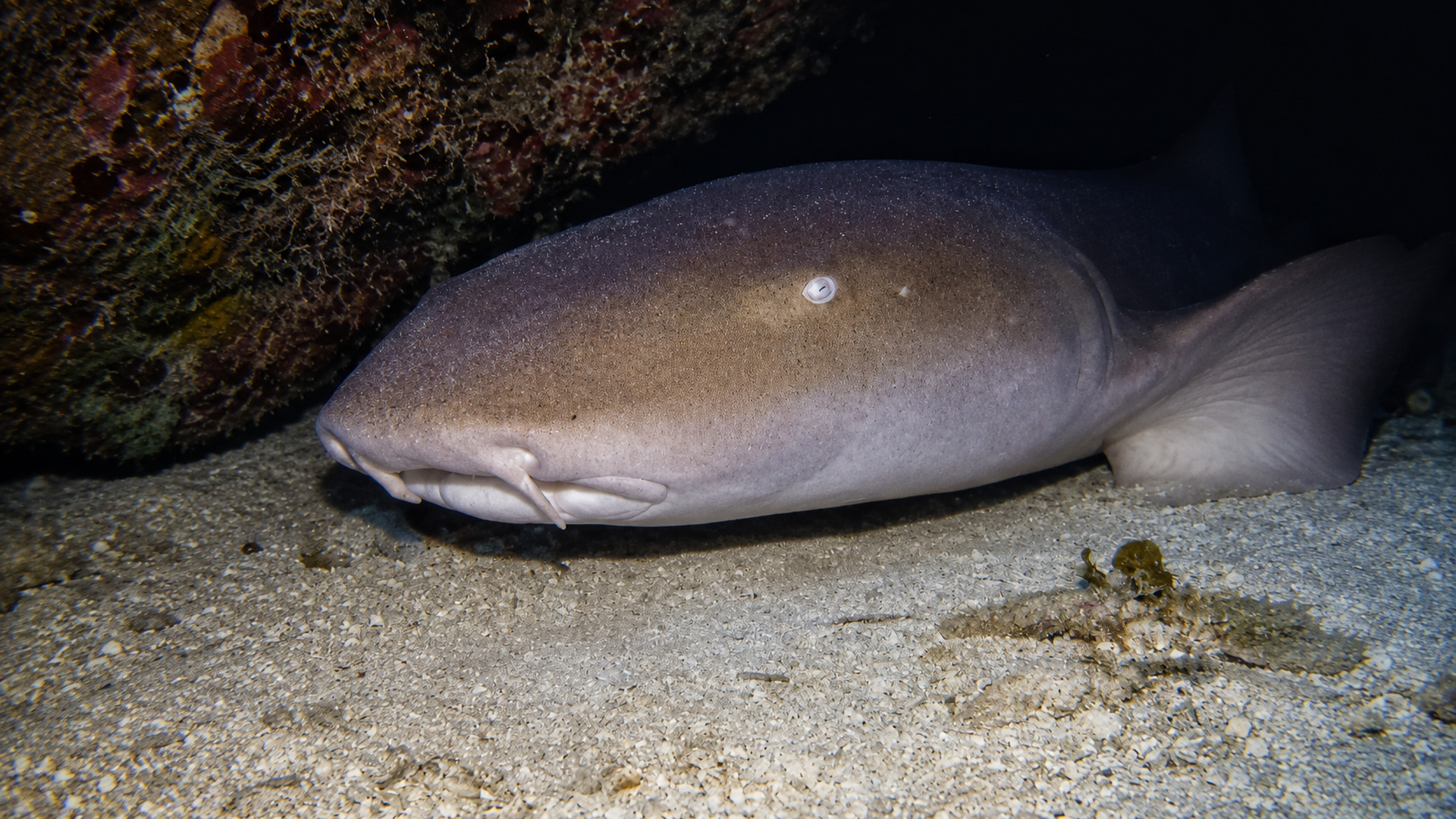
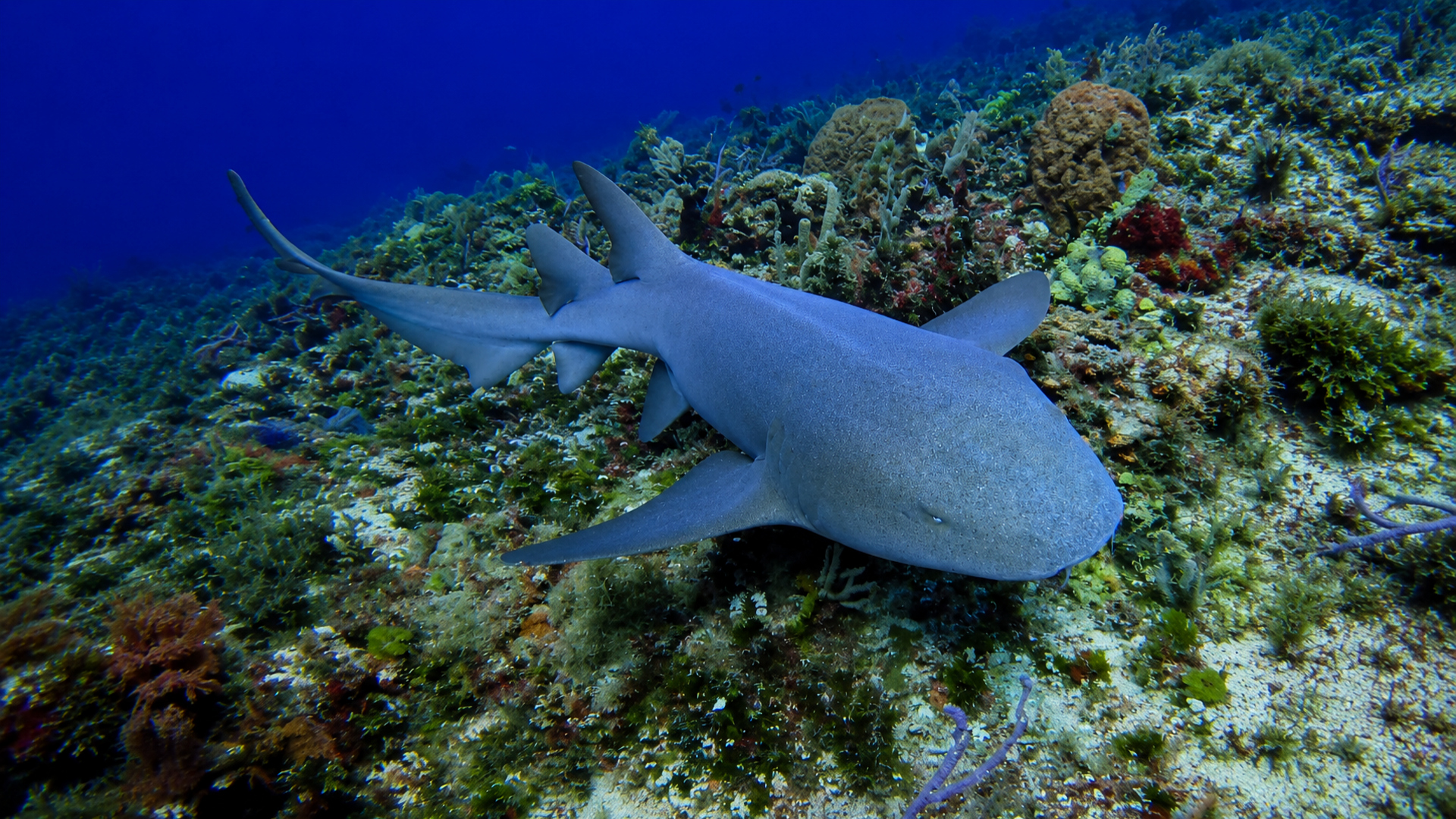
Close portrait of a nurse shark resting on sand
Close detail shows the texture, barbels, and calm resting posture.
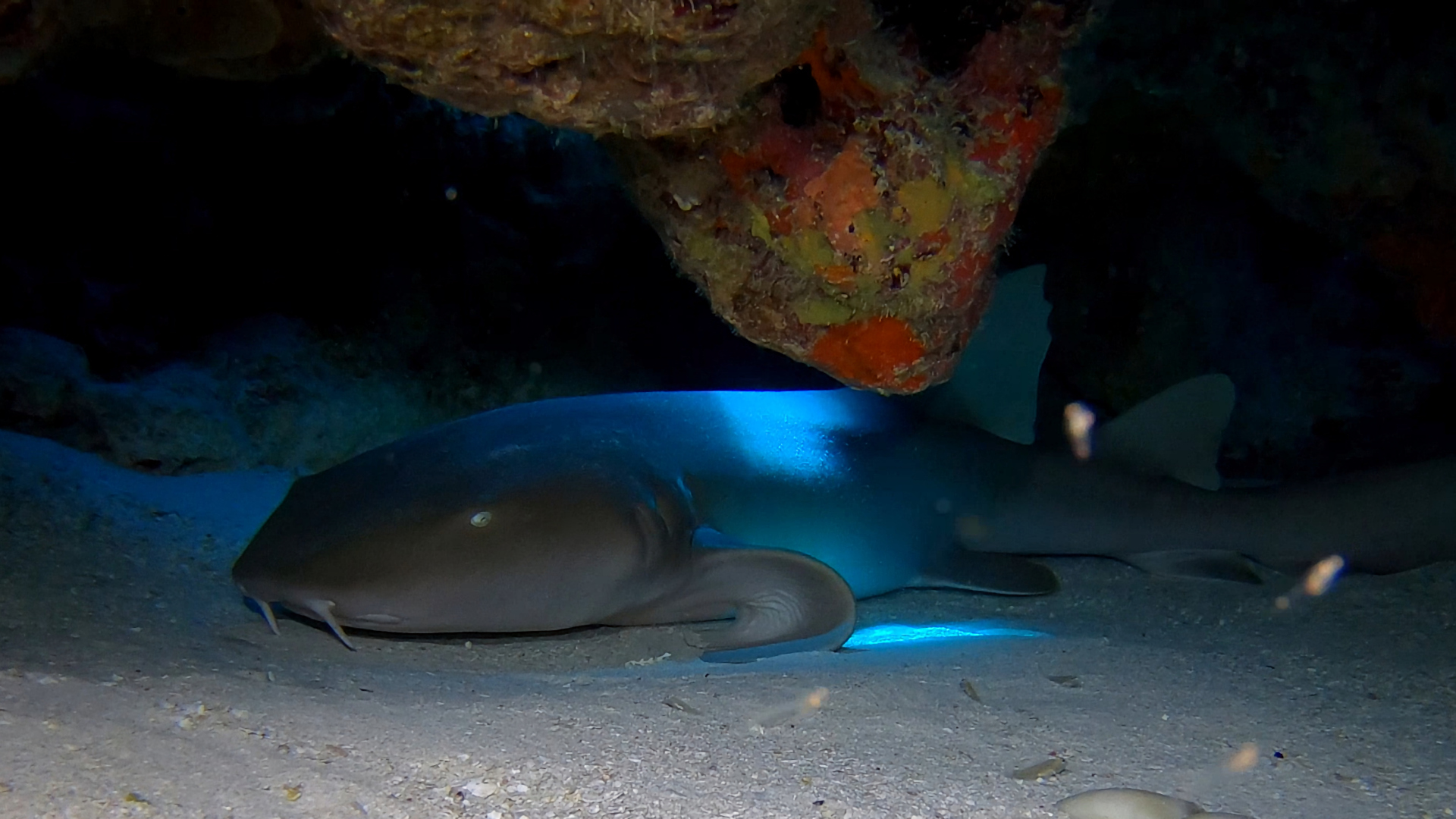
Nurse shark resting below a colorful coral overhang
Many reef animals are easiest to appreciate when we slow down.
Behavior Tells the Story

Look past the reputation.

A shark's movement, direction, body posture, and speed often say more than the animal's size or reputation.

Do Not Chase

Following a shark closely can change the encounter. A calm diver lets the animal continue naturally.

Watch the Whole Animal

Tail movement, body angle, and direction of travel help reveal whether the shark is resting, cruising, investigating, or leaving.

Respect the Reef

Good shark photography should not come at the expense of coral, sponges, or other animals sharing the same space.

A shark near a sand plume beside the reef
Sand, scent, and movement can draw attention on the reef.
A shark and several fish moving over the reef
Other fish often reveal when food or activity has attracted attention.
A Misunderstood Encounter

The lesson is in the misunderstanding.

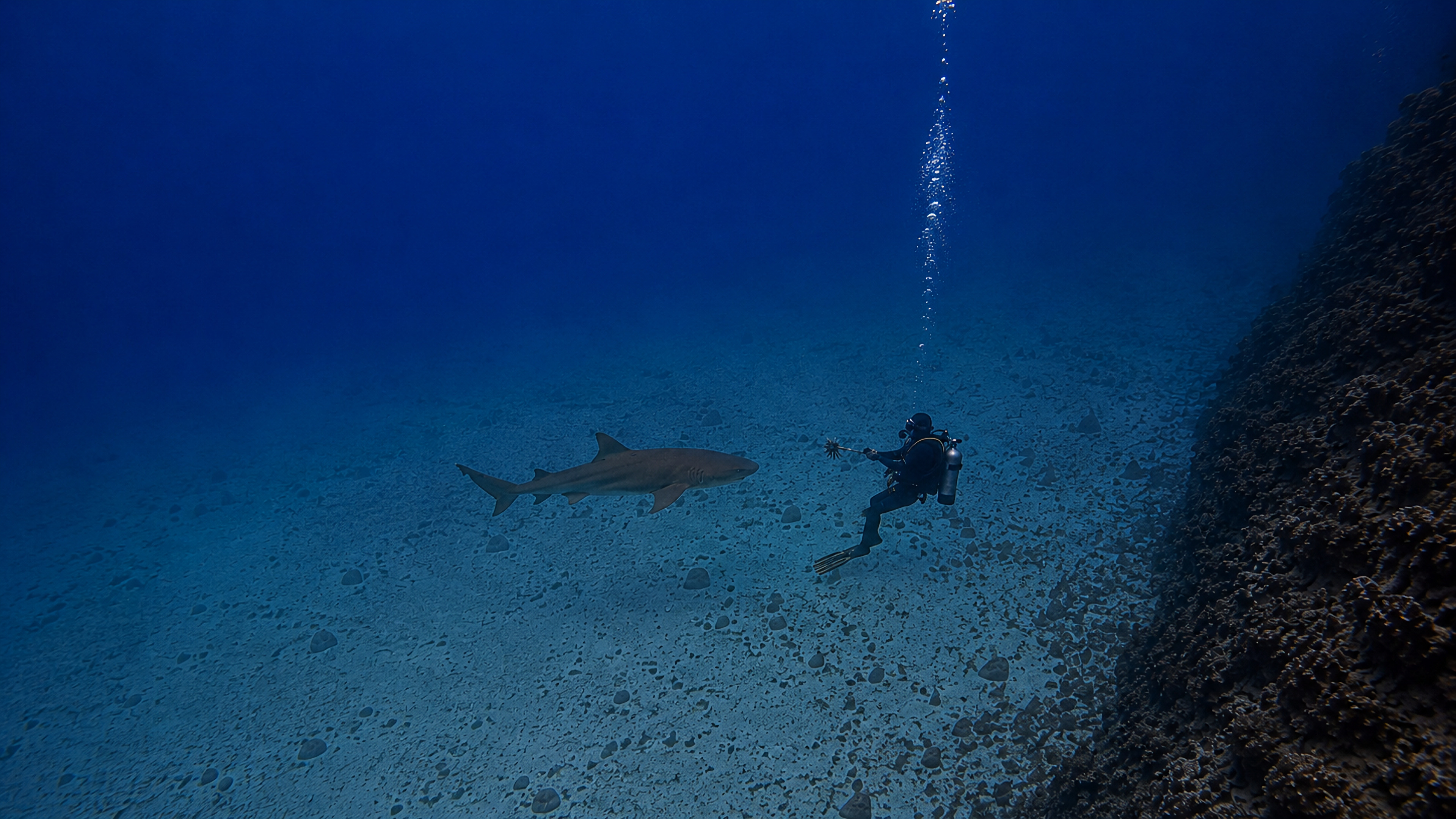
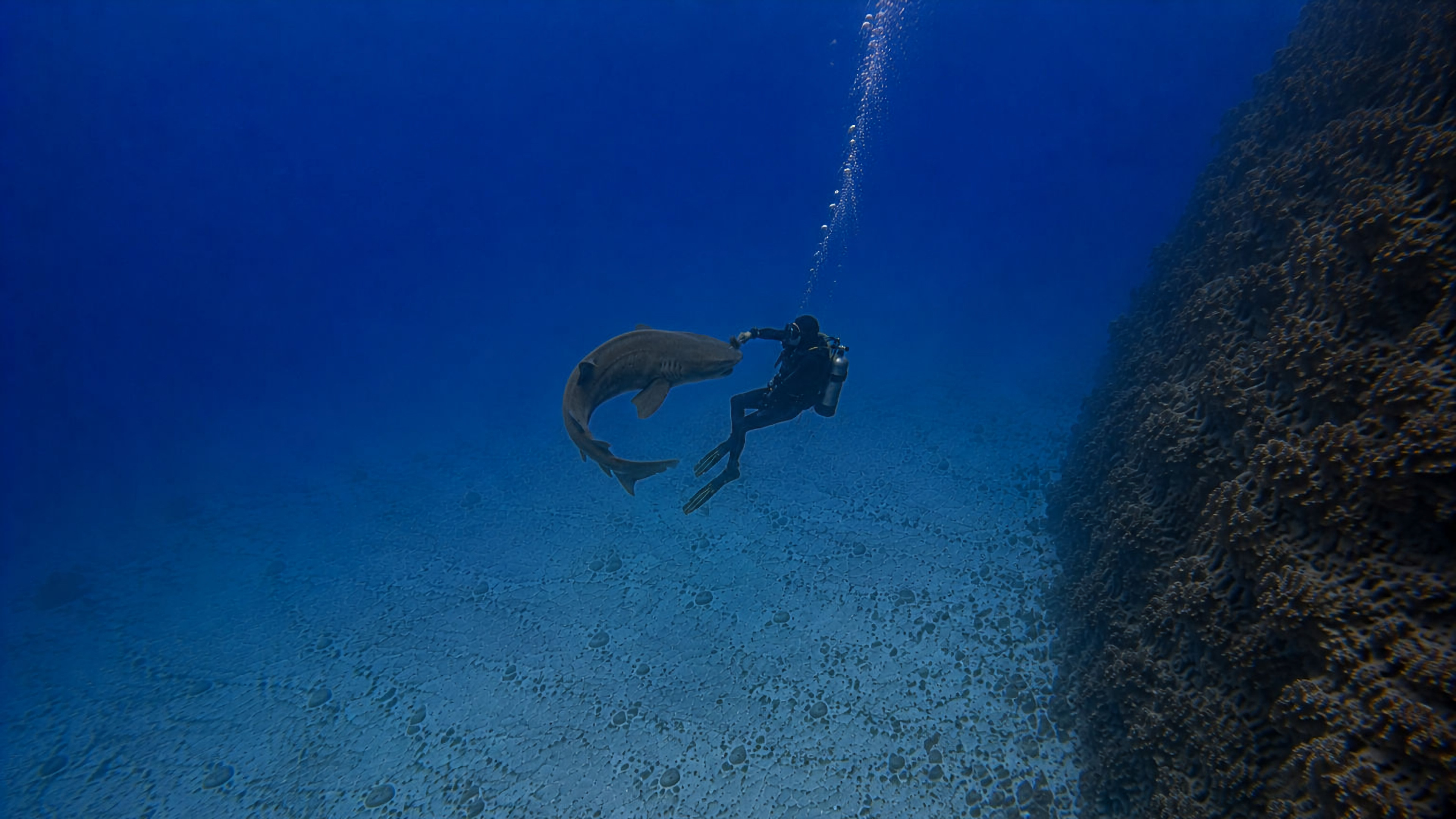
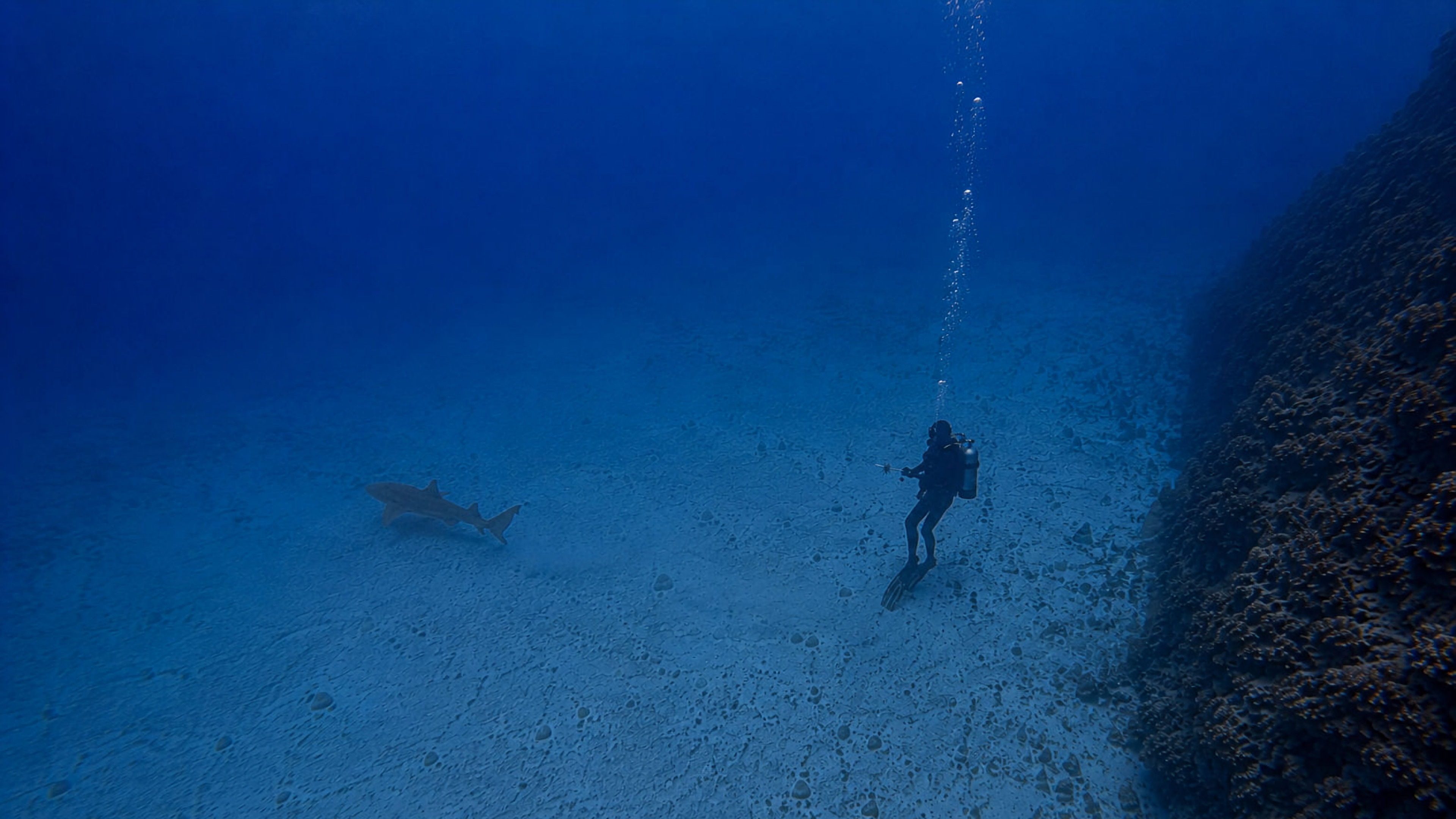
This sequence is not presented as an attack story. It is a lesson in how a shark may investigate scent, movement, and opportunity on the reef.

During dives where invasive lionfish are being removed, sharks may follow scent and activity. A diver holding a dead lionfish can suddenly become part of that investigation.

The following sequence shows a real encounter between a friend of mine and a nurse shark during a lionfish hunt in Cozumel. It illustrates how sharks respond to scent and why understanding their behavior is so important.

A shark moving along the reef before the close encounter begins
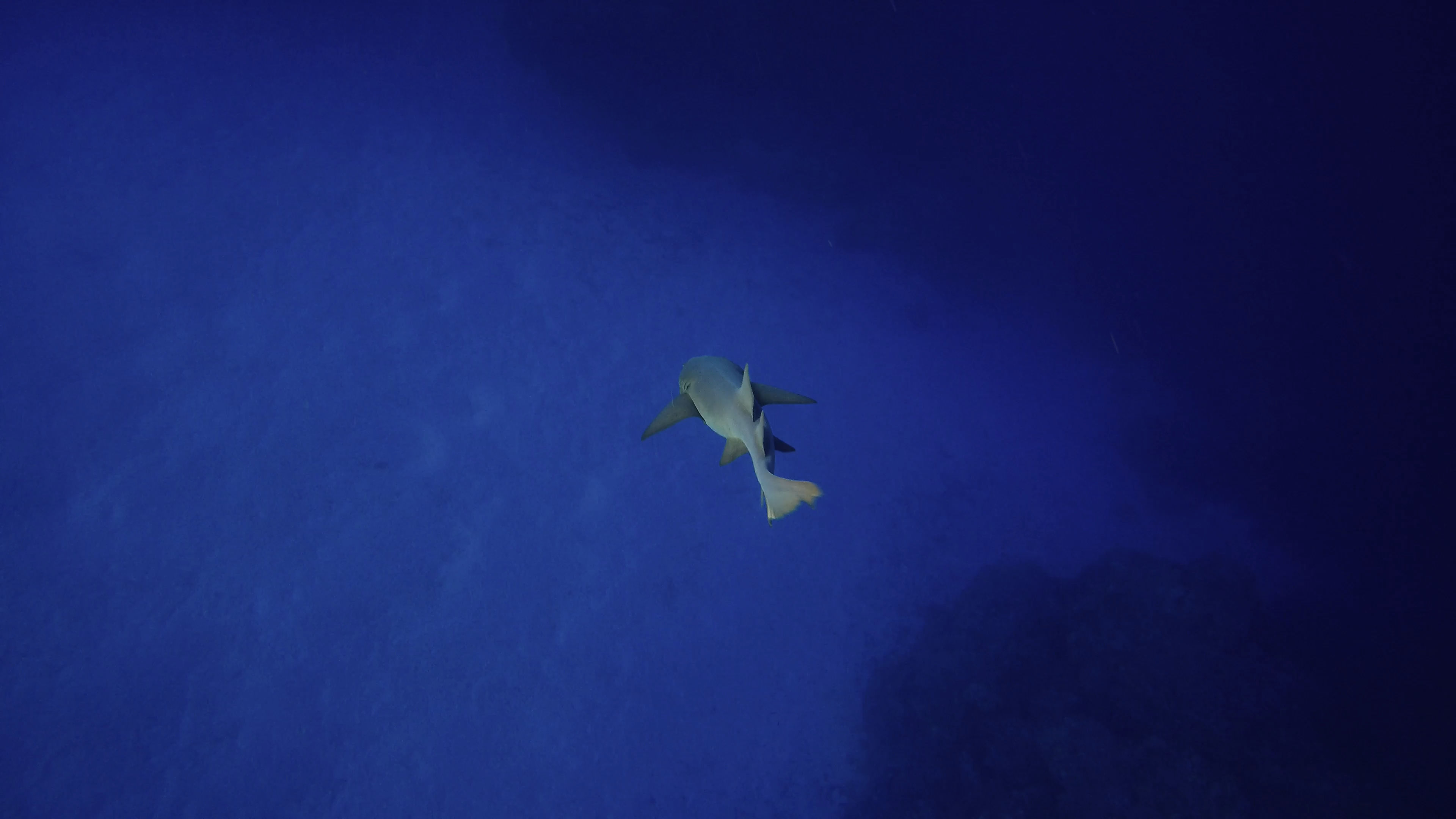
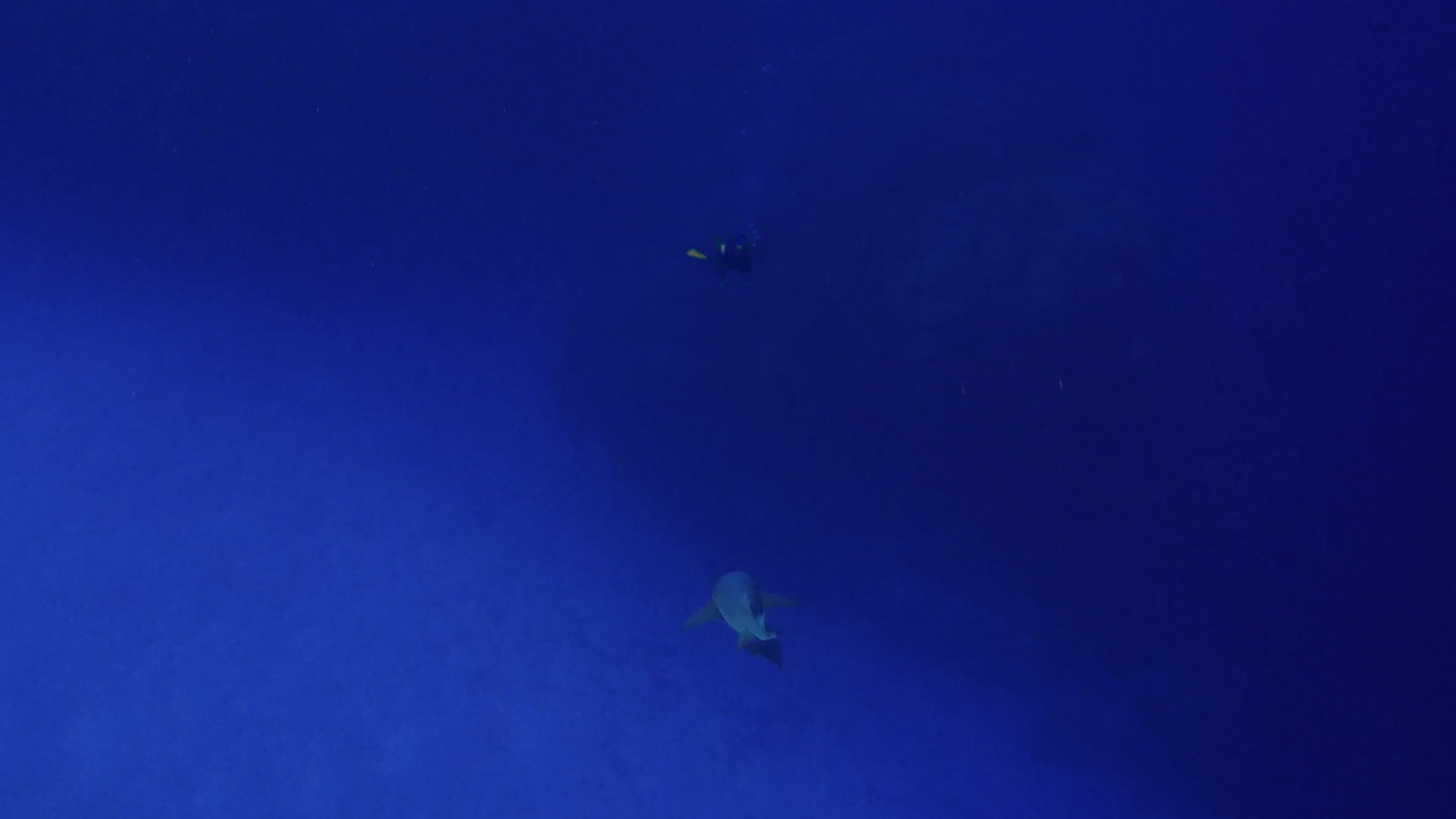
1. A nurse shark approaches us at a safety stop investigating the source of a lionfish scent.
A shark cruising near the reef wall
2. The shark loops around under us confused about where the scent is coming from.
A shark moving away into open blue water near the reef
3. Realizing the scent is coming from deeper water the shark descends to search further.
A diver and shark sharing the same reef space
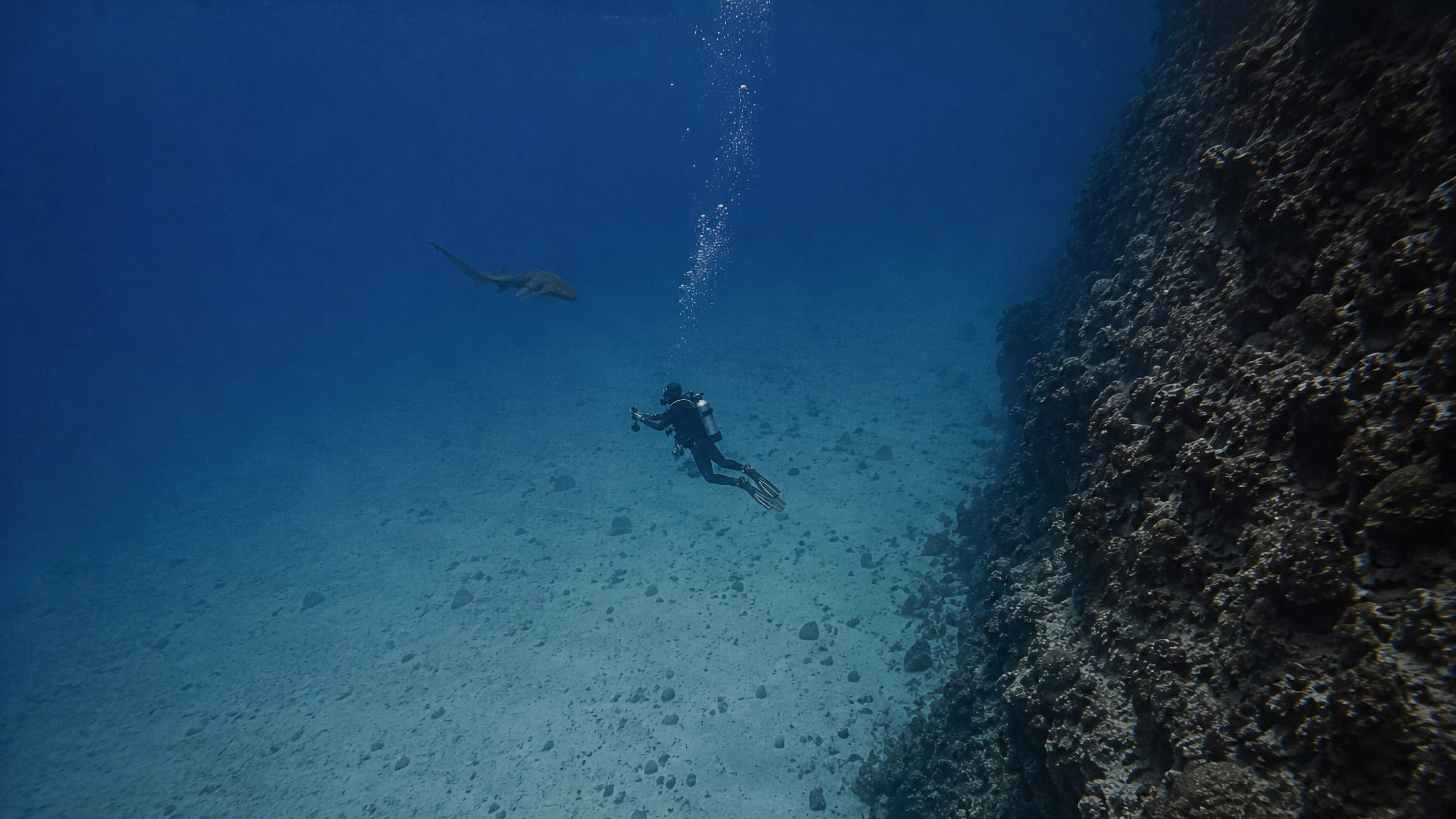
4. Seeing my friend the shark contiues its investigation hoping to find an easy meal.
A shark and diver sharing space near a reef wall
5. The shark cautiously investigates and the encounter becomes more focused.
A shark moving closer to a diver near a reef wall
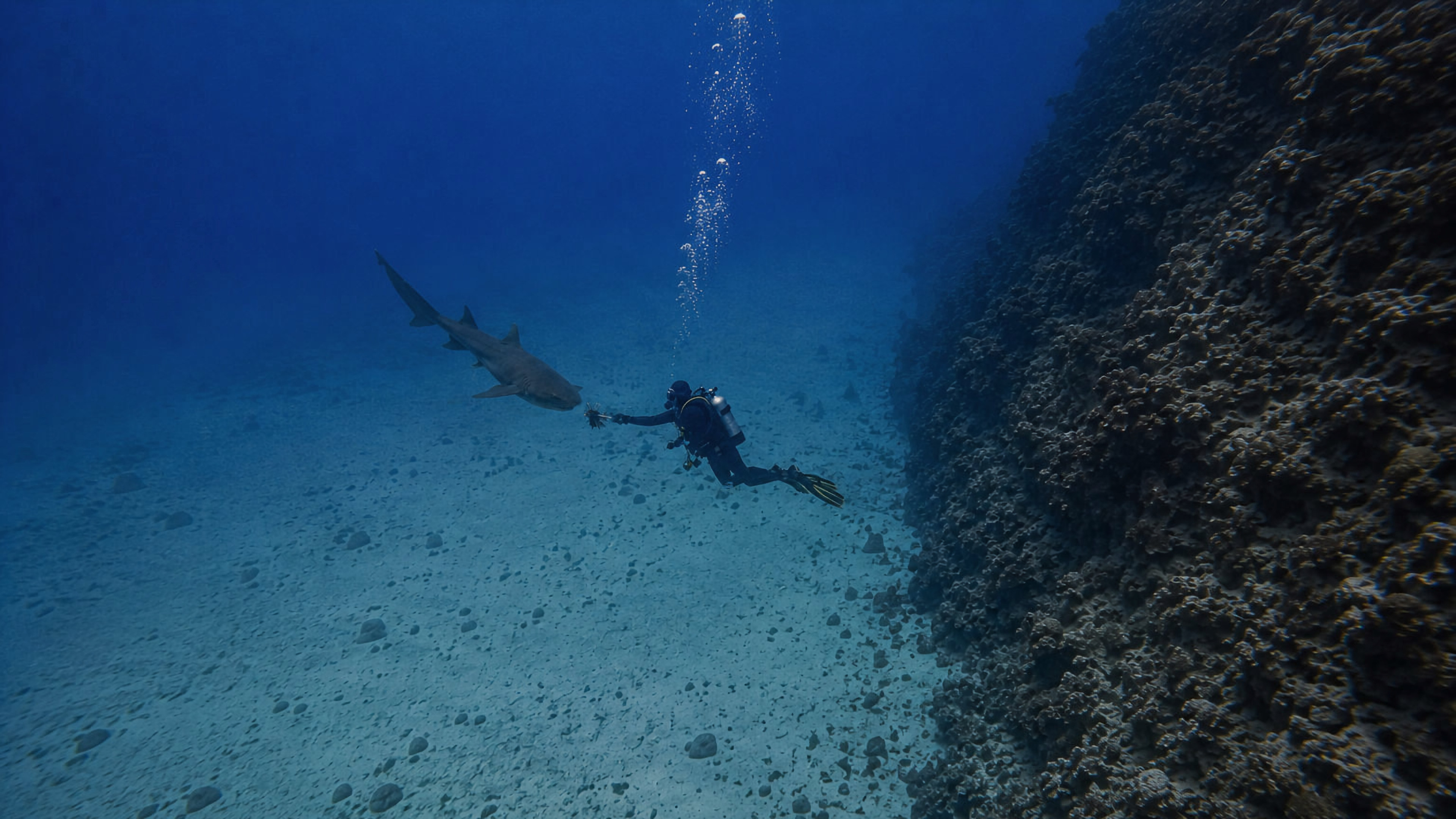
6. The shark discovers the source and attempts to take the lionfish for itself.
A shark and diver during a close investigative encounter
7. Failing to obtain the meal the shark makes further attempts.
A shark turning away from a diver after the encounter
8. My friend is determined that he will not be feeding lionfish to sharks.
A nurse shark portrait after the encounter sequence
9. The shark departs. We all have a lesson. Respect can resolve misunderstandings.
Rare Encounters

Sometimes the blue gives only a glimpse.

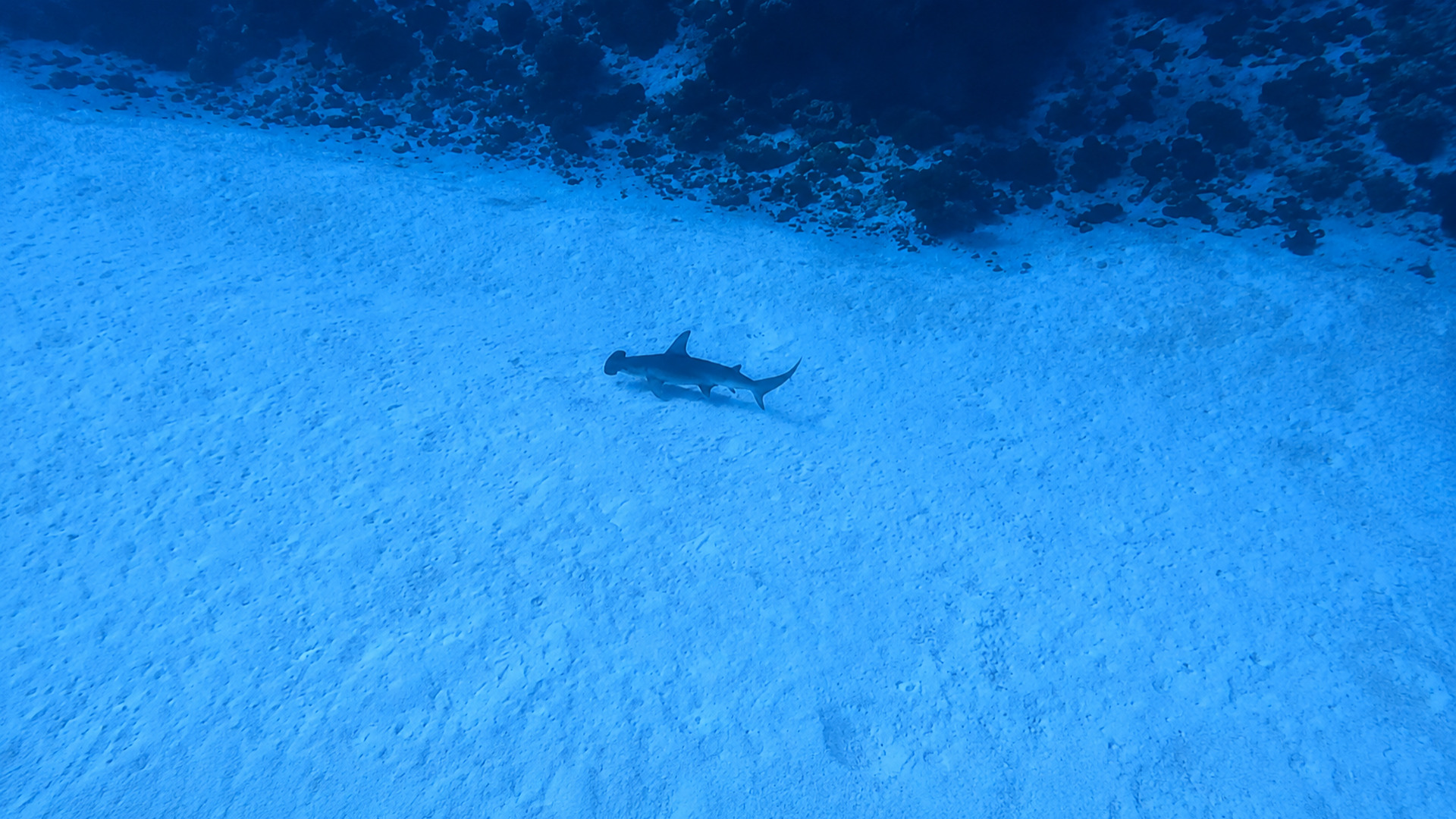
Hammerheads are not the everyday shark story for most Cozumel divers, but rare sightings are part of the larger mystery of the blue.

These images are quieter and more distant, but that distance is part of the truth of the encounter. Not every powerful wildlife image needs to be close. Sometimes the best image is the one that shows how vast the ocean is, and how briefly an animal may pass through our view.

A hammerhead shark swimming over the reef in blue water
A rare hammerhead passing through open blue water.
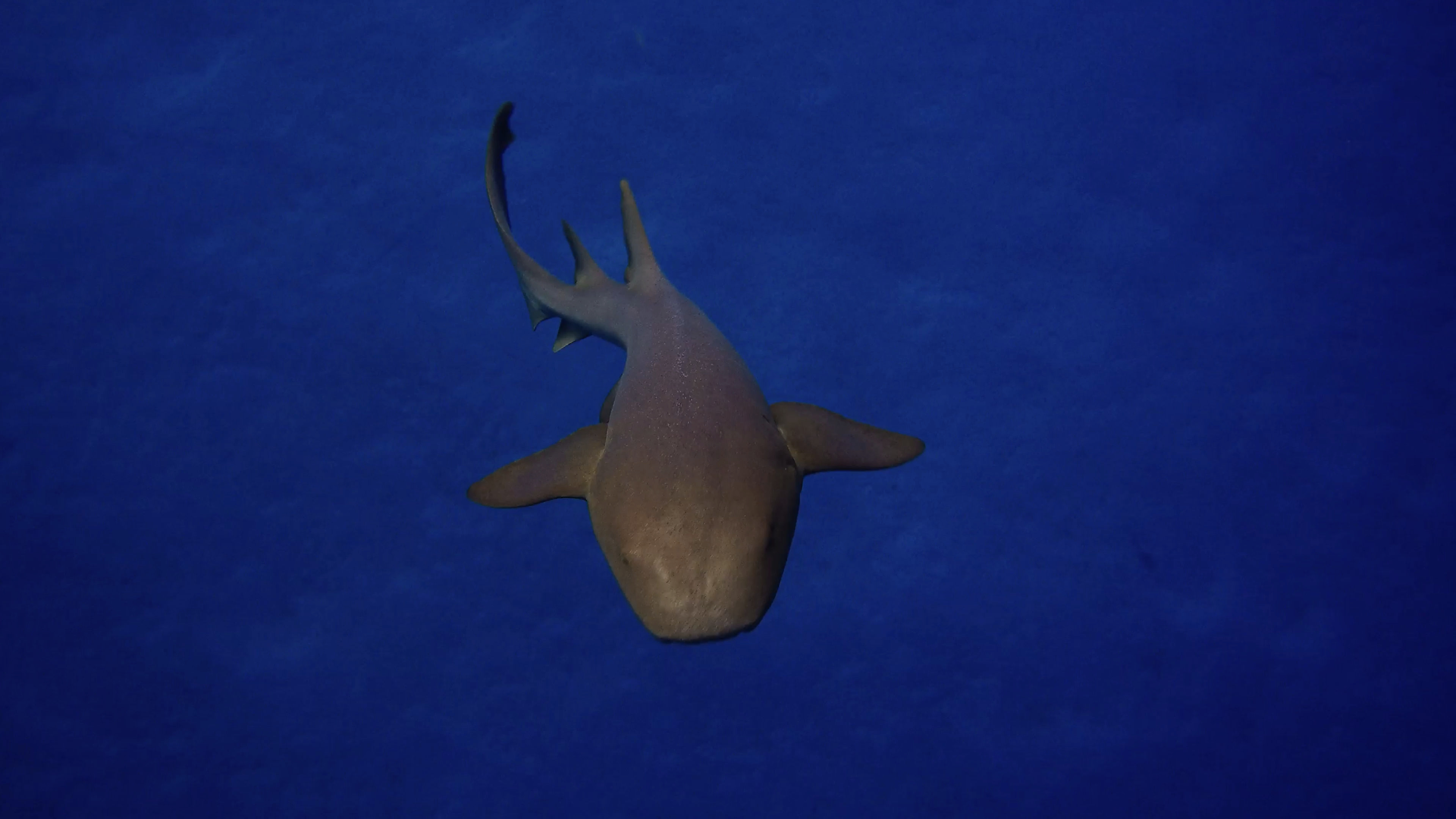
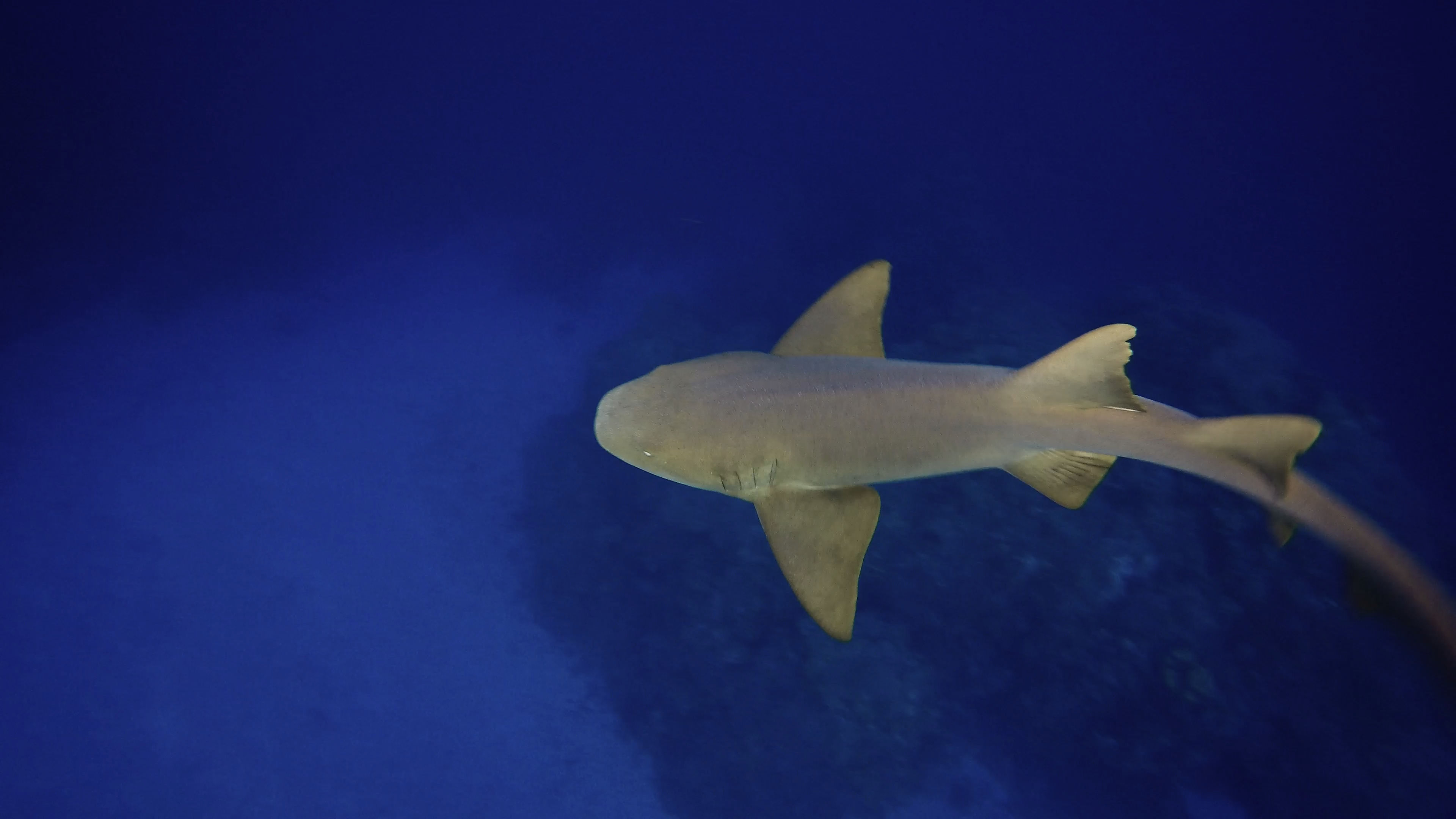
A hammerhead shark seen from above over pale blue sand
Viewed from above, the animal becomes a quiet shape moving through a much larger sea.
Portraits from the Reef

Every angle tells a different story.

Some photographs show behavior. Others show texture, shape, light, and the quiet presence of an animal at home on the reef.

Quick Facts

What divers are seeing.

Nurse Sharks

Nurse sharks are commonly seen resting under ledges or moving slowly near the bottom along Cozumel reefs.

Reef Sharks

Reef sharks may appear in open water or along reef edges, often passing through quickly and without interaction.

Hammerheads

Hammerheads are rare for most divers around Cozumel, making even a distant sighting memorable.

Shark Questions

Questions divers often ask

Are sharks common on Cozumel dives?

Nurse sharks are the most common shark many Cozumel divers encounter. Reef sharks are possible, and hammerhead sightings are rare but memorable.

Are nurse sharks dangerous to divers?

Nurse sharks are generally calm around divers, but they are still wild animals. Divers should never touch, block, feed, chase, or crowd them.

Why do sharks sometimes approach divers?

Sharks may investigate scent, movement, fish activity, or unusual behavior in the water. Curiosity or investigation is not the same thing as aggression.

Should divers swim after a shark for a better photo?

No. The better encounter usually comes from slowing down, keeping good buoyancy, and letting the animal continue naturally.

What should I do if a shark comes close?

Stay calm, maintain awareness, keep your hands and gear controlled, avoid sudden chasing movements, and give the animal a clear path.

What is the main lesson from shark encounters?

The best lesson is respect. A shark is not a monster and not a pet. It is wildlife sharing its home for a brief moment.

Respectful Encounters

The goal is to share a moment.

The goal is not to chase the animal or have the animal chase you. The goal is to share a moment.

The greatest shark encounter is not measured by how close the shark comes to you. It is measured by how naturally it continues its life because you were there.

Continue Your Dive

Every reef has another story waiting to be discovered.

Explore more of Cozumel's marine life through personal encounters, underwater photography, and stories from the blue.

Return to Featured Marine Life
Top ↑