Featured Marine Life

Schools of Fish

The reef is not only a place to see fish. Sometimes, when a diver slows down, it becomes a place to be accepted by them.

Inside the School Calm Diver Gallery Questions
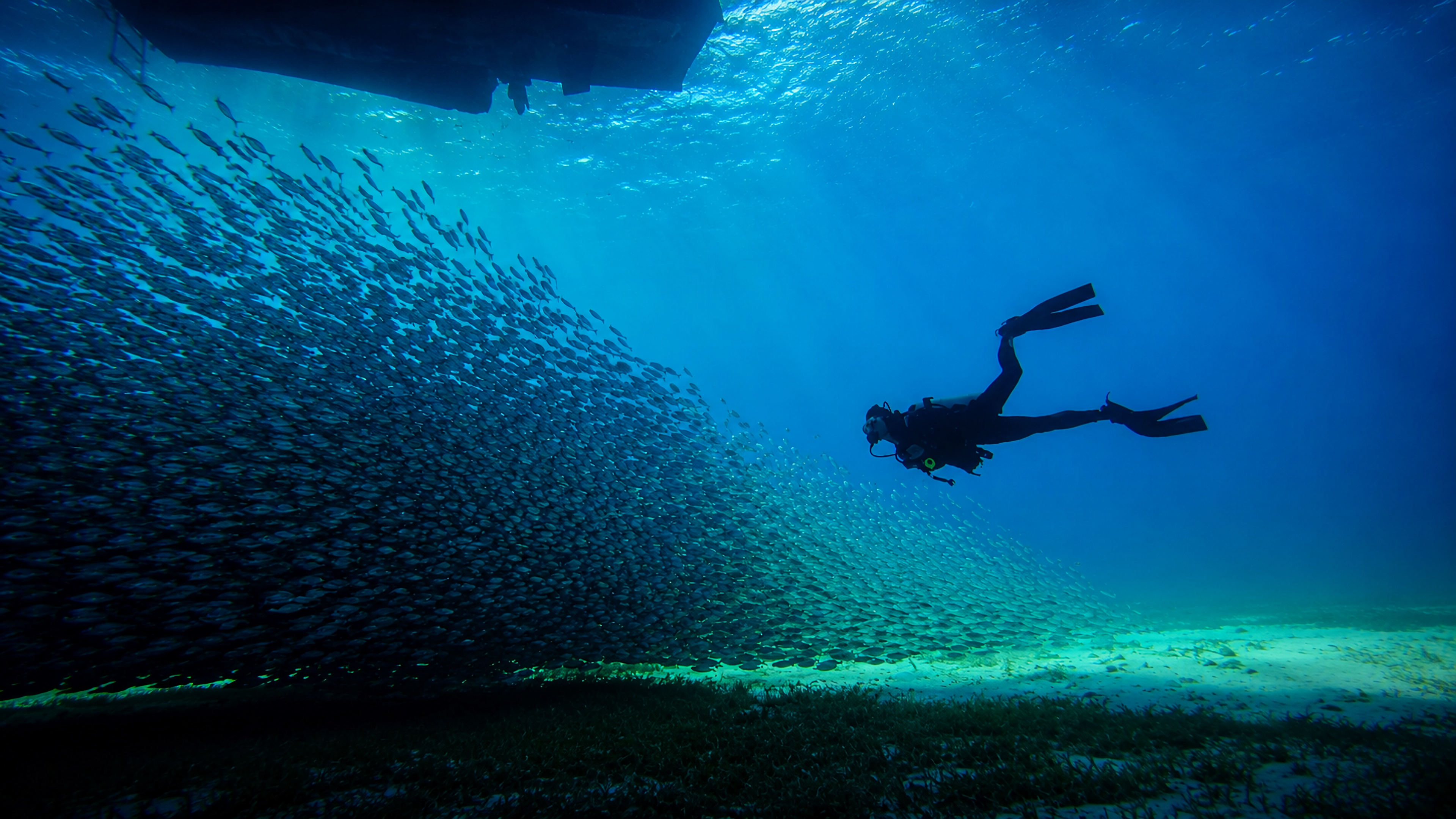
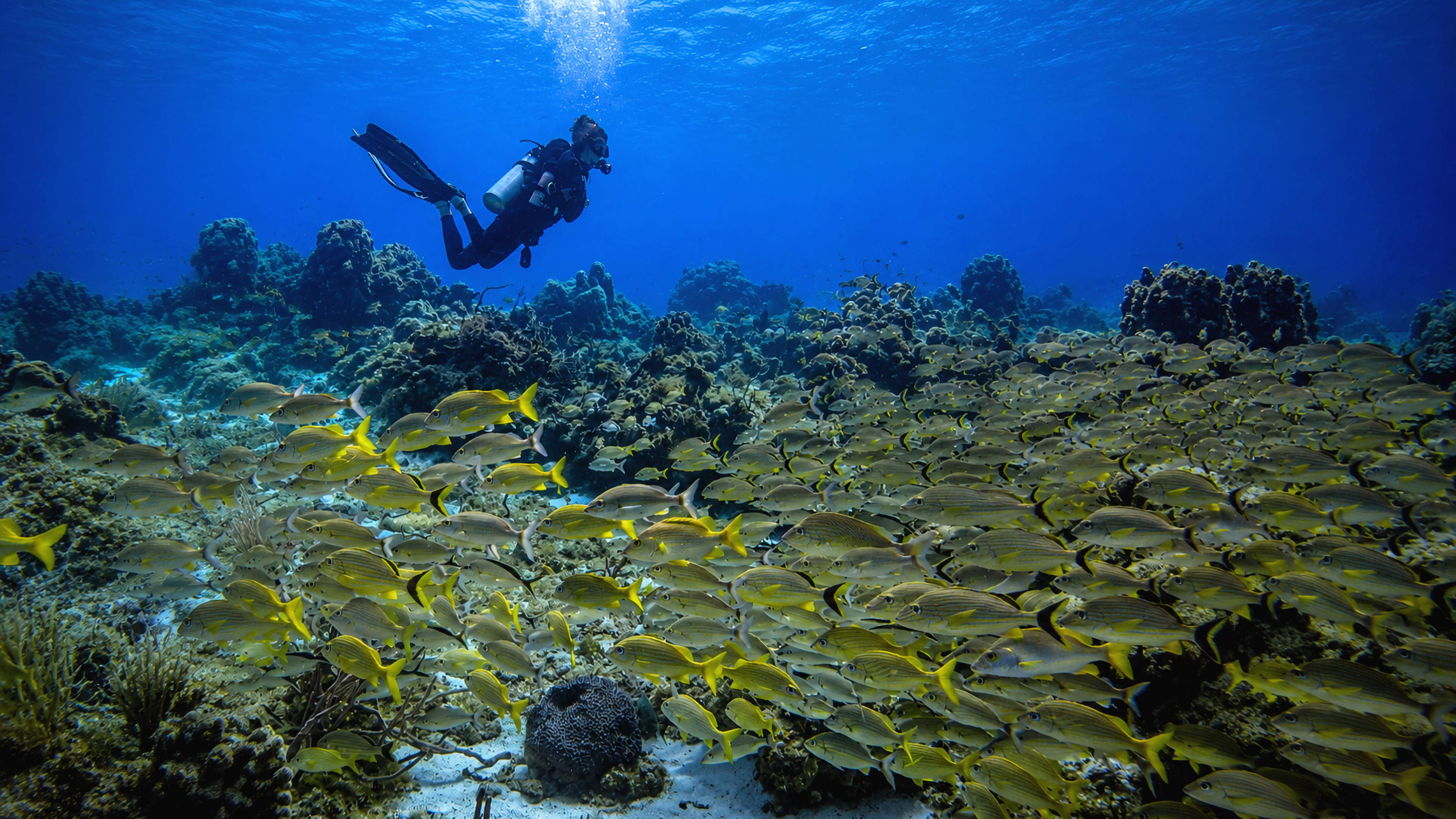
A diver moving calmly above a large school of yellowtail snapper on a Cozumel reef
A school moves across the reef while a diver stays above and outside the flow.
The Living Reef

A school is more than many fish.

A school of fish can look like a single living shape. Hundreds of small decisions become one coordinated movement across the reef.

For divers, the lesson begins with restraint. A school is not something to rush into. It is something to watch, understand, and approach with patience. When the diver becomes calm enough, the fish may continue their lives as if the diver belongs there.
Why Fish School

Safety, awareness, and shared movement.

Schooling helps fish survive. It can confuse predators, increase awareness, conserve energy, and help the group move through the reef as one.

Safety in Numbers

Many eyes can notice danger sooner than one. A tight group also makes it harder for a predator to single out one fish.

Shared Awareness

Each fish responds to the movement of its neighbours. The result can look almost choreographed.

Energy and Flow

By moving together, fish can travel efficiently through changing currents, reef channels, and open water.

Shelter and Shade

Sometimes the school chooses the shadows.

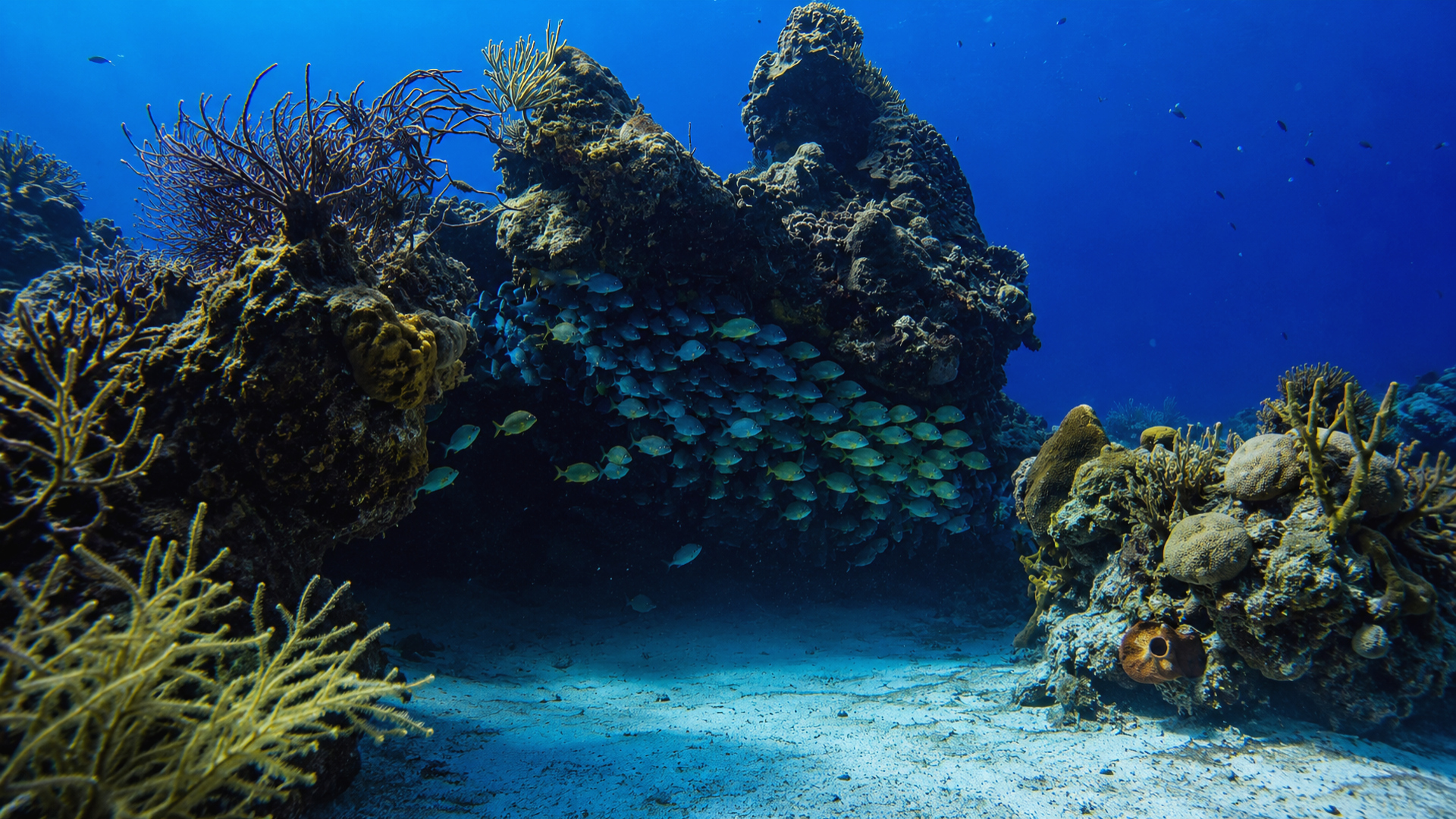
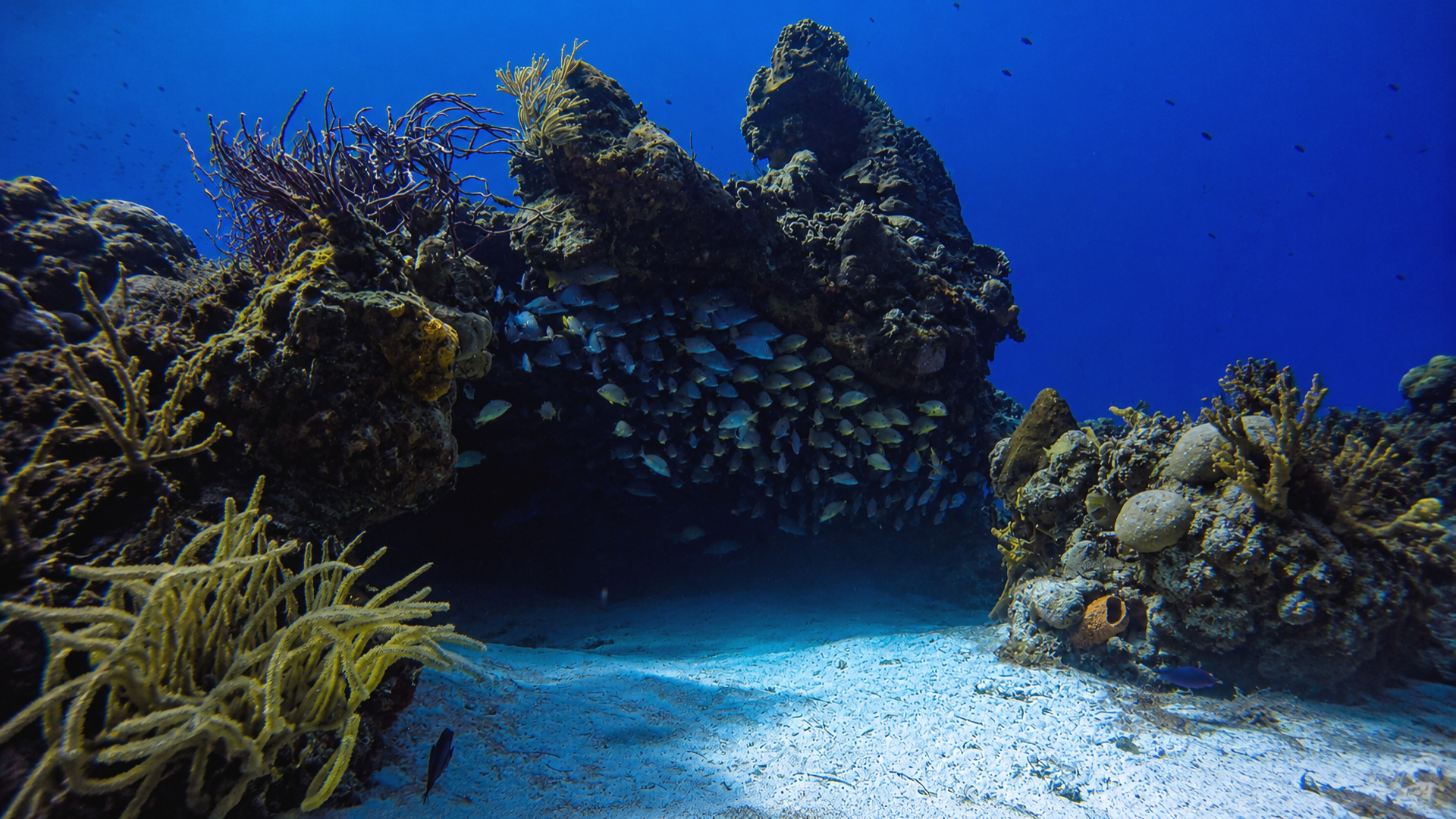
Fish do not always school in open water. Many gather under ledges, near coral heads, or on the shaded side of a reef structure.

Protection is part of the story, but so is comfort. Reef fish often use shadow, structure, and cooler darker spaces as part of their daily rhythm. A diver who notices those patterns begins to see the reef as habitat, not scenery.

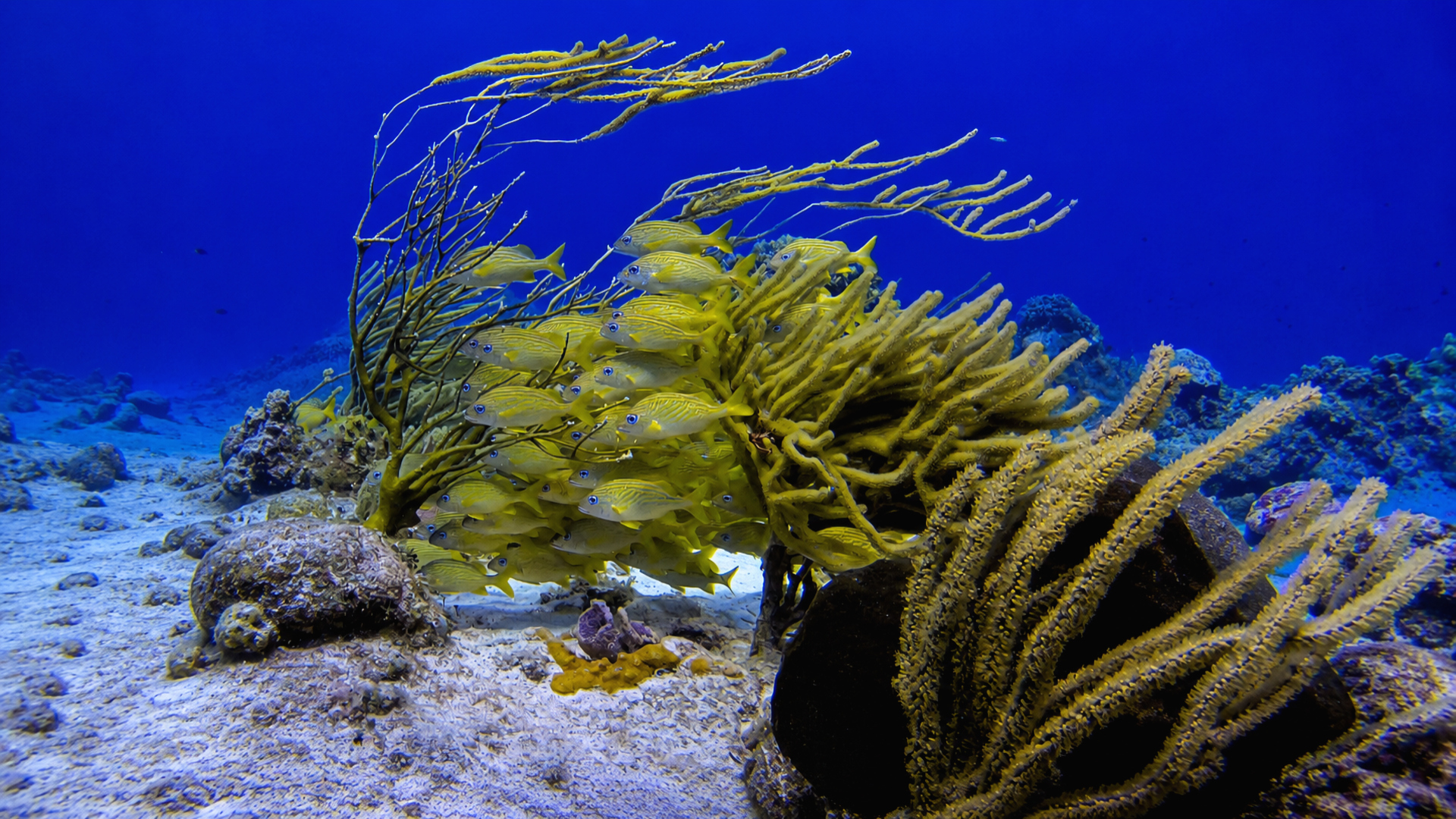
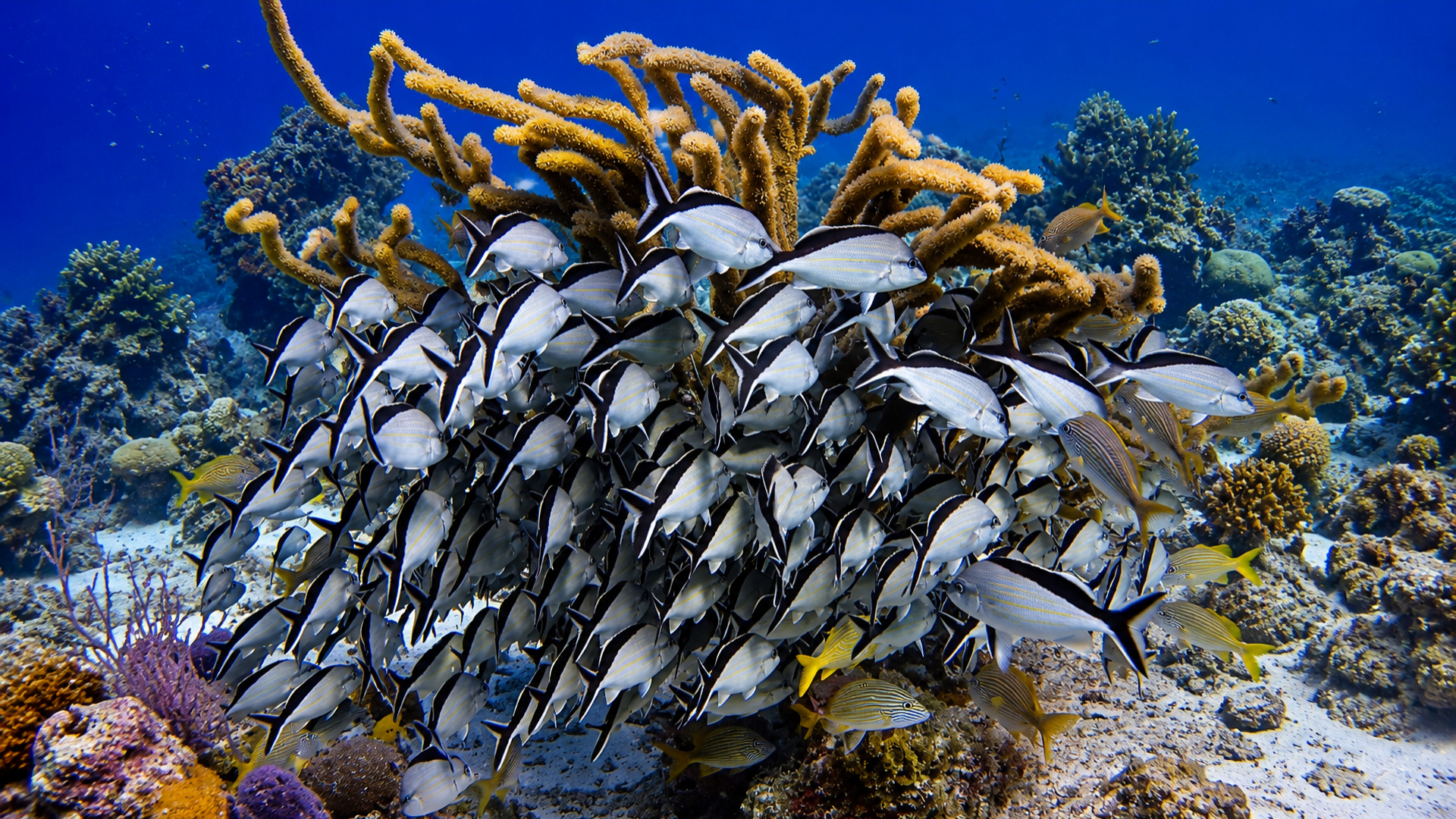
A school of fish sheltering beneath a dark reef overhang
A shaded reef overhang becomes shelter, resting space, and protection for a school.
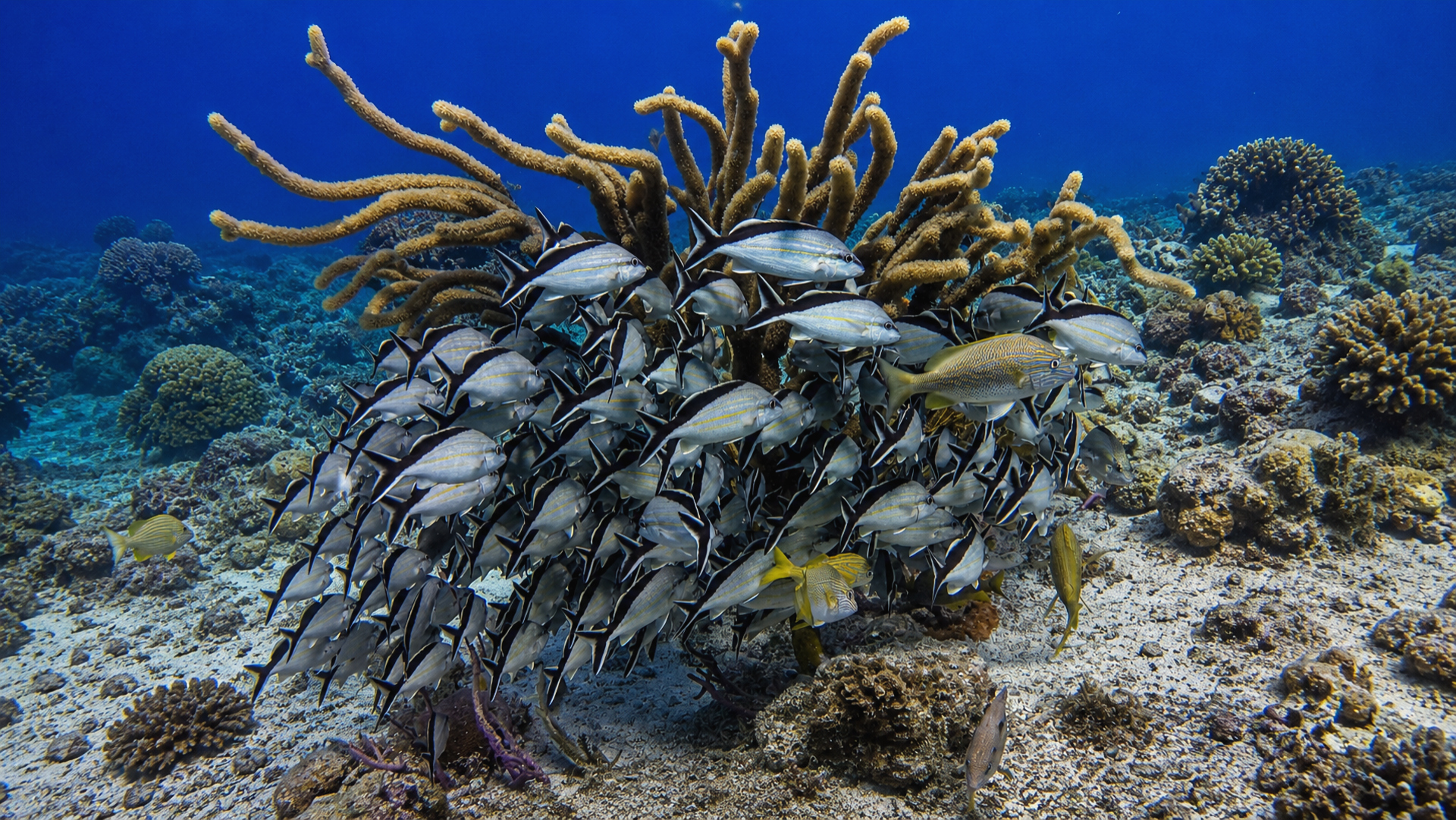
Fish gathered beneath a reef ledge in shadow
A school gathers in the protected shadow beneath a reef structure.
Fish sheltering near a reef wall and shaded overhang
The same lesson from a wider view: the reef gives the school a place to hold together.
Movement

The school becomes a river.

When a school moves, it can pour across the reef like water. The diver's job is not to interrupt the flow.

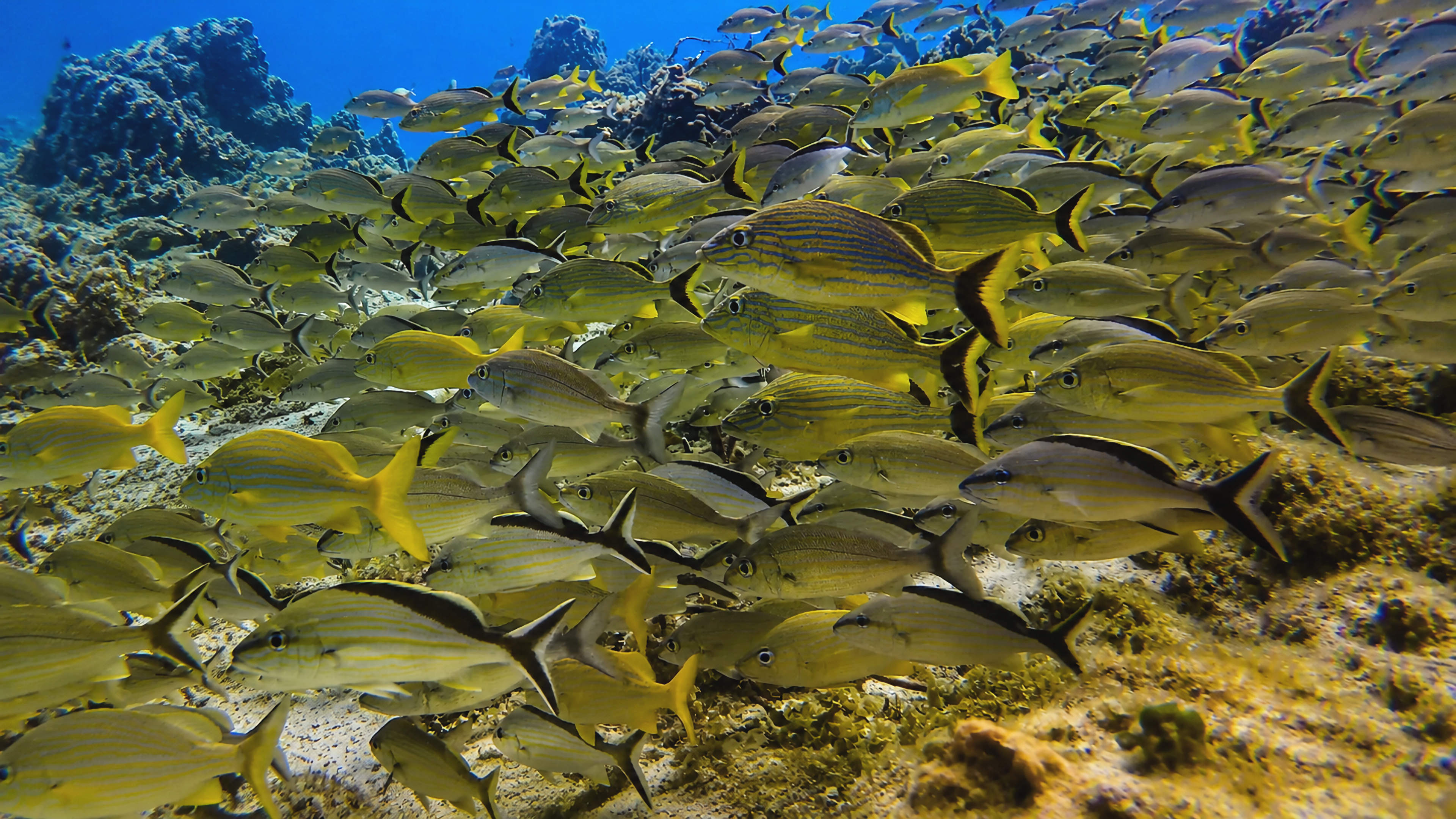
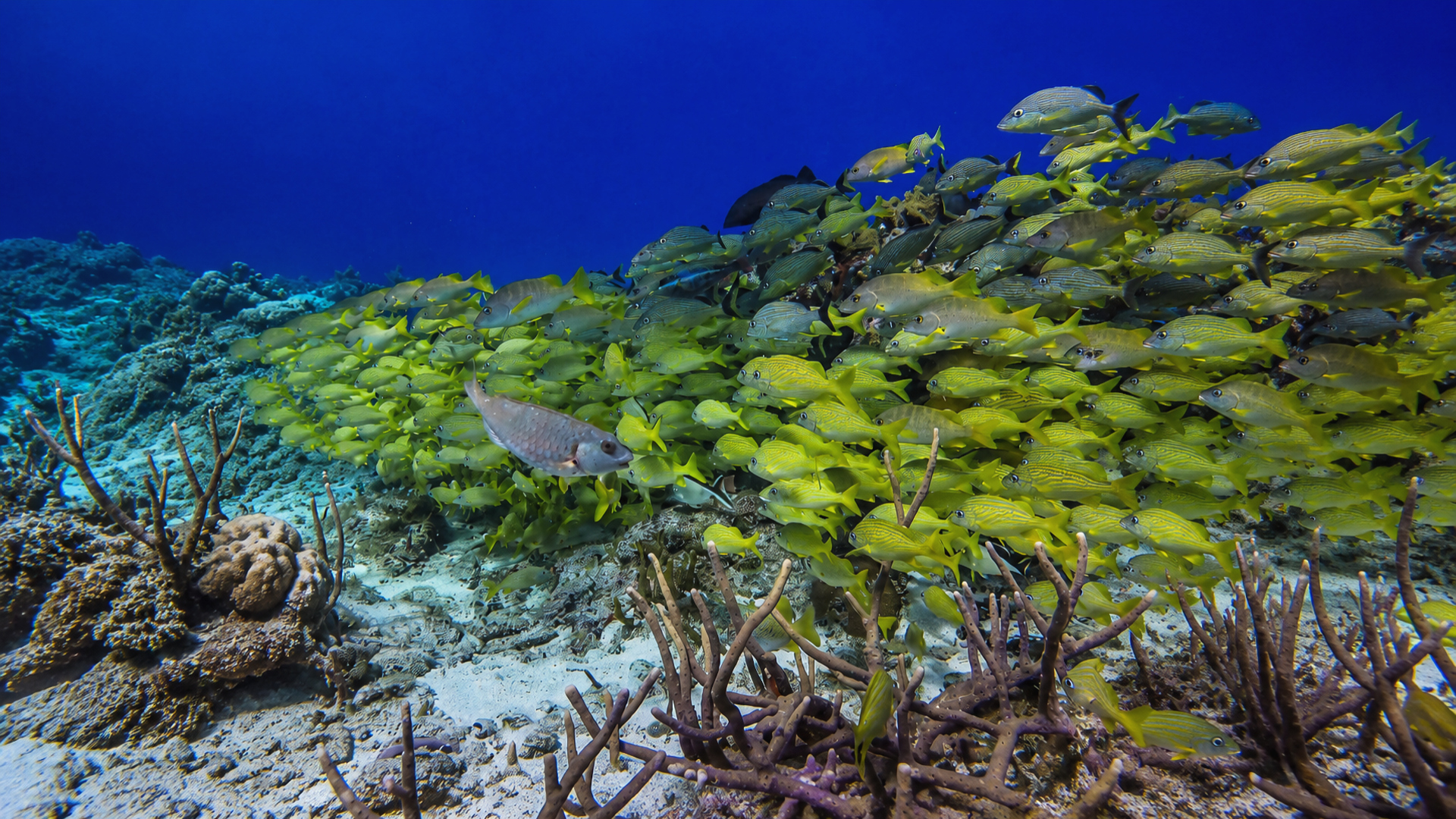
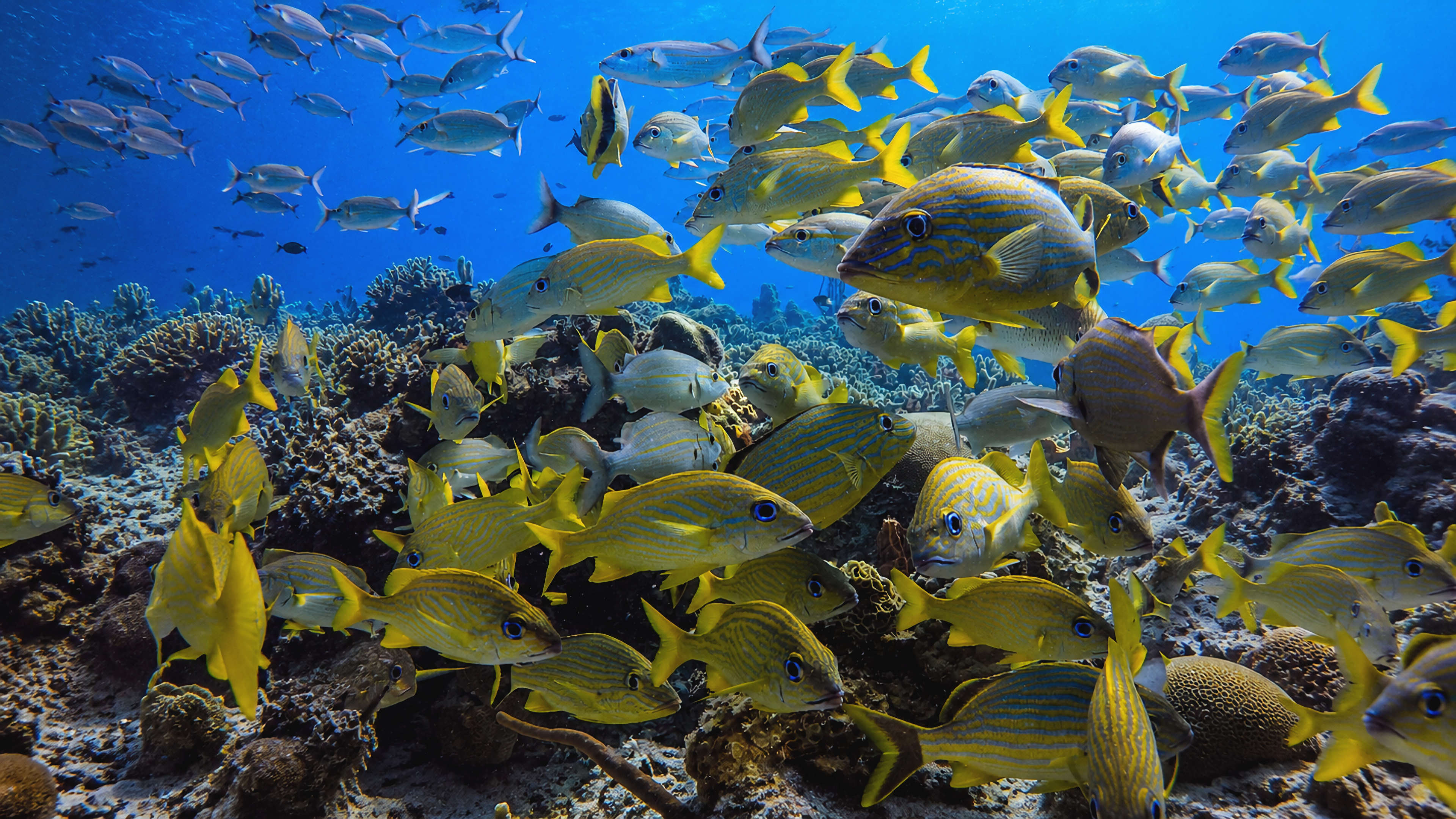
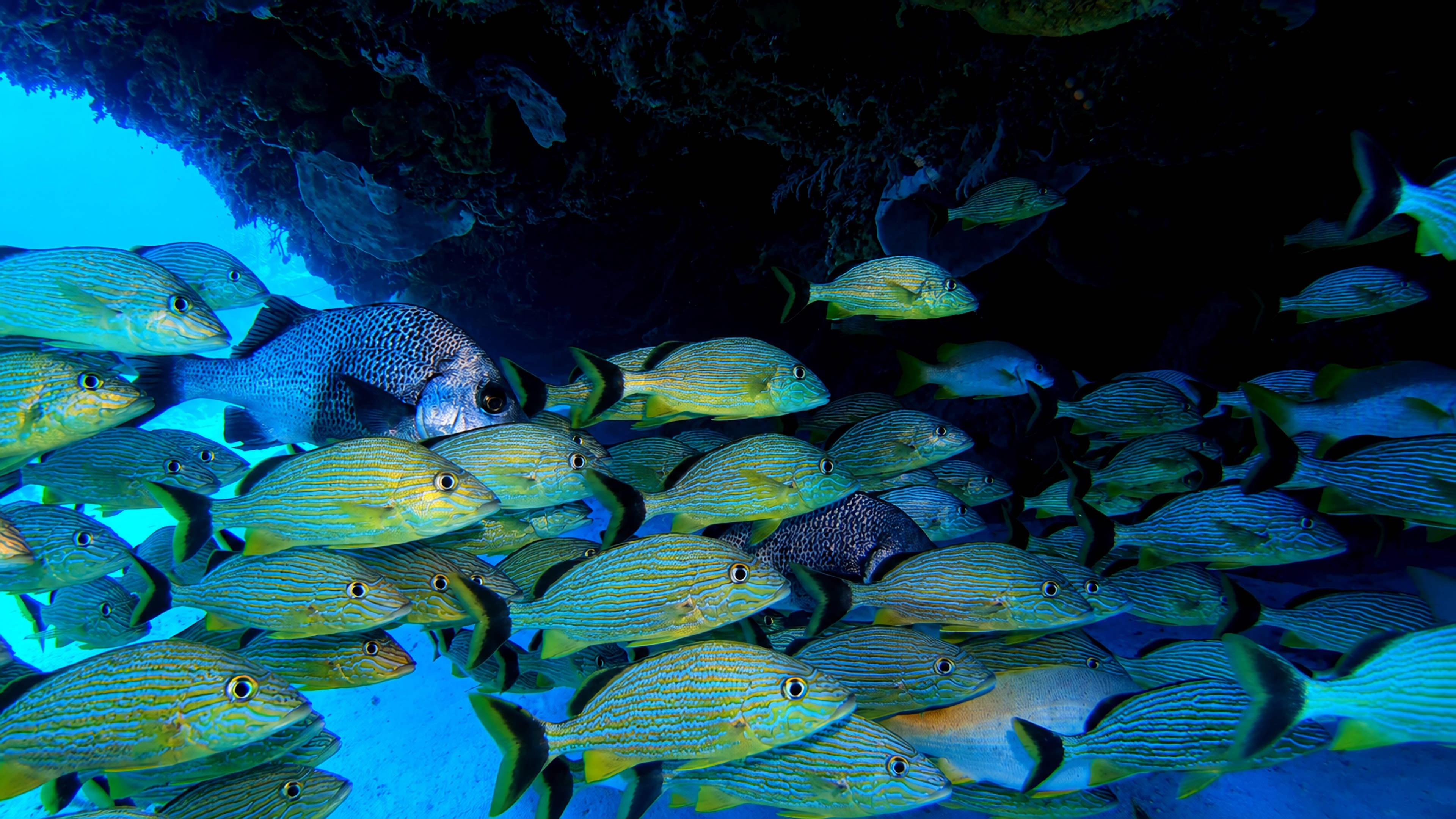
A dense school of yellowtail snapper moving across a reef
The direction of the school is clear. Every fish contributes to the movement.
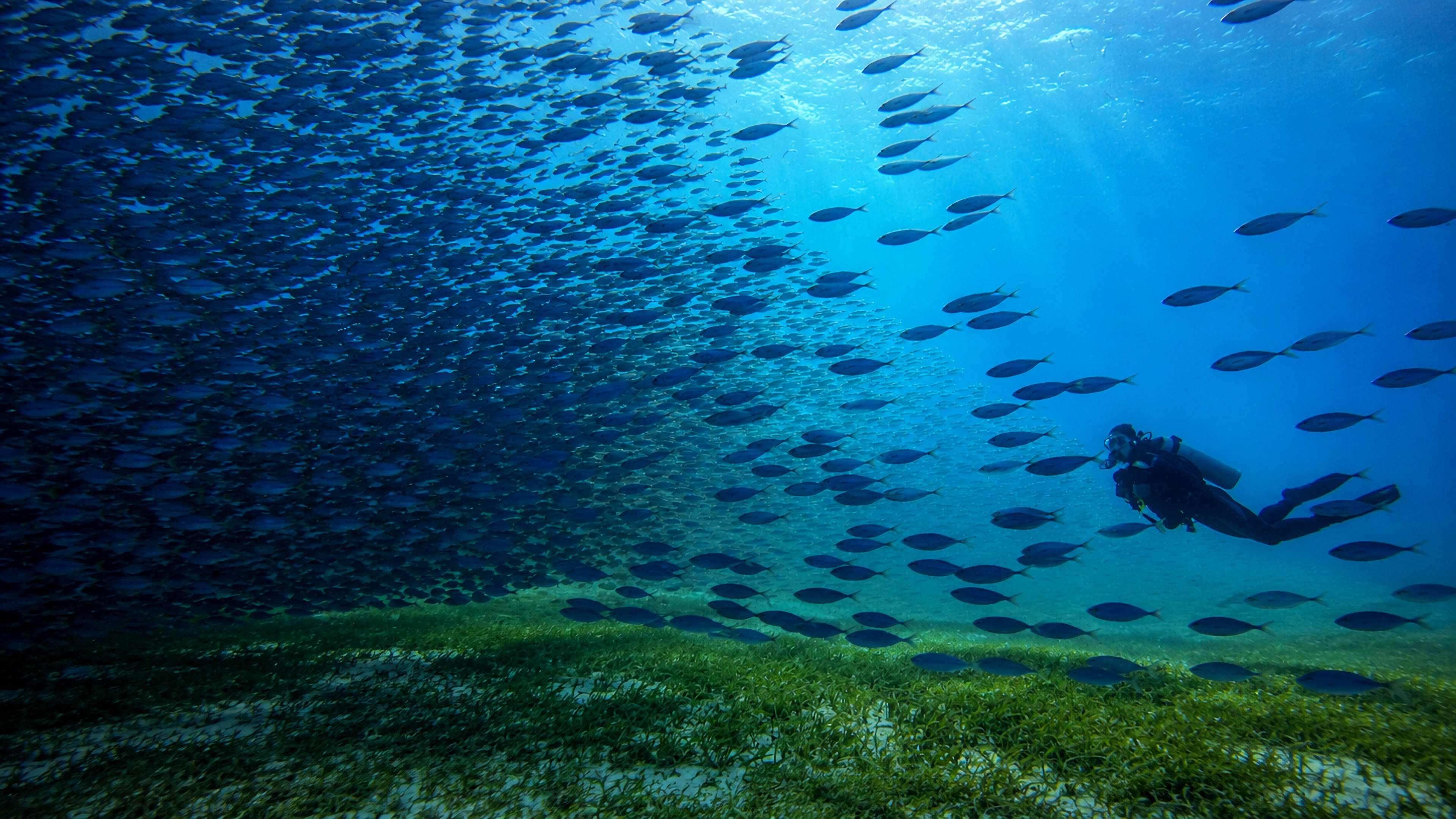
A diver beside a moving wall of schooling fish
The diver remains outside the school, matching its calm rather than pushing into it.
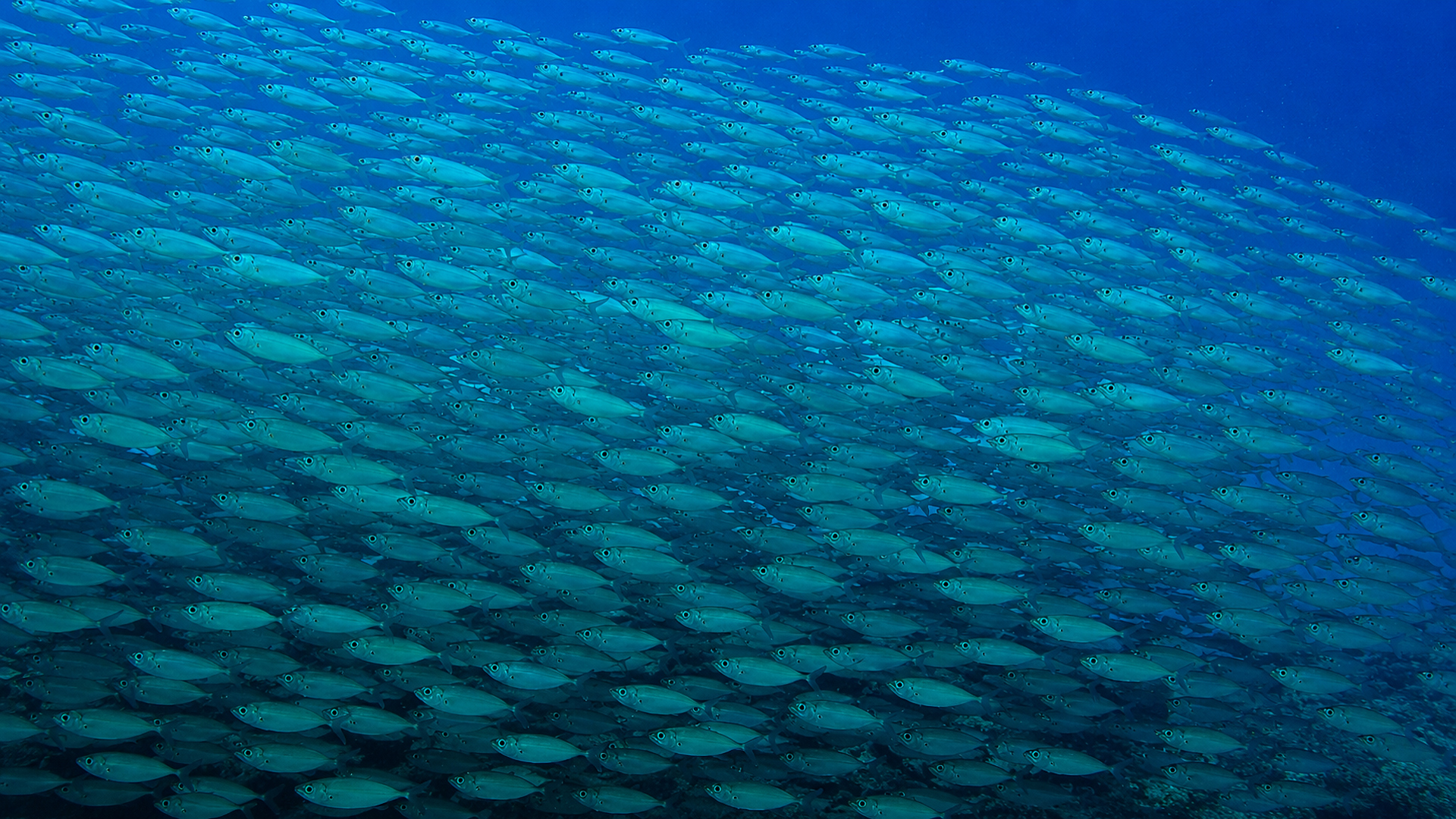
A dense school of fish filling the frame in blue water
Inside the school, individual fish become pattern, rhythm, and motion.
Inside the School

The world becomes movement.

From outside, a school is a group. From inside, it can feel like being surrounded by a living current.

That experience is only possible when the diver is controlled enough to avoid creating alarm. Slow breathing, steady buoyancy, and gentle movement help tell the fish that the diver is not a threat.

A diver surrounded by schooling fish in blue water
When fish continue moving naturally around you, the encounter becomes a privilege rather than a pursuit.
The Calm Diver

Calmness earns acceptance.

Great buoyancy is not only a diving skill. It is a way of communicating with marine life.

Slow inhales, slow exhales, quiet finning, and patient body movement change the encounter. A calm diver becomes less disruptive. Sometimes the school adjusts, opens, surrounds, or simply continues as if the diver has been accepted into the moment.

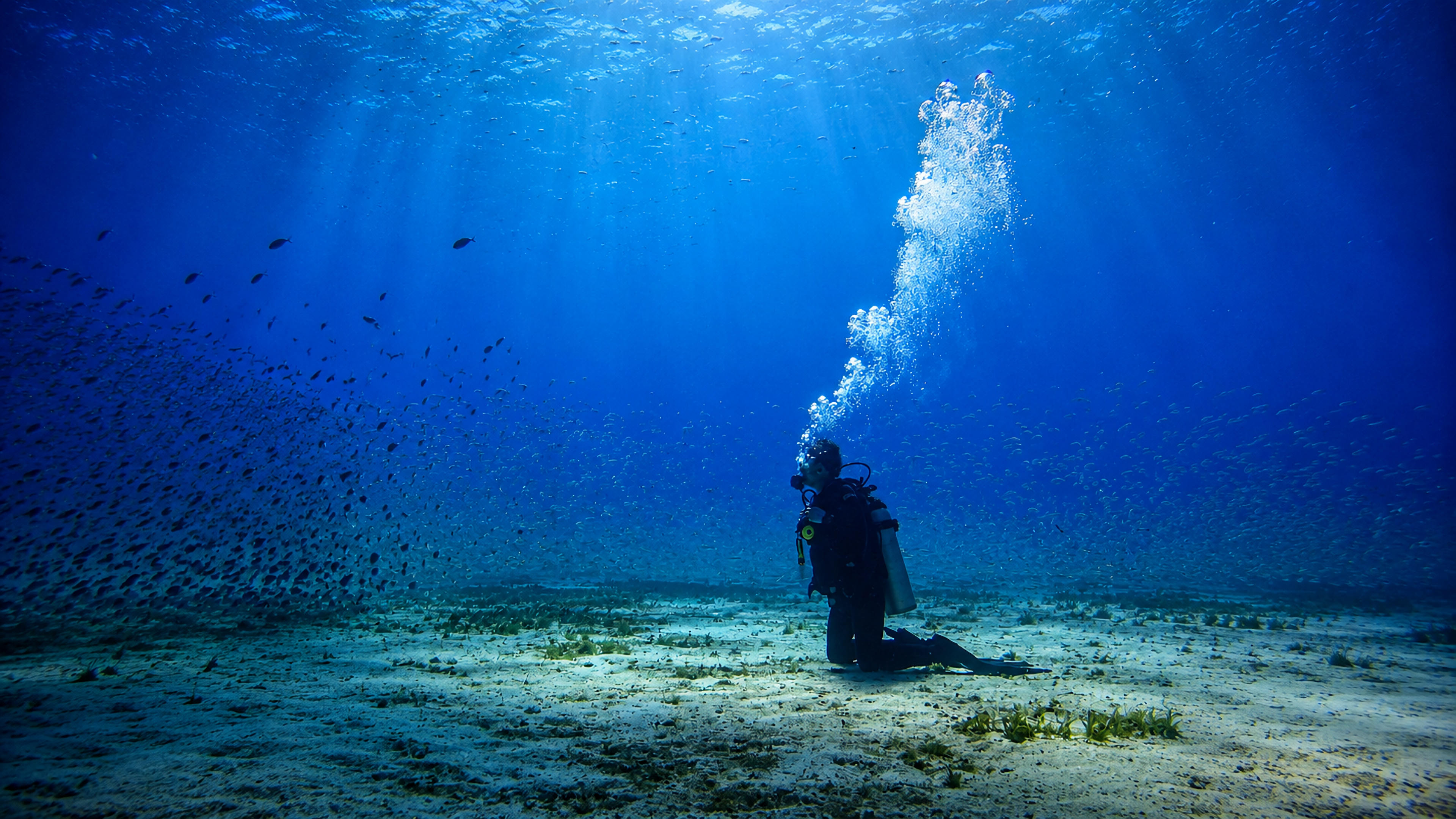
A calm diver kneeling quietly while fish school nearby in blue water
The diver is not chasing the school. The diver is quiet enough for the school to remain.
Schools of Fish Questions

Questions divers often ask

Why do fish school?

Fish school for several reasons, including protection from predators, shared awareness, efficient movement, and staying together around useful reef habitat.

Why do schools gather under ledges?

Reef ledges and overhangs offer shadow, structure, and protection. Schools may gather there for safety, comfort, and reduced exposure to bright sunlight or predators above.

Can a diver enter a school of fish?

Sometimes a school will allow a calm diver to remain close or even become surrounded. That should never be forced. The diver should slow down, control buoyancy, and let the fish decide.

What is the best way to approach schooling fish?

Approach slowly from the side, avoid sudden finning, control your breathing, and never chase the school. The goal is to reduce disturbance, not to get the closest photograph.

Why does good buoyancy matter?

Good buoyancy protects the reef and makes the diver less disruptive. Slow breathing and controlled movement help create the calm that allows longer, more natural encounters.

The Lesson

The ocean rewards calm.

The best schooling encounters are not won by speed, strength, or pursuit. They are earned by control.

When a diver slows down enough, the reef changes. Fish that might scatter begin to hold their shape. Movement continues. The school remains a school. And for a few moments, the diver is allowed to witness the reef from within its rhythm.

Continue the Adventure

Every reef has another story waiting to be discovered.

Follow Dive the Blue for more underwater videos, marine life photography, Cozumel reef stories, and future project updates.

YouTube Instagram Facebook Contact

Return to the Featured Marine Life collection to explore more animals that shape the reefs of Cozumel.

Return to Featured Marine Life
Top ↑