Featured Marine Life

Moray Eels of Cozumel

Misunderstood reef residents that teach divers to look past first impressions and understand what behavior really means.

Other Eels Gallery Questions Respect
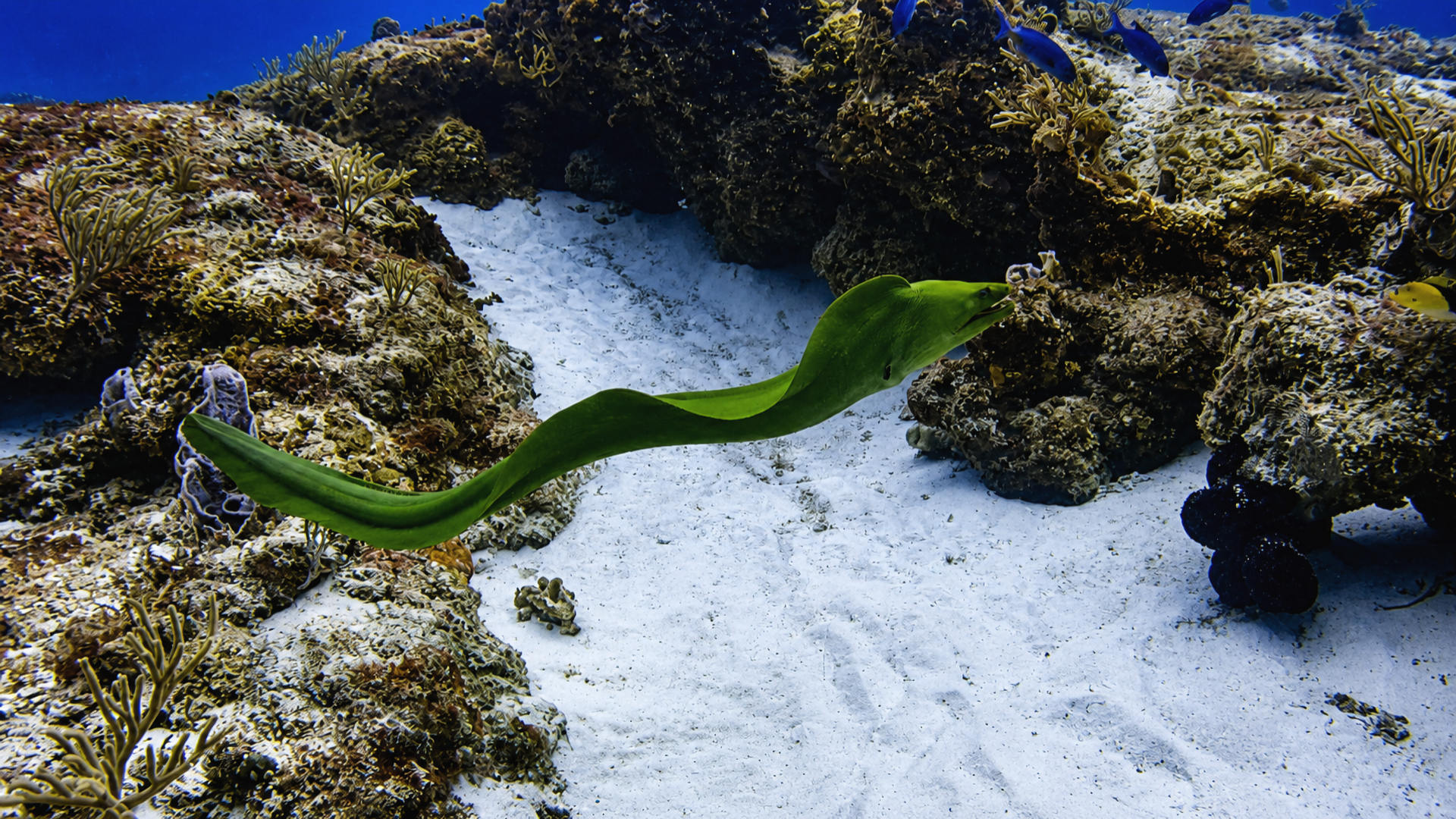
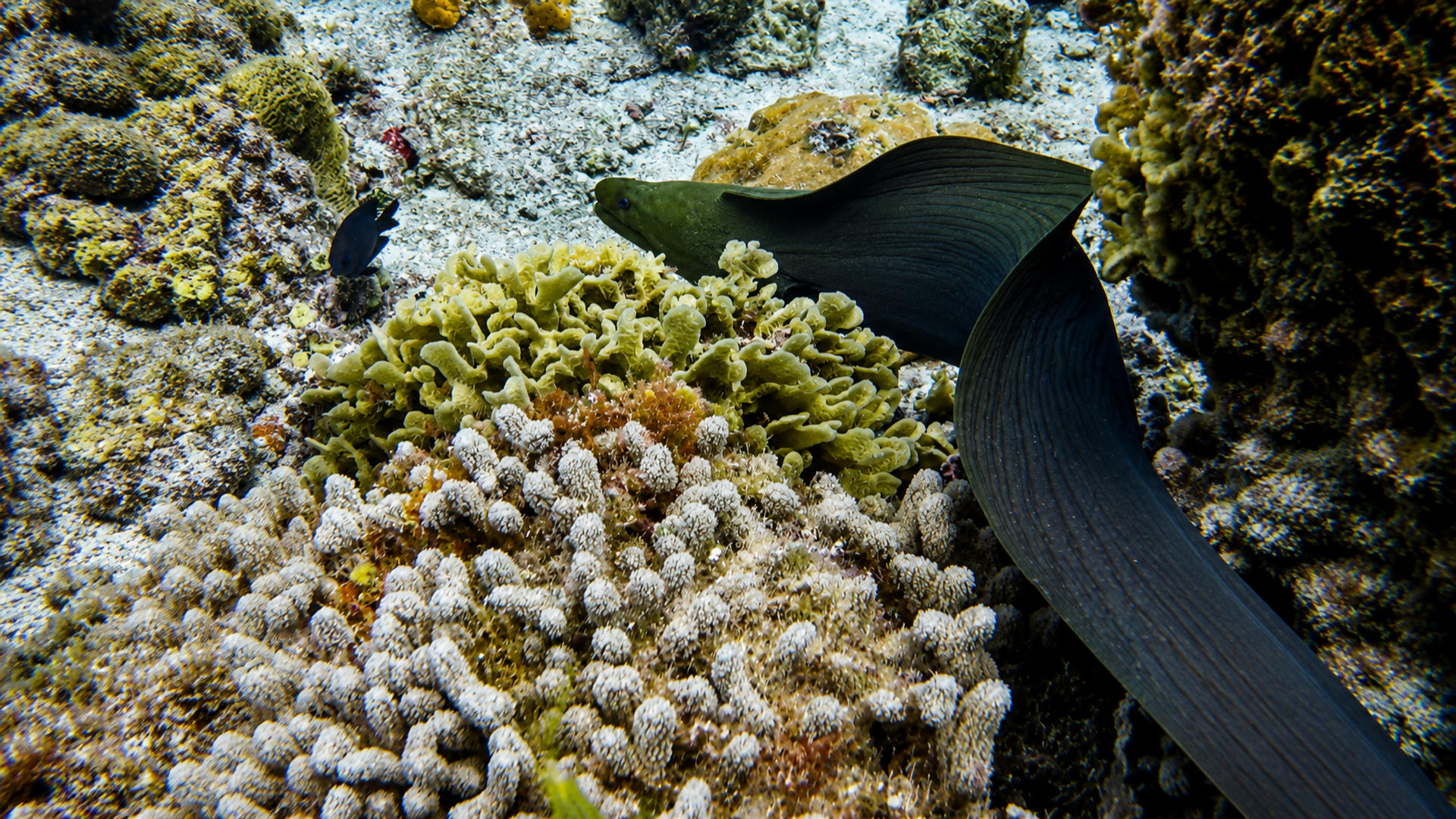
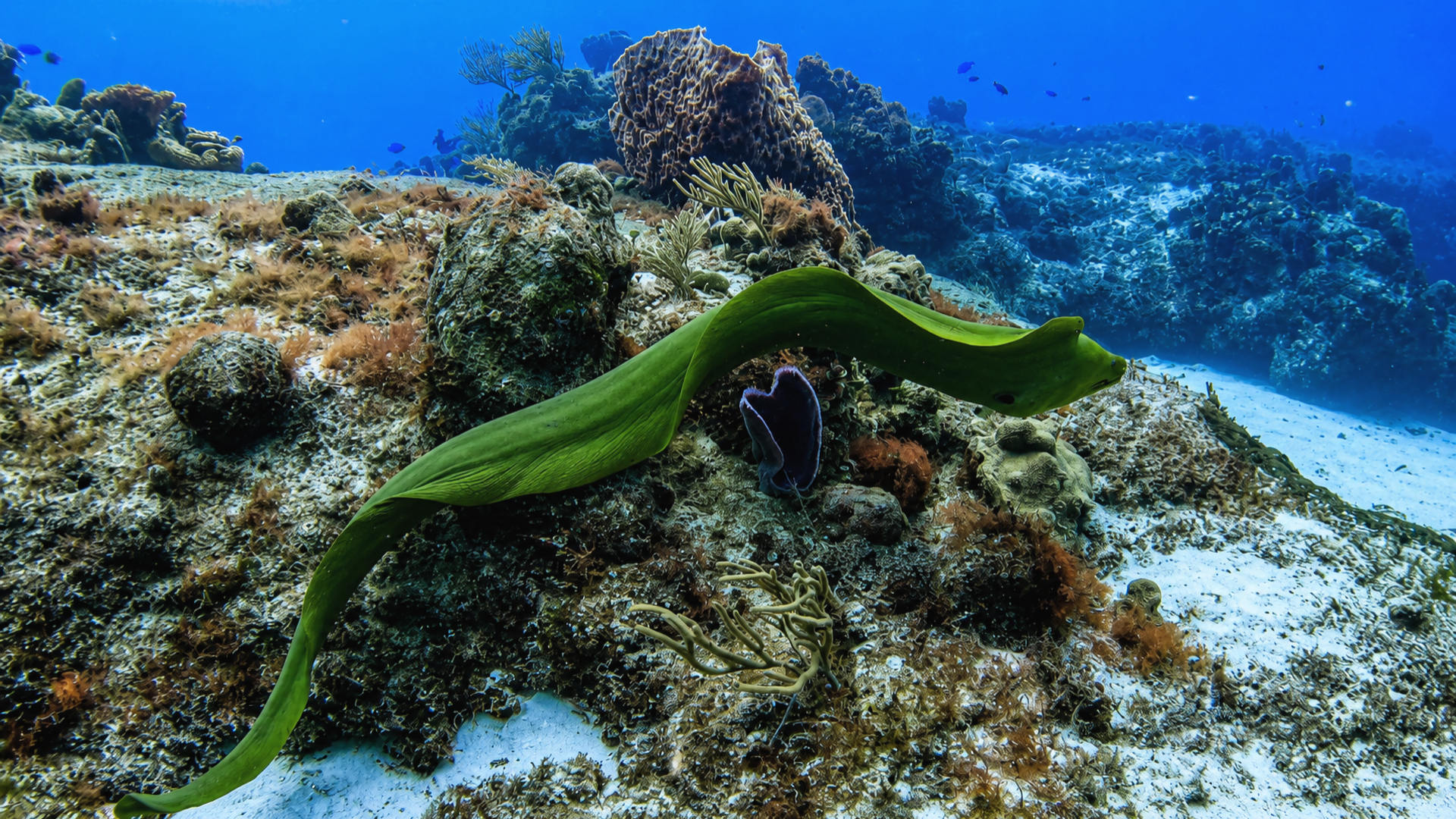
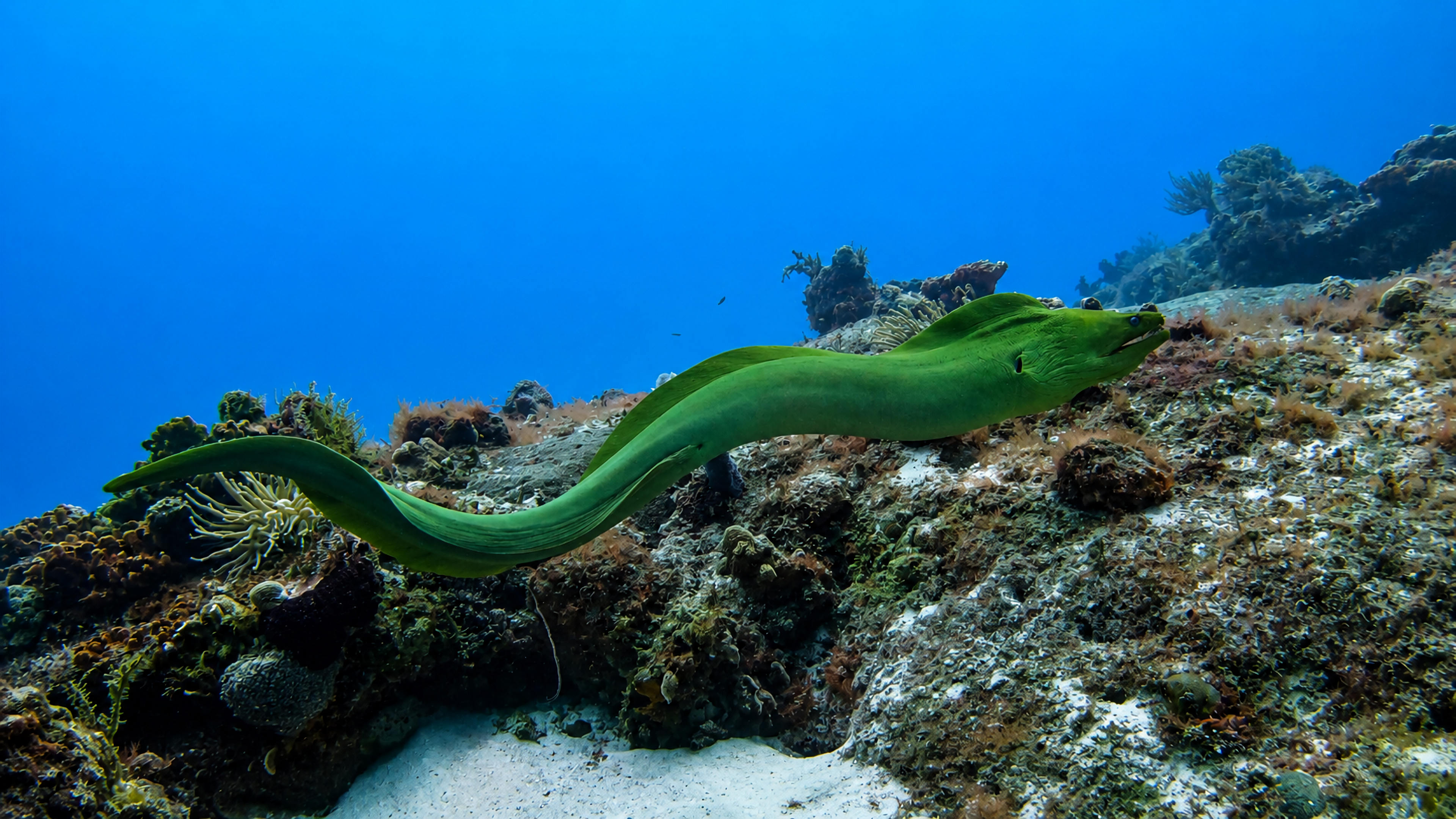
A Green Moray swimming freely over a Cozumel reef
A Green Moray in the open reveals the animal behind the reputation.
The First Impression

Not a monster a
reef specialist.

Moray eels are often judged by appearance: a large head, open mouth, strong teeth, and a hidden body tucked into the reef.

But a closer look tells a different story. Morays are patient hunters, careful observers, and important reef residents. What looks threatening at first may simply be breathing, watching, or waiting in the safety of a coral shelter.
What the Moray Is Telling You

Understanding replaces fear.

The lesson of the moray is that the reef often looks different once we understand the behavior behind what we are seeing.

Open Mouth

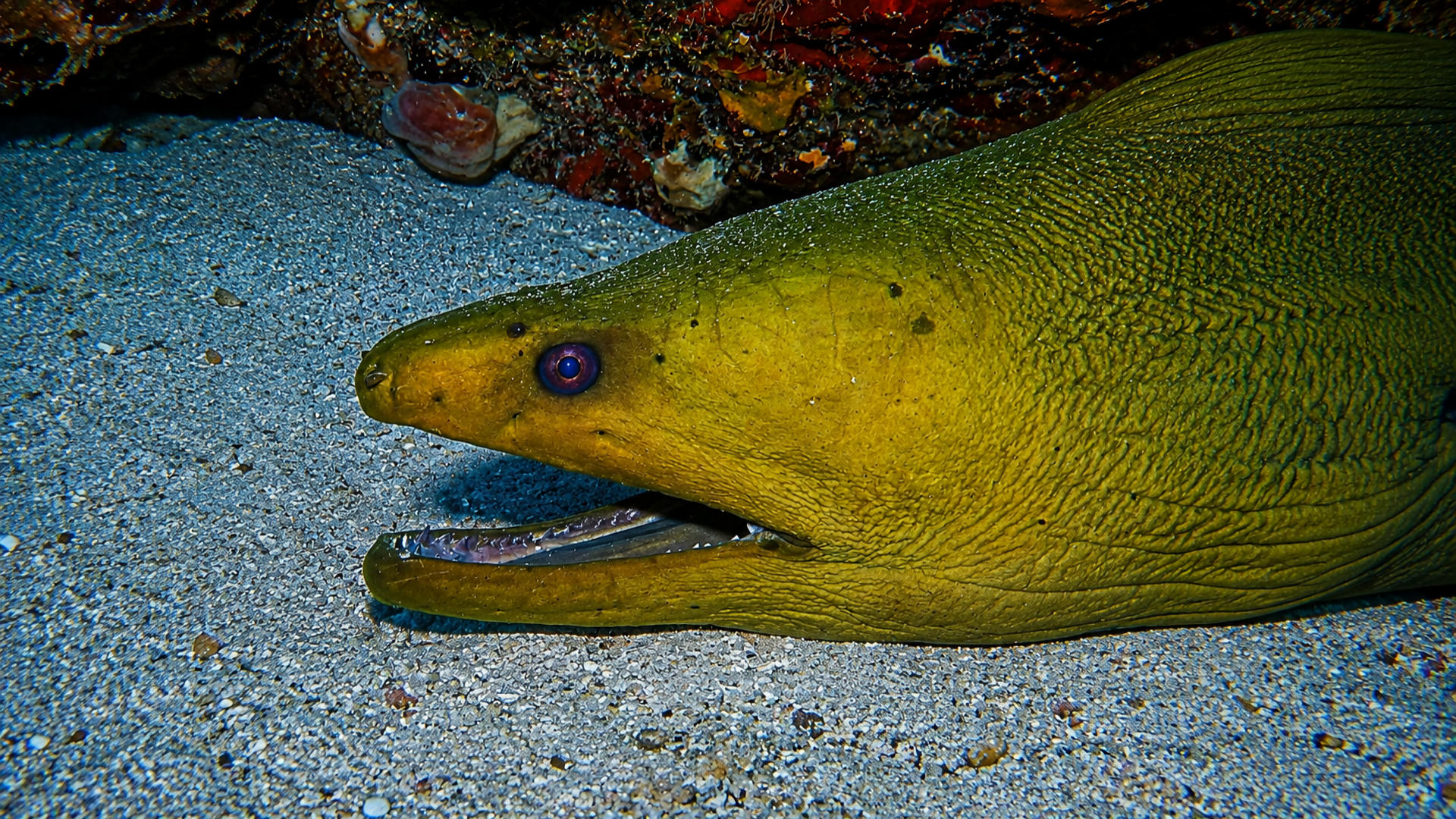
Morays often open and close their mouths to move water across their gills. Intimidating, but it is how they breathe.

Hidden Body

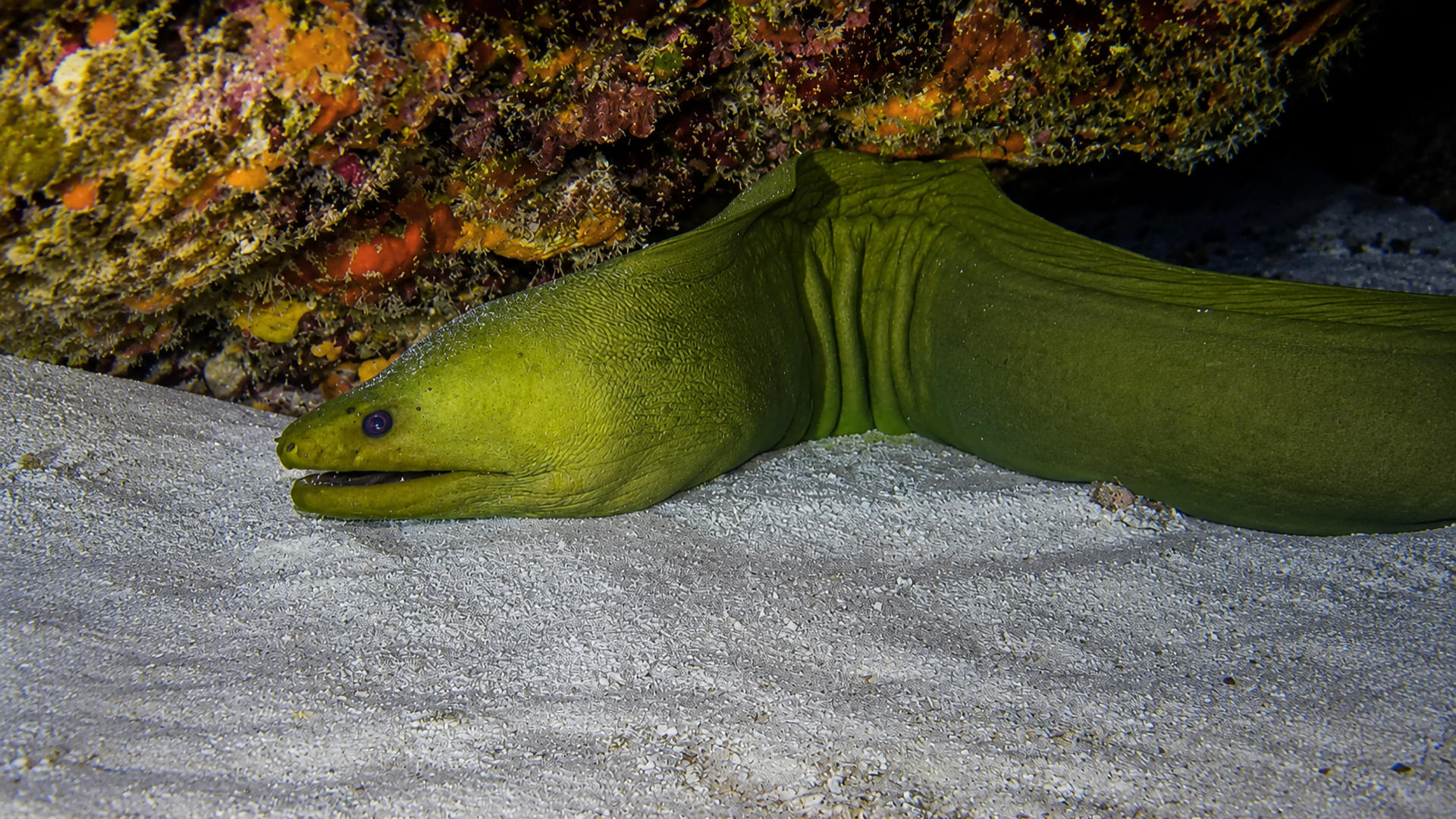
A moray tucked into the reef is using shelter. The crevice is home, protection, and a place to rest.

Slow Movement

When a moray swims in the open, it may be relocating, hunting, or following scent. It is not a reason to panic.

Green Morays

Personality on the reef.

Green Morays are among the most memorable animals divers encounter around Cozumel.

Their size can be impressive, but their behavior is often calm and deliberate. A respectful diver can watch from a comfortable distance and see an animal that is far more curious and expressive than frightening.

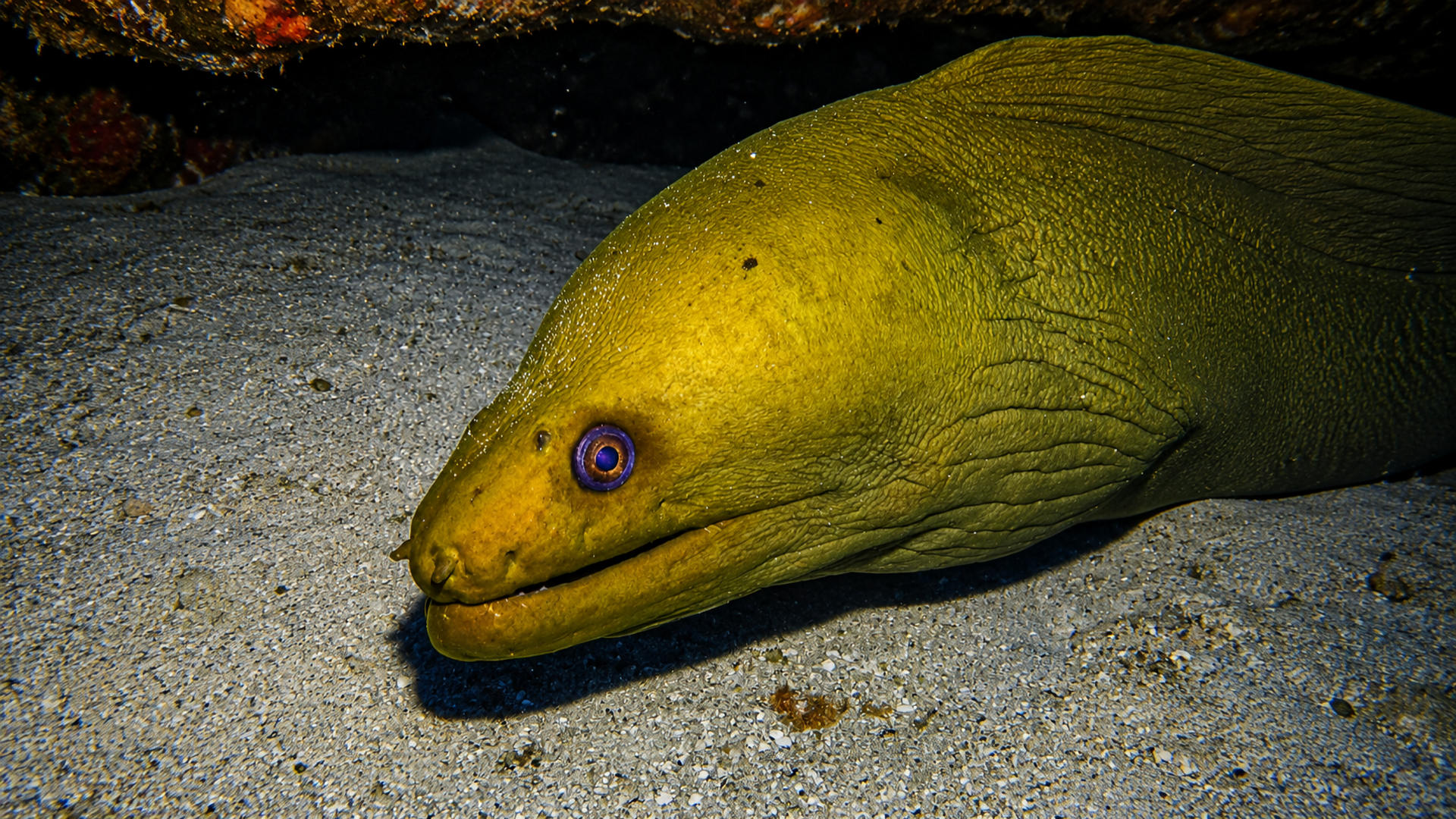
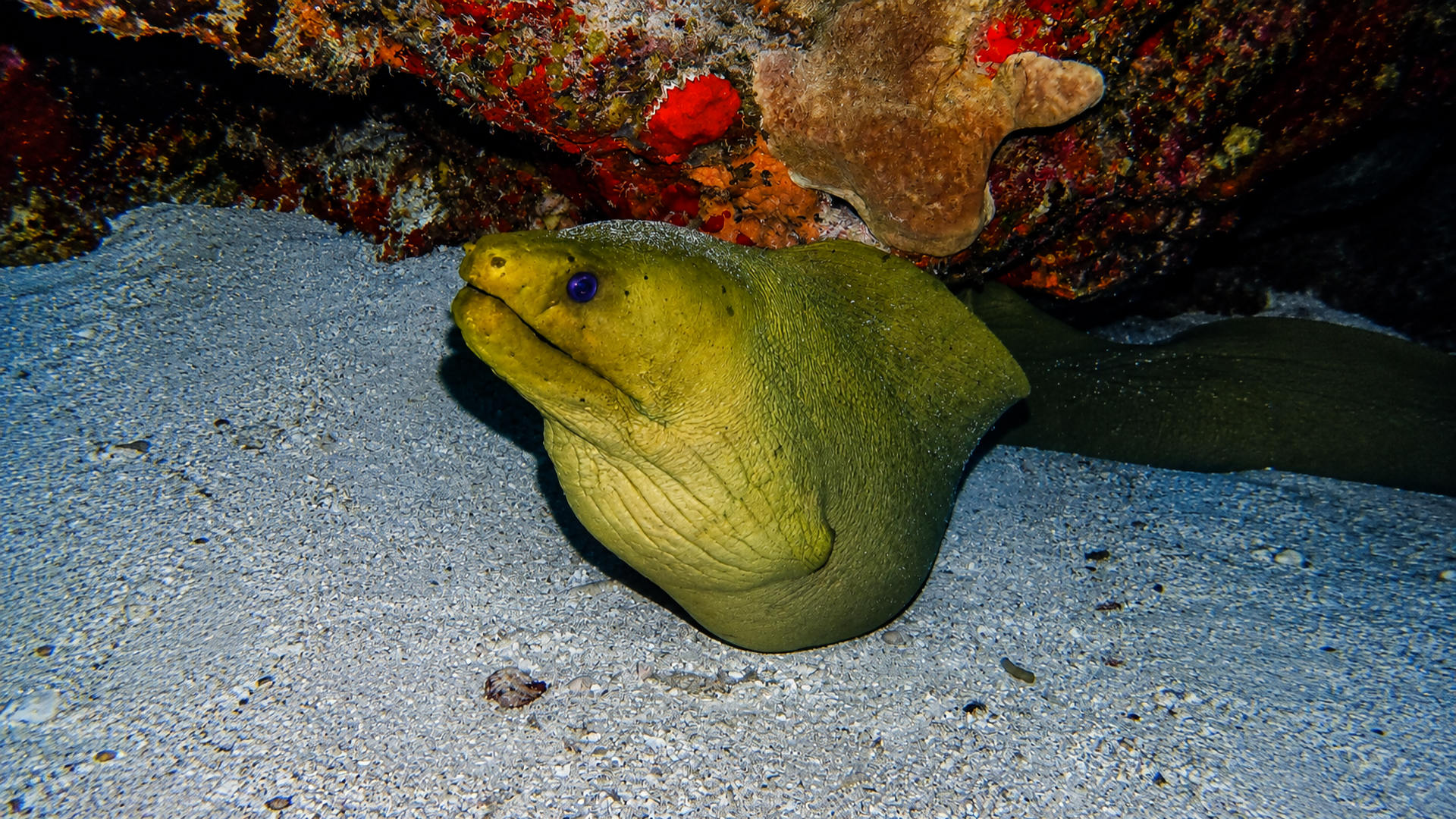
A Green Moray resting near the reef with its head visible
A Green Moray watches from a protected place within the reef.
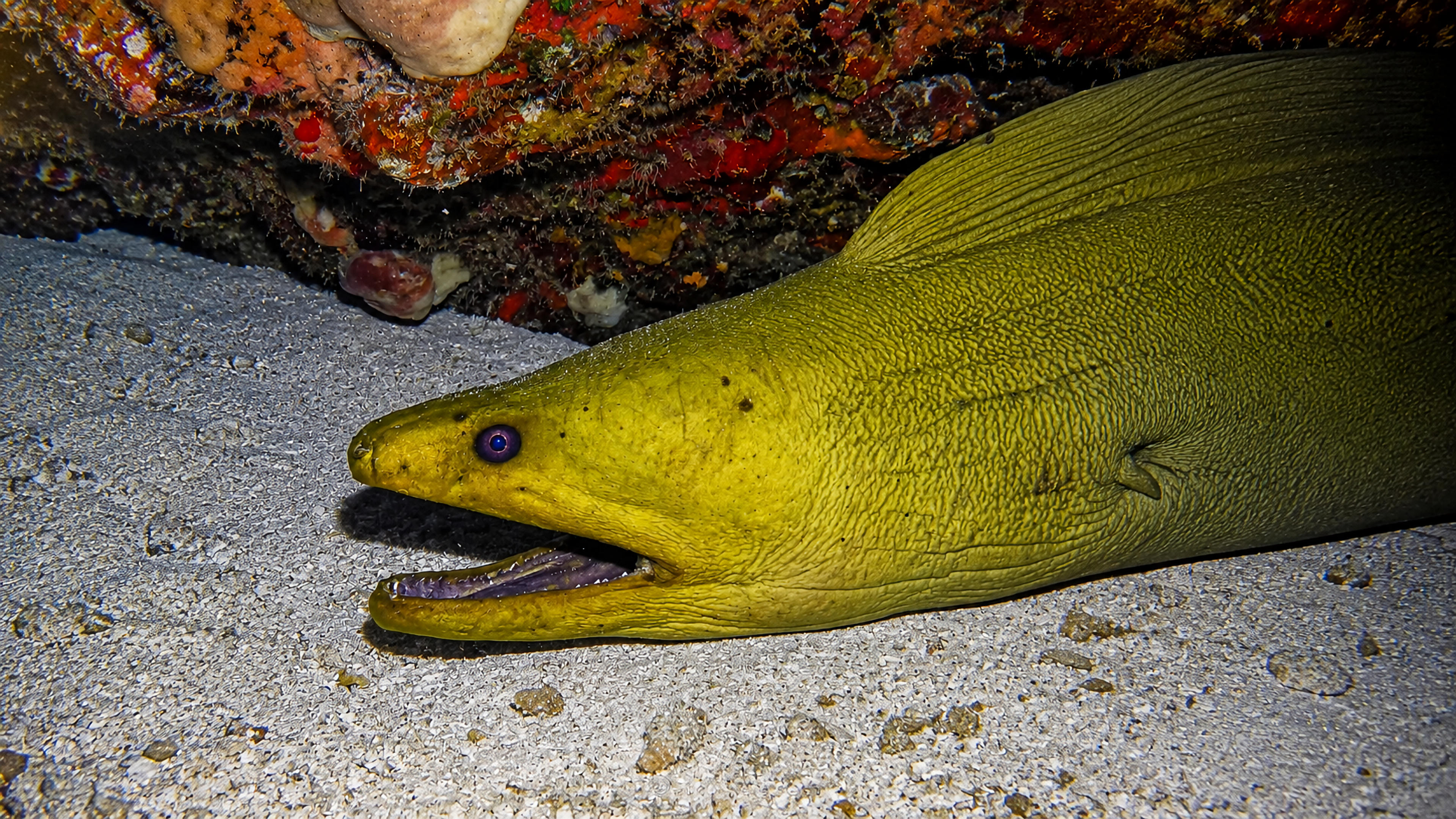
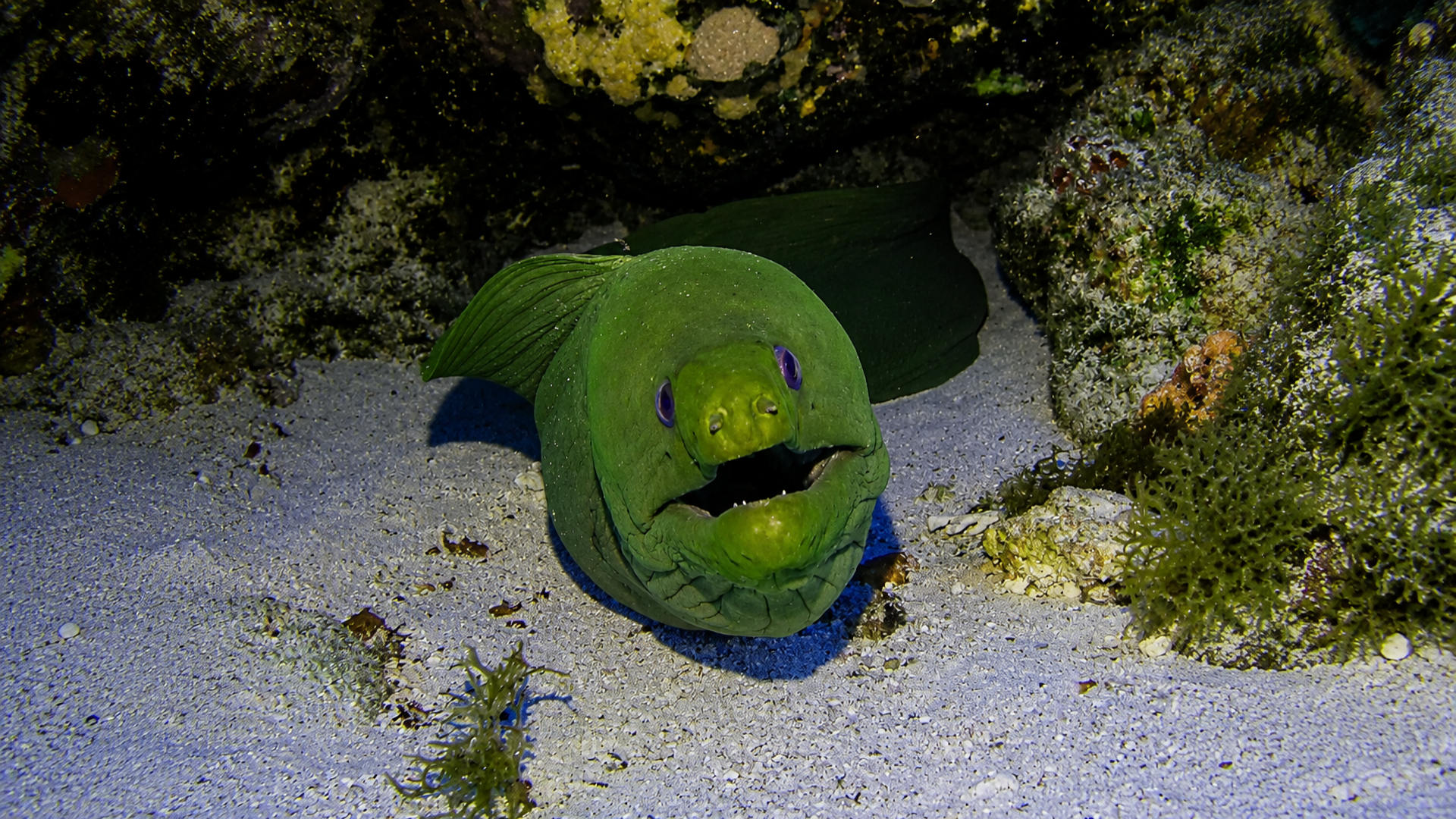
A front-facing Green Moray in a reef crevice
A face that can seem fierce becomes fascinating when understood.
A Green Moray resting beneath a reef ledge
Ledges and crevices are part of the moray's world.
The Secret Life of Morays

There is an entire animal behind the face.

Many divers only see a moray's head. When one swims in the open, the encounter reveals shape, strength, and graceful movement through the reef.

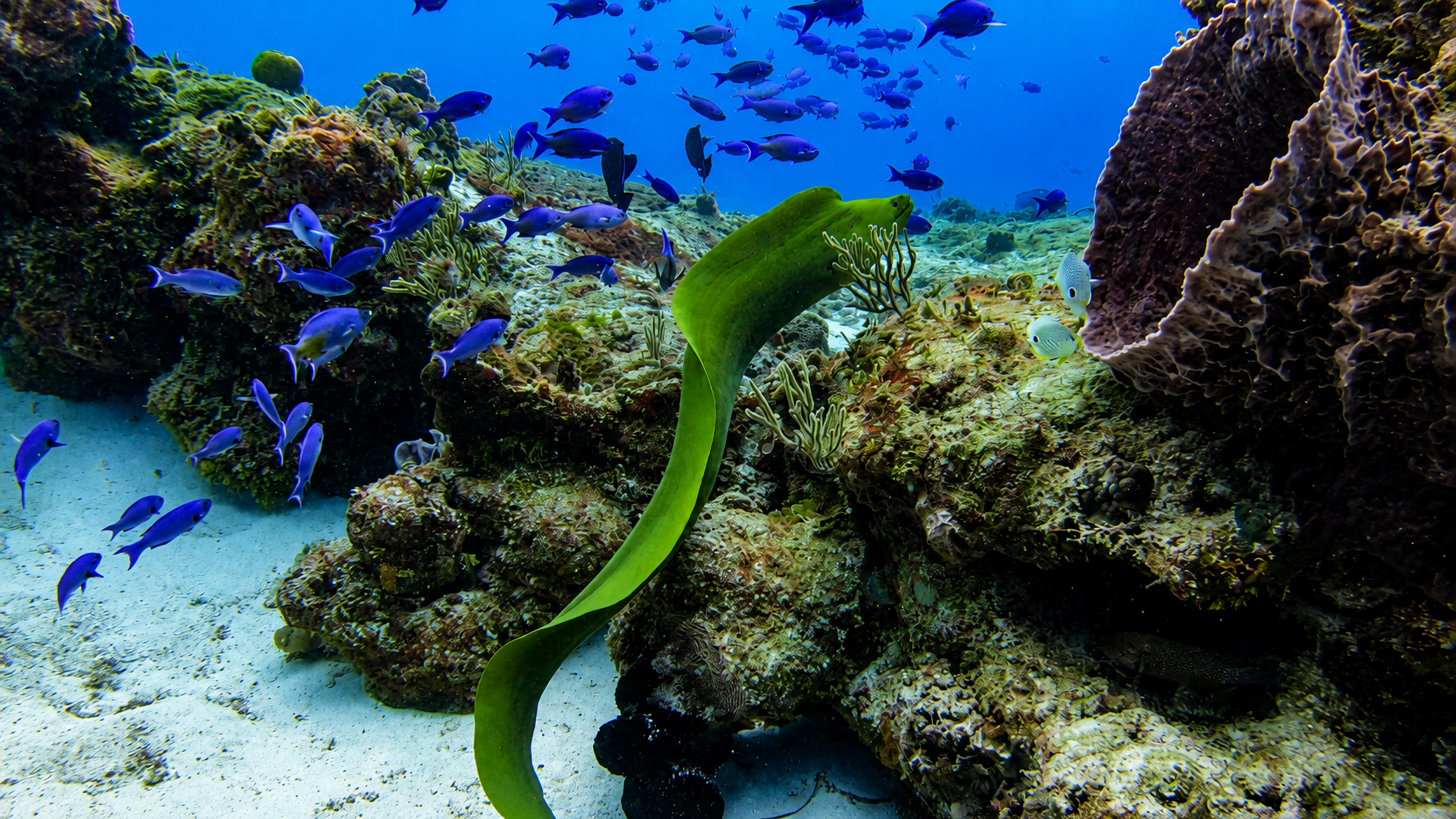
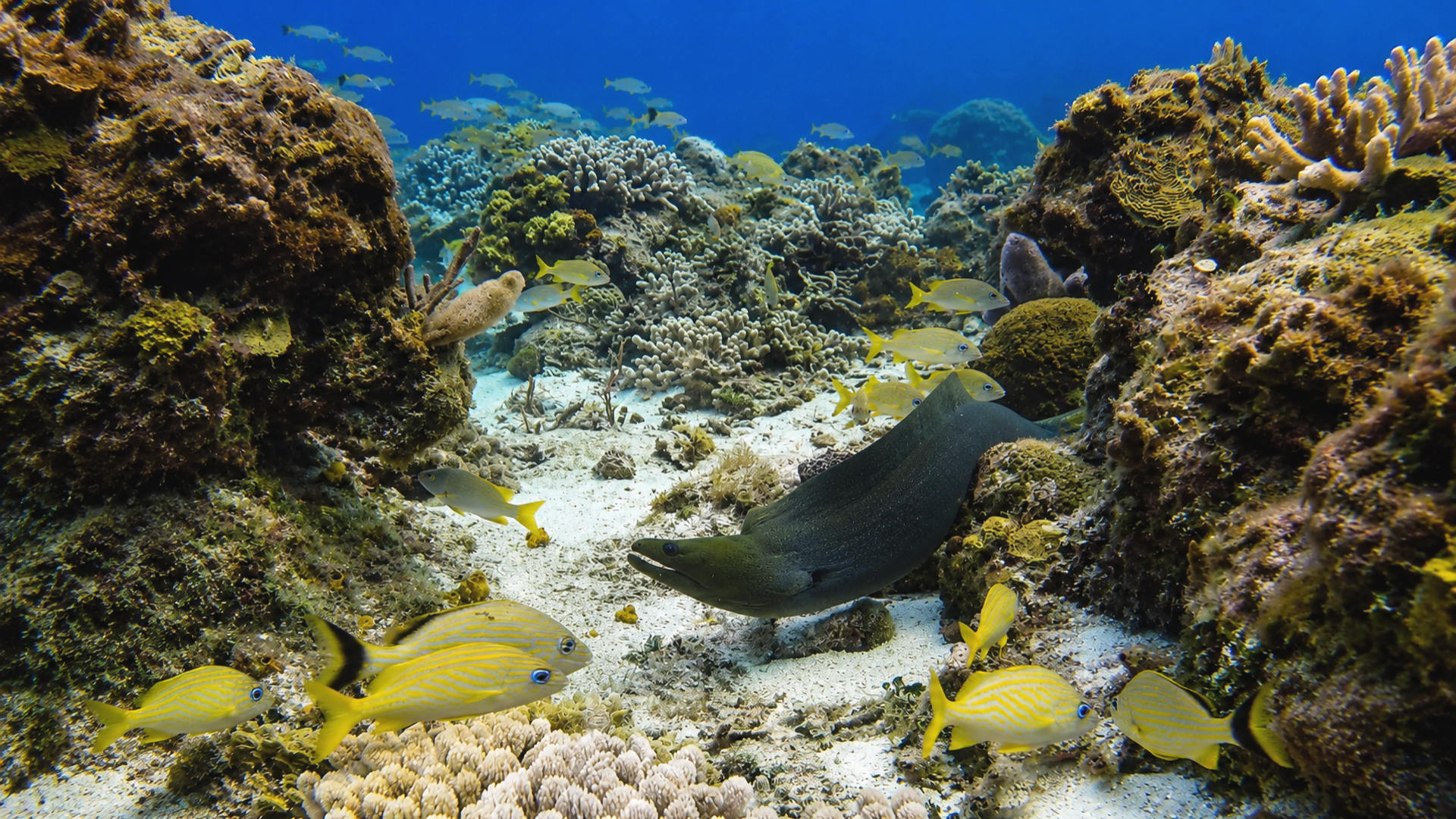
A Green Moray swimming through a reef with blue fish nearby
A Green Moray moves through a living reef, surrounded by small fish and coral life.
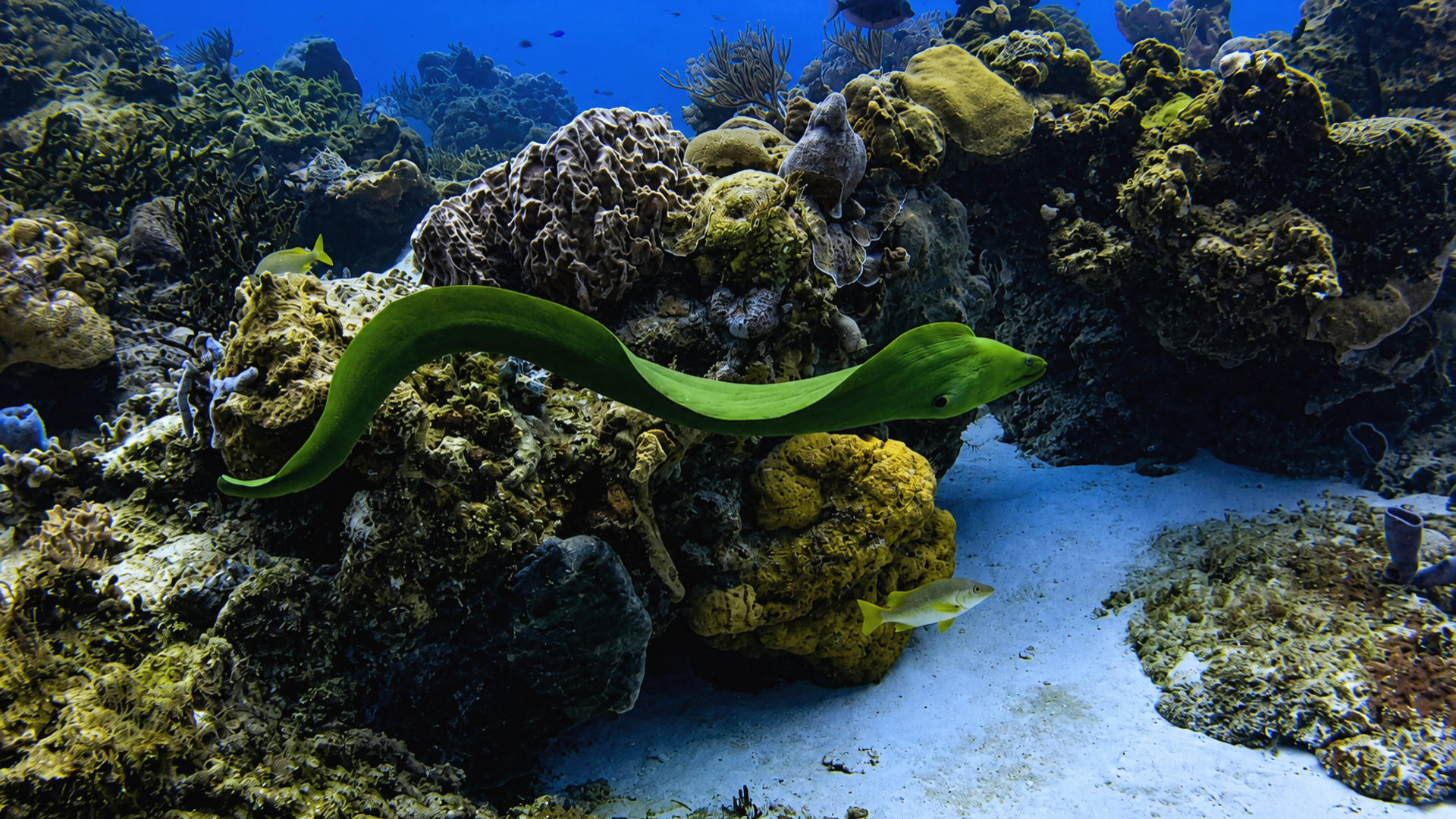
A Green Moray curving through a coral reef
A sweeping curve shows how naturally the eel moves through reef structure.
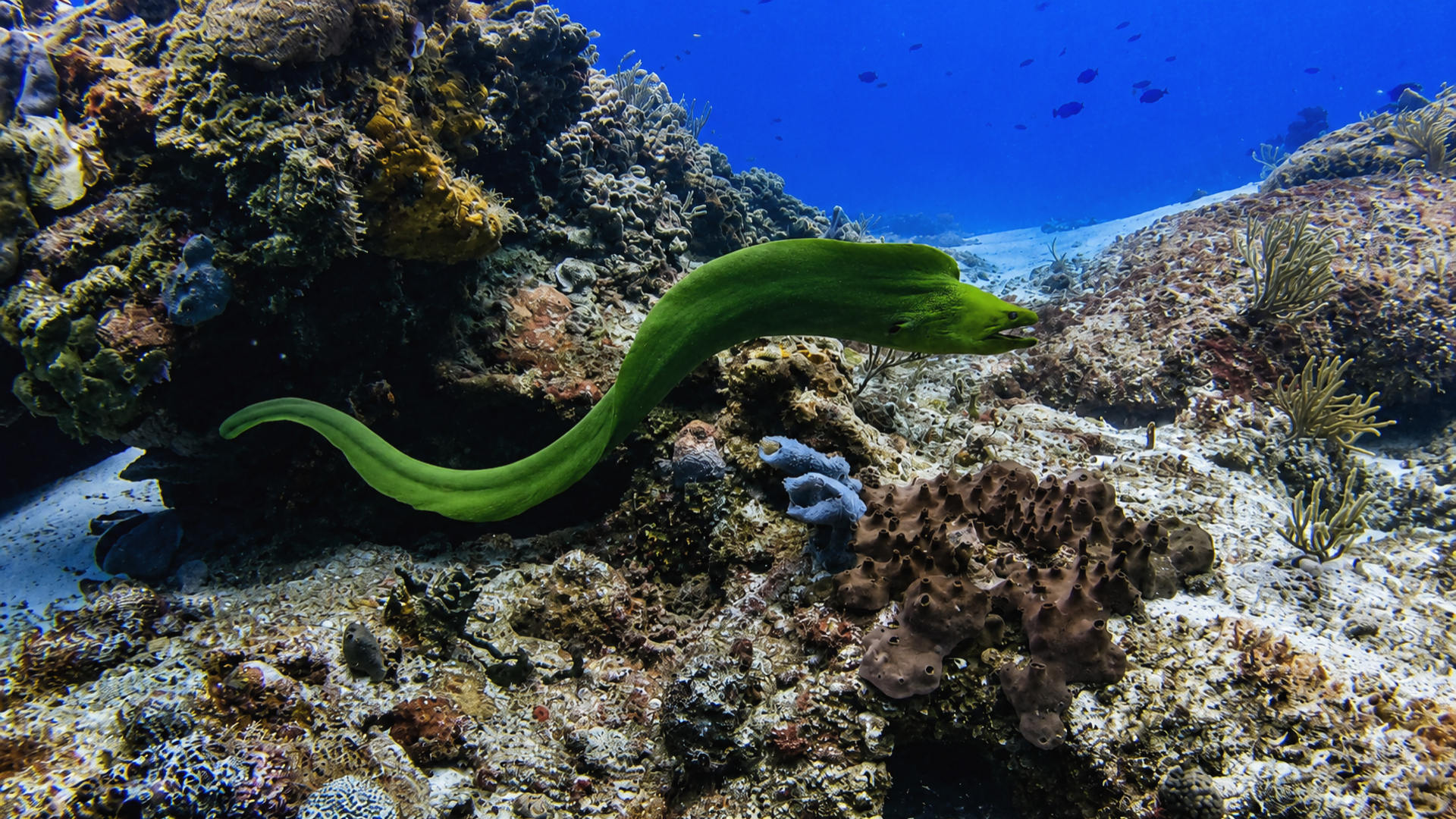
A Green Moray swimming across a sandy reef channel
Open sand and coral edges become pathways between shelters.
A Green Moray crossing pale sand beside coral
A bright sand channel reveals the length and elegance of the animal.
Other Eels You May Encounter

Not every eel is a Green Moray.

Cozumel's reefs and sandy bottoms offer more variety than many divers realize. Slowing down helps reveal smaller, patterned, and less commonly noticed species.

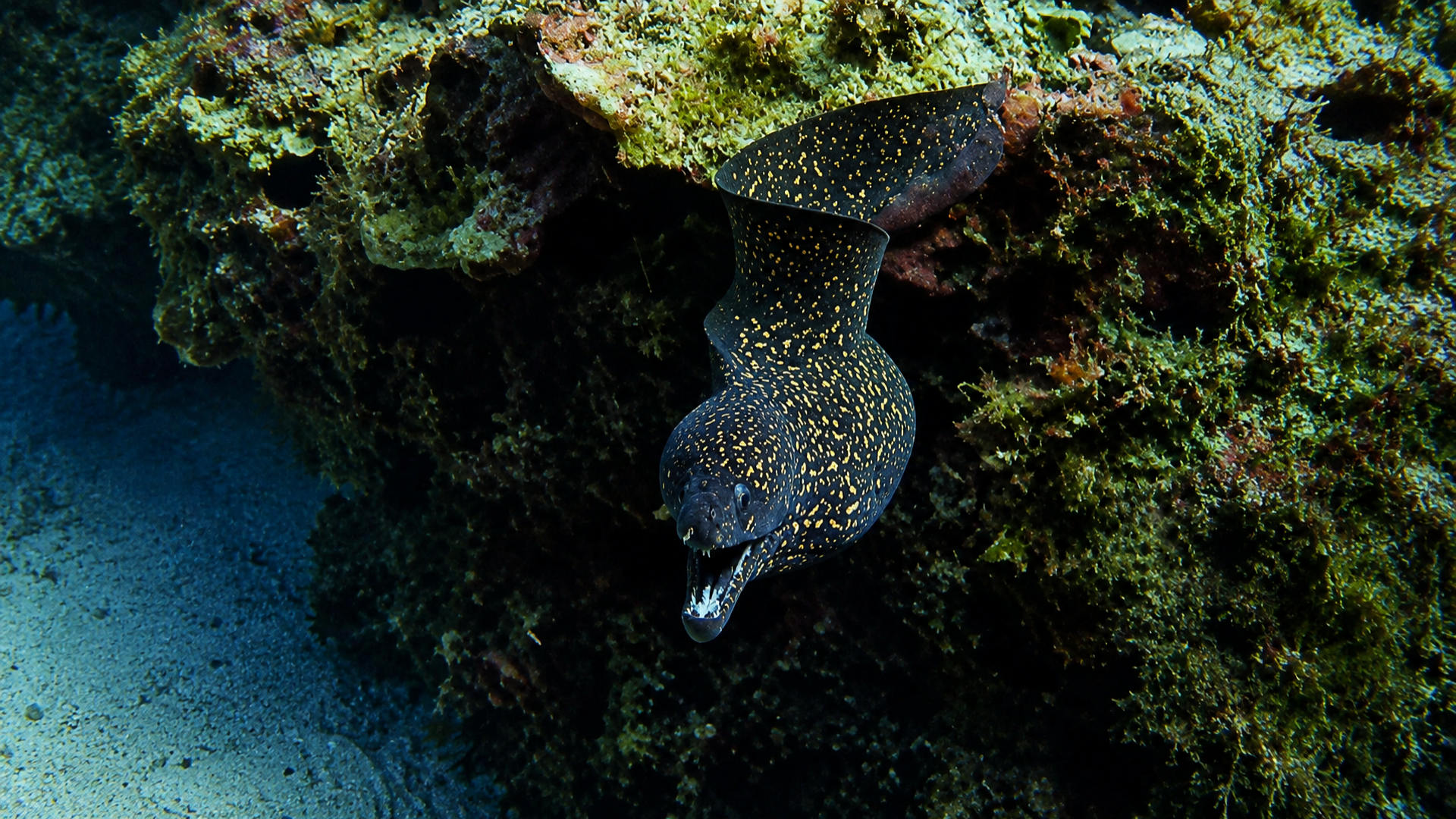
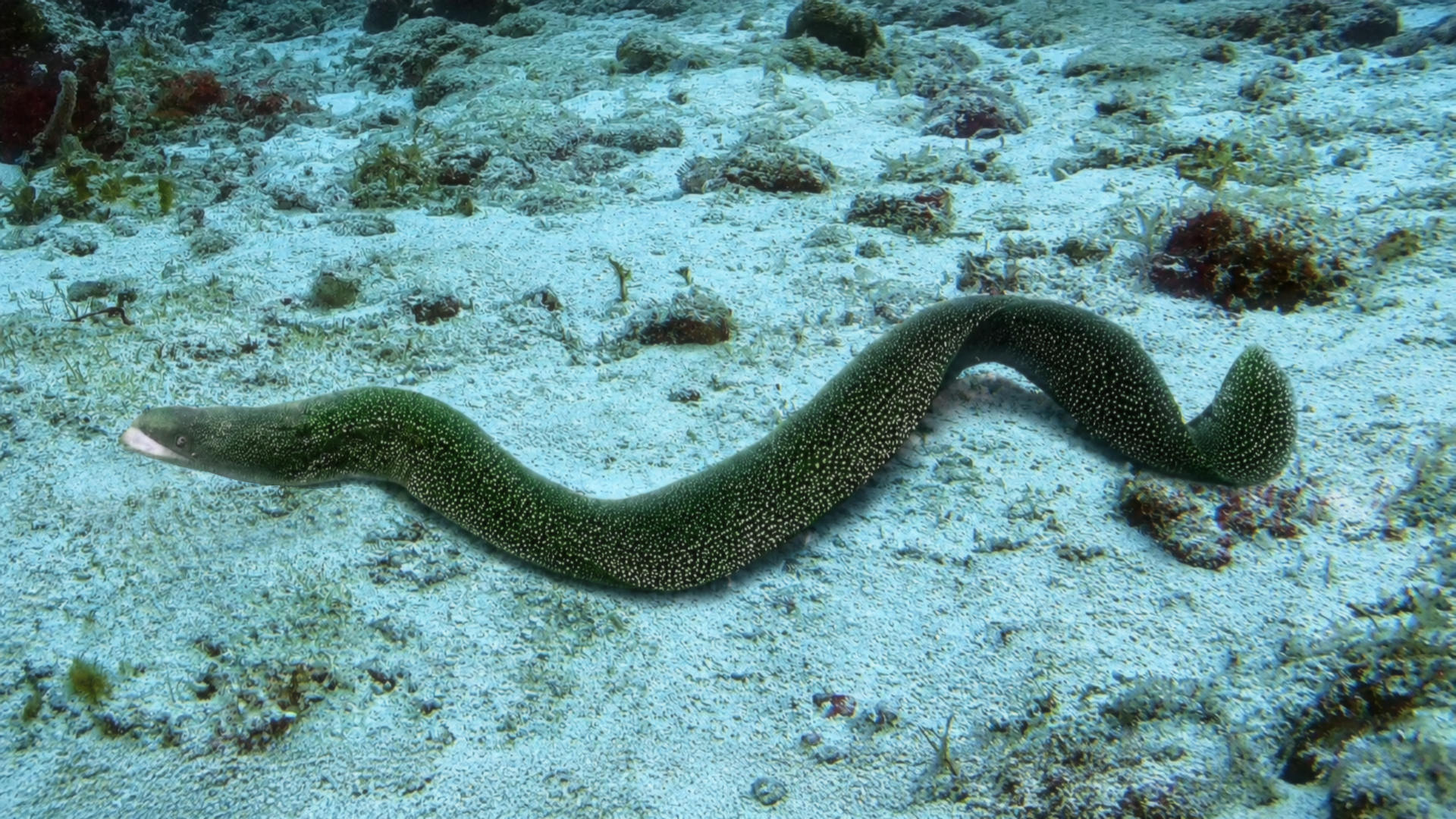
A Gold-speckled Moray moving along the reef
Gold-spotted Moray: the gold spots and smaller body create a very different look.
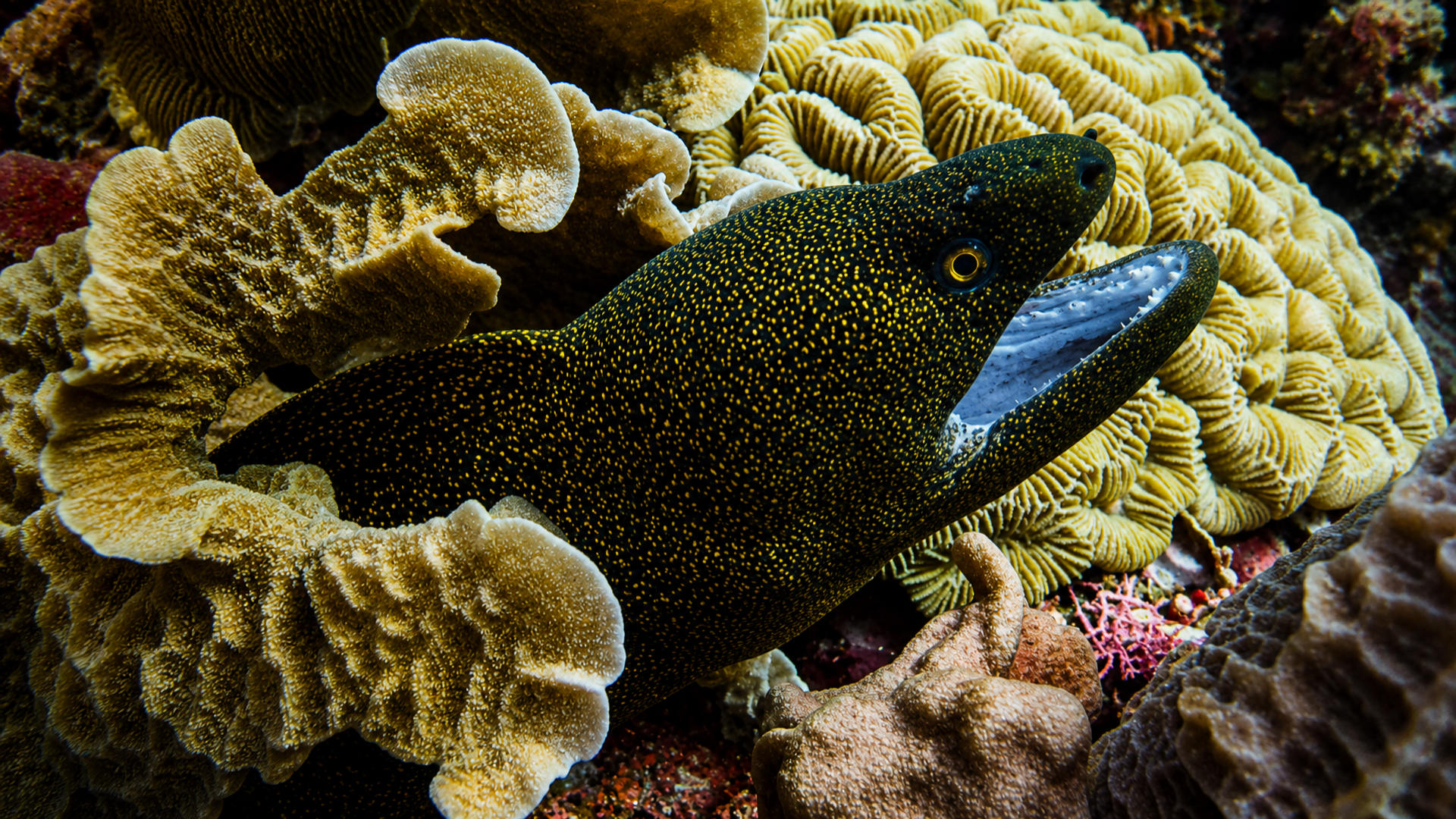
A Gold-speckled Moray tucked into coral
Gold-speckled Moray: a smaller face hidden among coral texture and shadow.
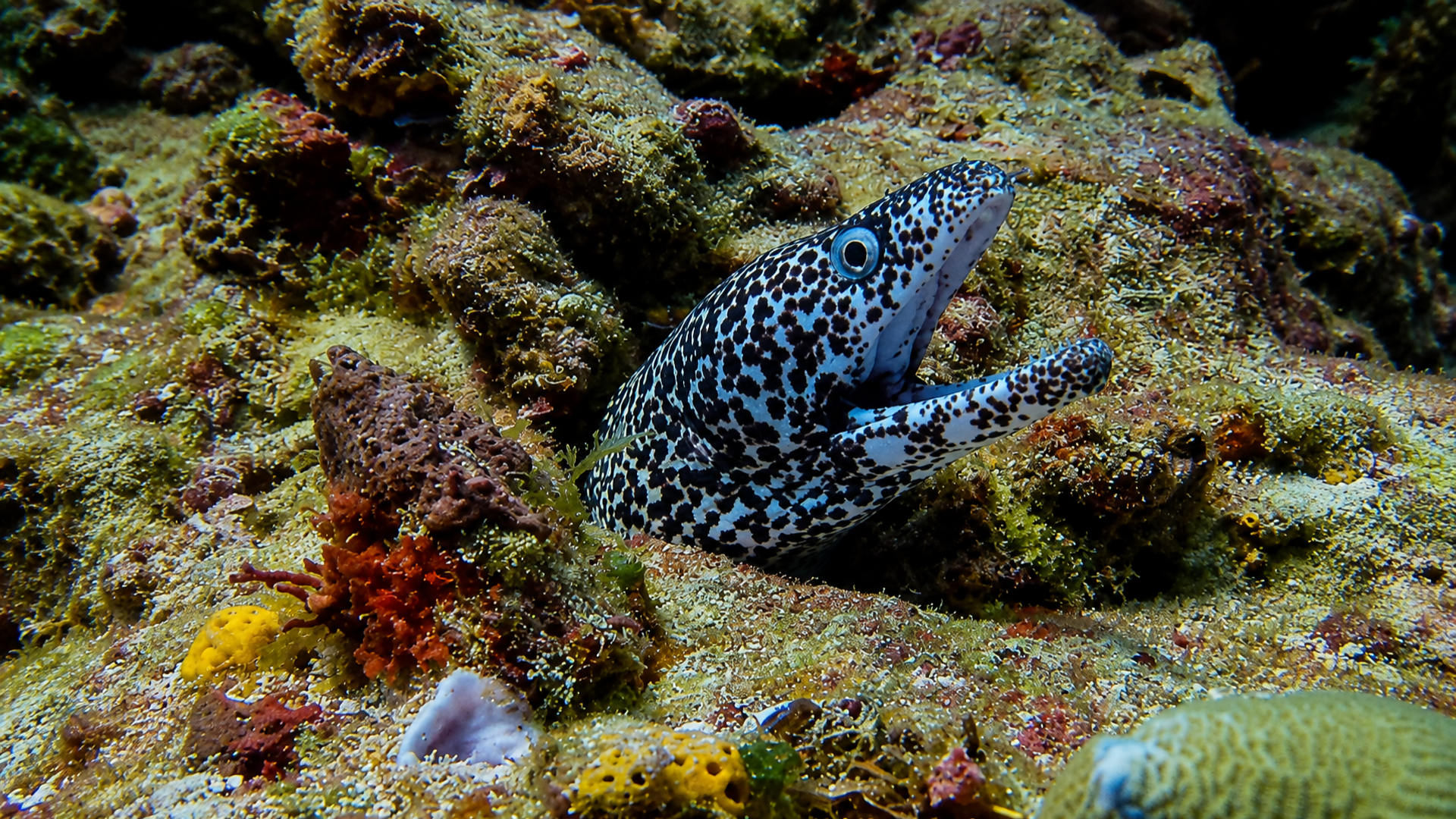
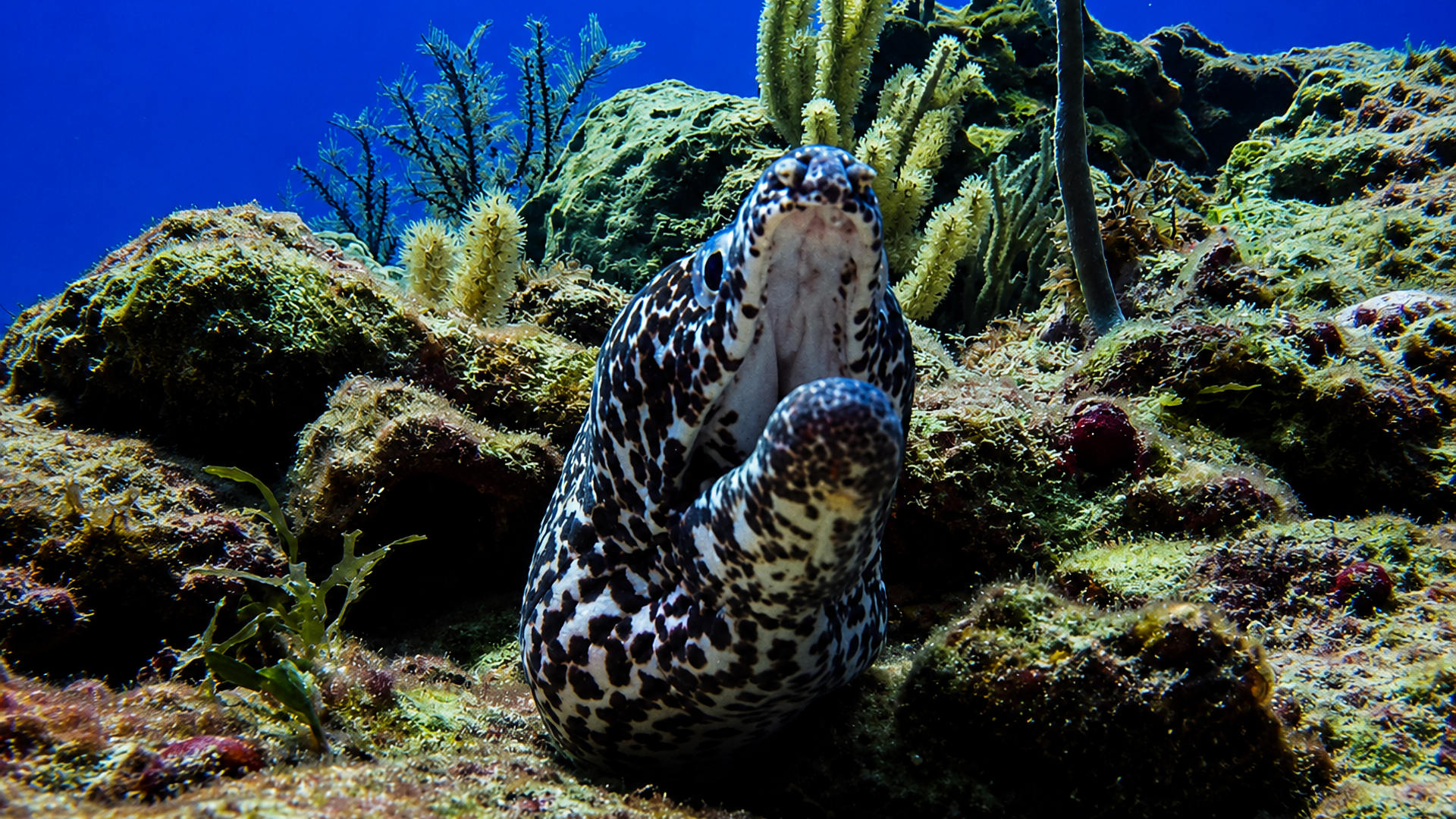
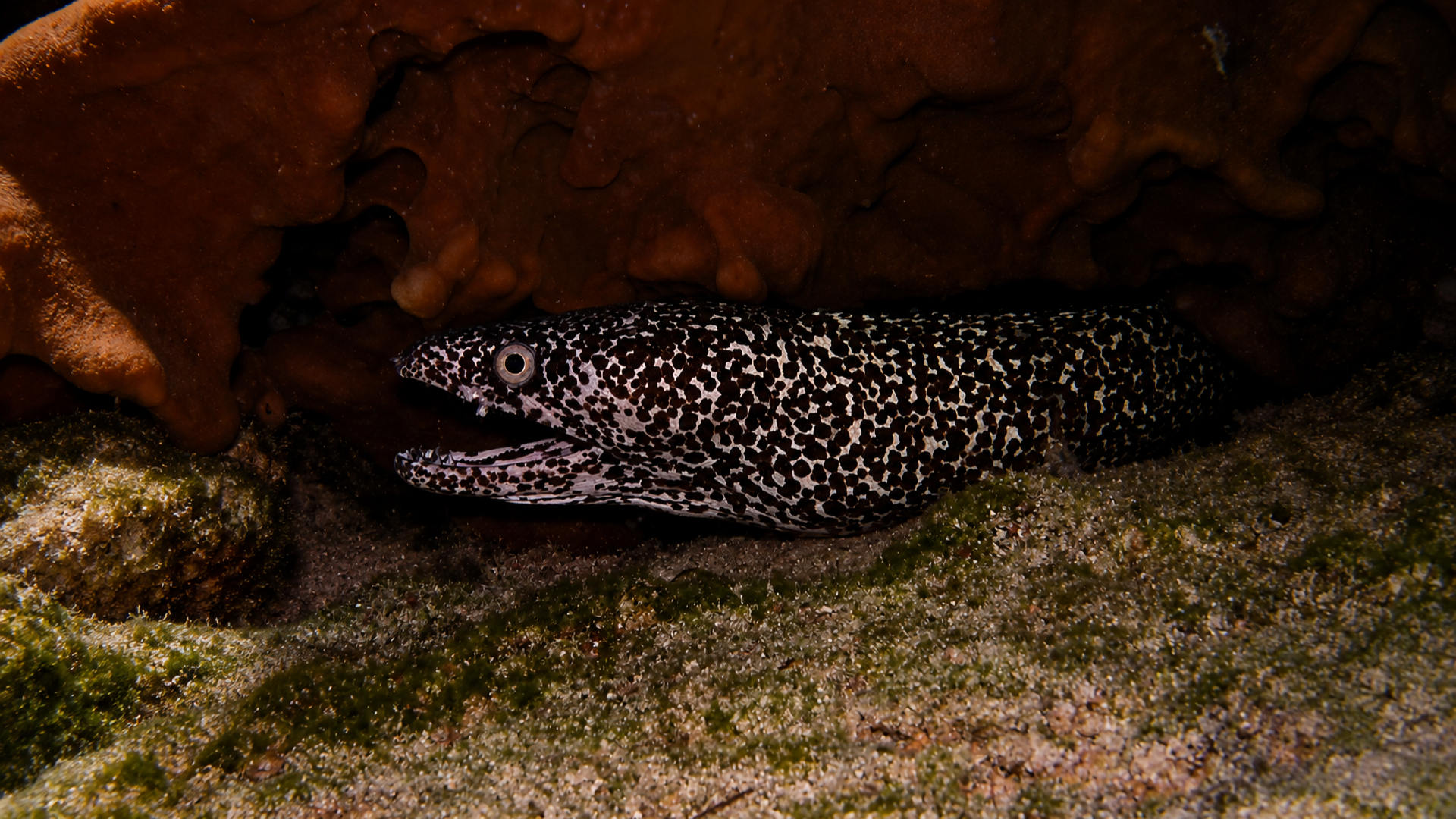
A Spotted Moray emerging from the reef
Spotted Moray: pattern, teeth, and camouflage in one memorable portrait.
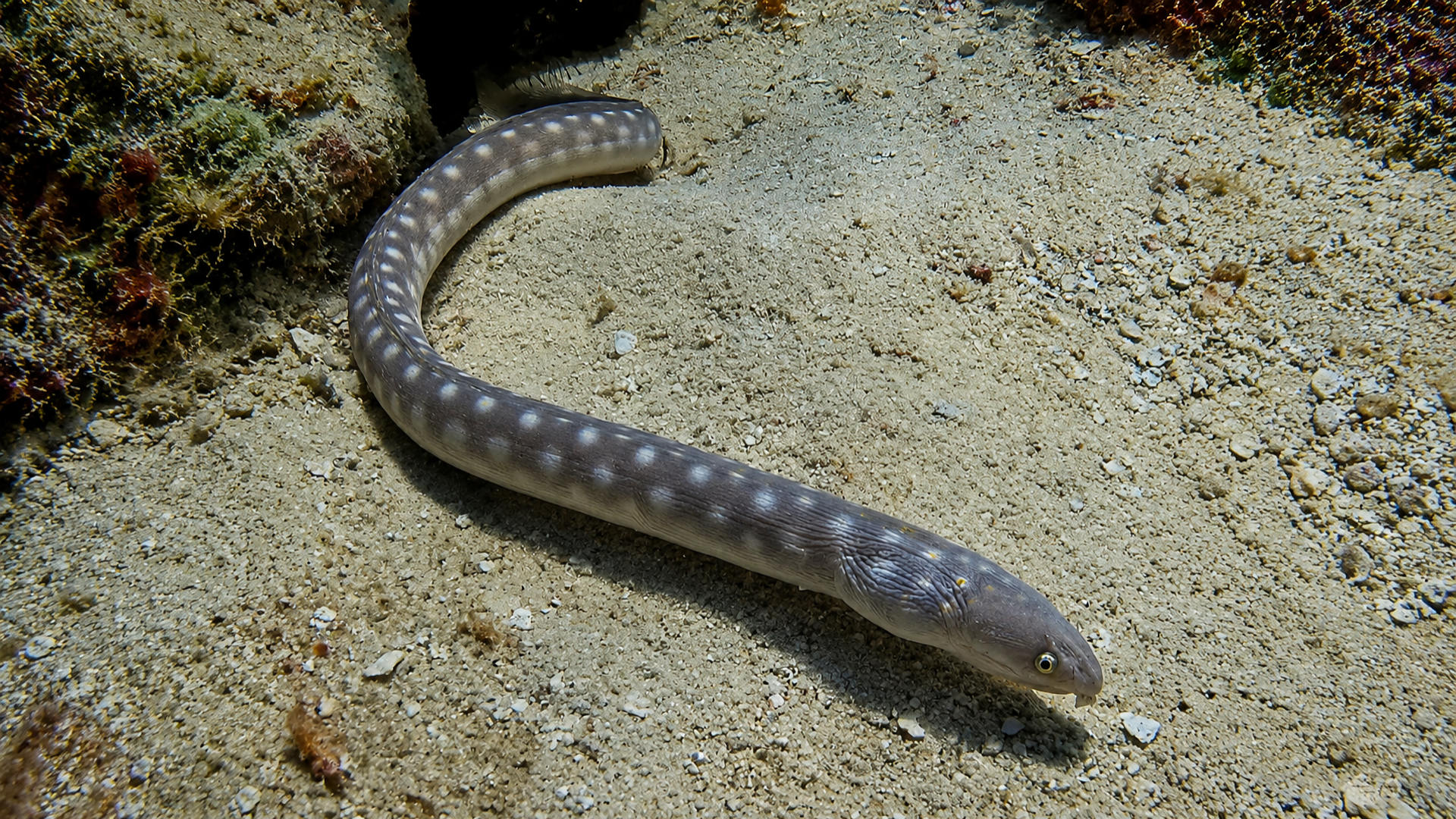
A Sharp-tail Eel moving over a sandy reef bottom
Sharp-tail Eel: slender, patterned, and often seen close to the sand.
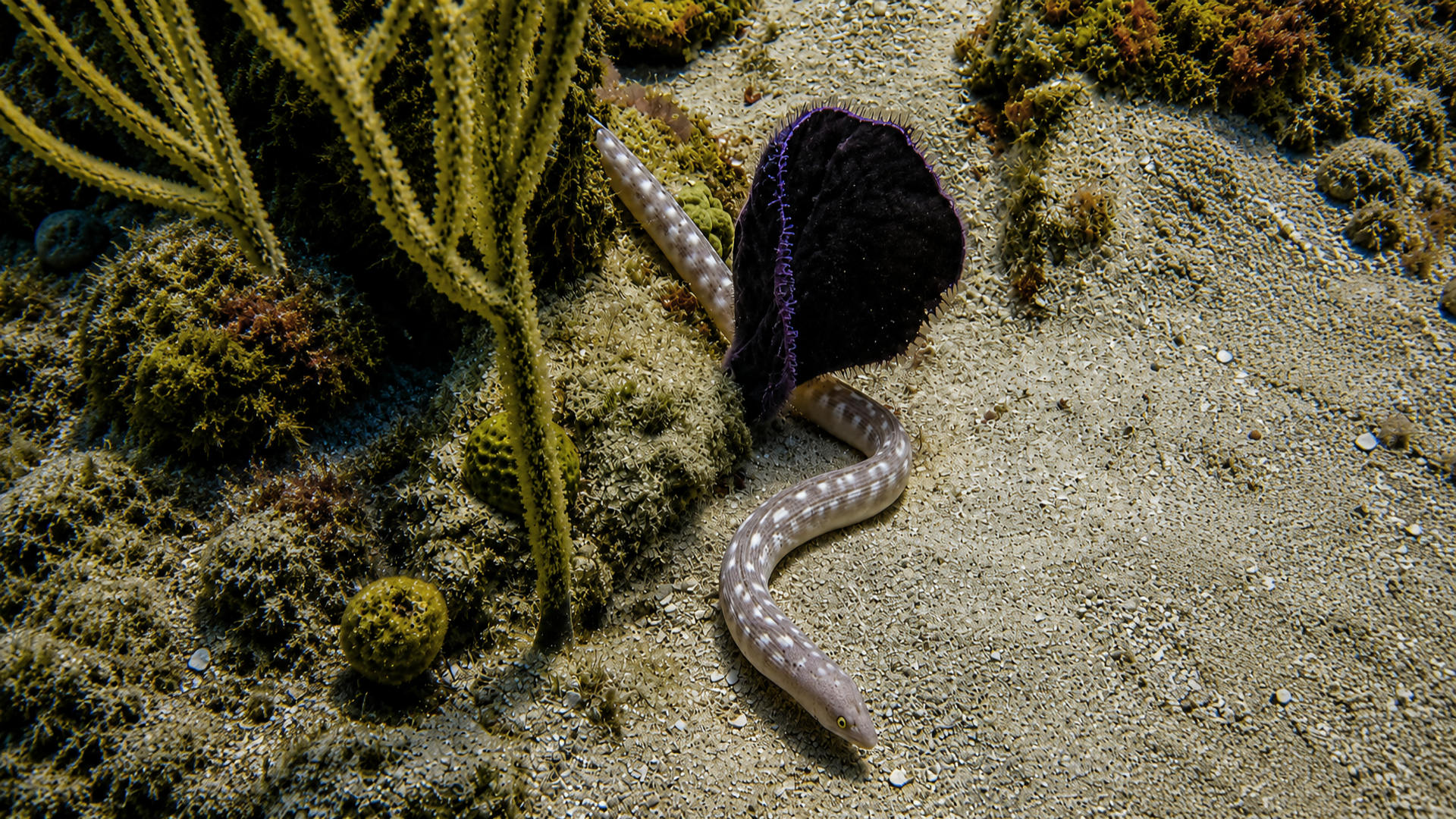
A Sharp-tail Eel moving beside coral and sponges
Another Sharp-tail showing how easily they blend into the reef base.
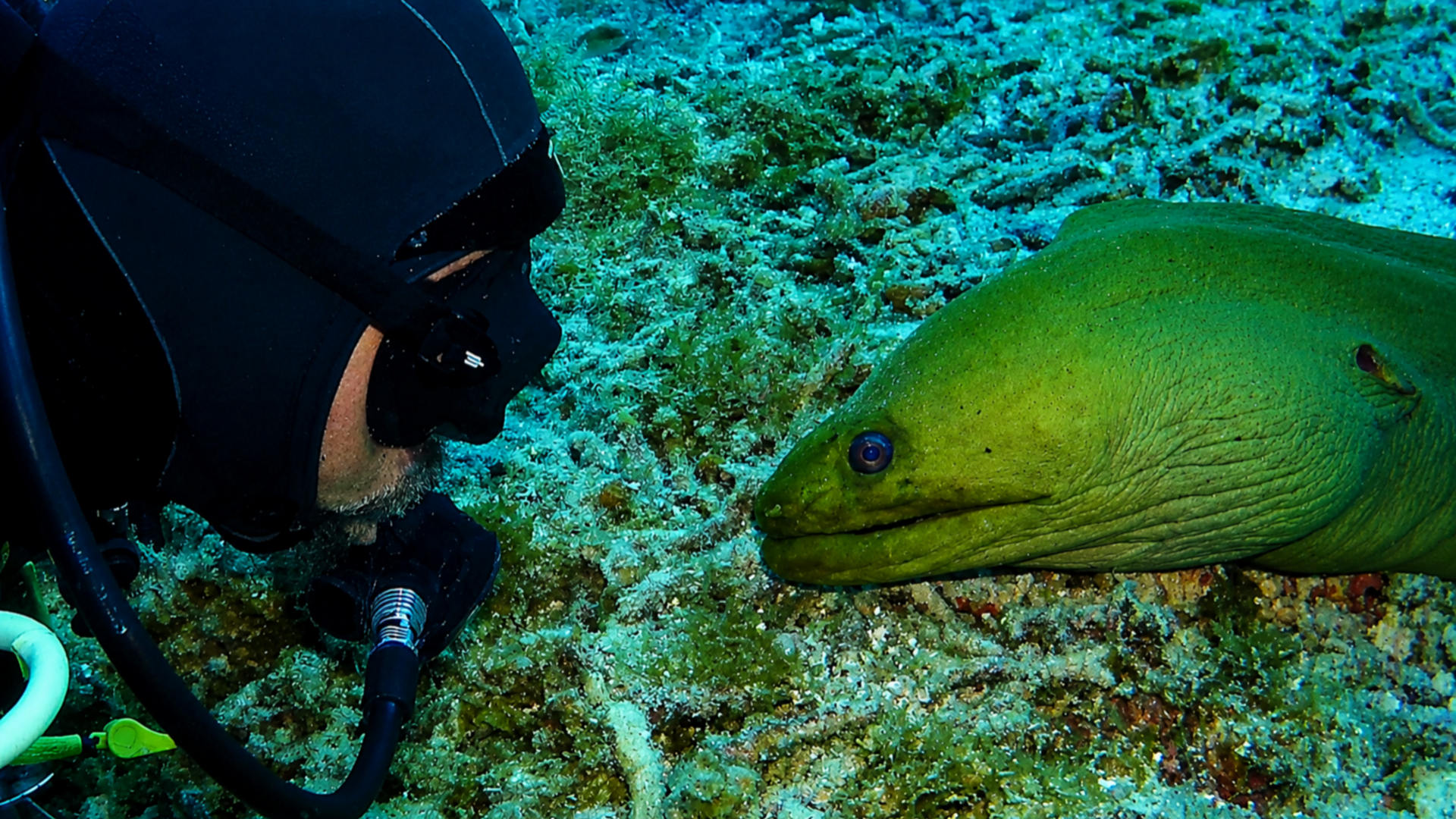
A diver calmly observing a Green Moray on the reef
A calm diver gives the moray space and lets the encounter remain natural.
The Diver's Lesson

The reef does not need us to interfere.

The safest and most respectful moray encounter is almost always the same: watch quietly, keep your hands away, and do not crowd the animal's shelter.

Morays do not need to be chased, touched, fed, or forced into a photograph. The better image is the one where the animal continues its own life with divers understanding the moment.

Moray Eel Questions

Questions divers often ask

Why do moray eels open and close their mouths?

Most of the time they are moving water across their gills to breathe. It can look threatening, but it is usually normal breathing behavior.

Are moray eels aggressive toward divers?

Morays are wild predators and should be respected, but they generally do not seek conflict with divers. Problems are most likely when people feed, corner, touch, or reach toward them.

Should divers put a hand near a moray's hole?

No. Never put your hands into reef openings, under ledges, or near an eel's shelter. That rule protects both the diver and the animal.

Why are morays often hidden in the reef?

Reef crevices provide shelter, protection, and a place to watch for prey. A hidden moray is not necessarily scared; it is living the way the reef allows it to live.

What do moray eels eat?

Morays are predators that feed on fish, crustaceans, and other reef animals. Their strong sense of smell helps them hunt, especially in low light or at night.

What is the best way to photograph a moray?

Stay calm, control your buoyancy, avoid blocking the animal's escape path, and let the eel remain in control of the encounter.

The Lesson

First impressions are not always truth.

A moray's open mouth can look like a threat. Its hidden body can make it seem mysterious. Its teeth can make it seem dangerous.

But when a diver slows down and learns what the behavior means, fear becomes understanding. The moray does not become less wild. It becomes more respected.

Continue the Adventure

Every reef has another story waiting to be discovered.

Follow Dive the Blue for more underwater videos, marine life photography, Cozumel reef stories, and future project updates.

YouTube Instagram Facebook Contact

Return to the Featured Marine Life collection to explore more animals that shape the reefs of Cozumel.

Return to Featured Marine Life
Top ↑